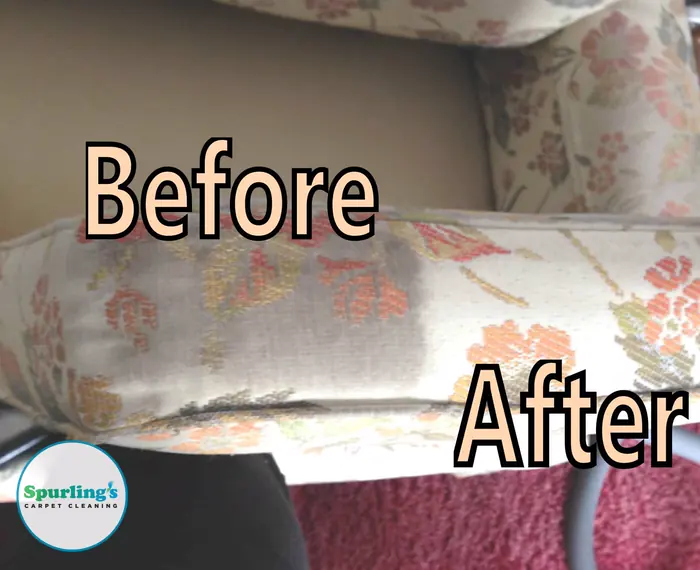
Why is Upholstery Cleaning Important?

We use a special upholstery cleaning tool, so upholstery & mattresses aren’t left overly soaked and won’t take more than a few hours to dry.
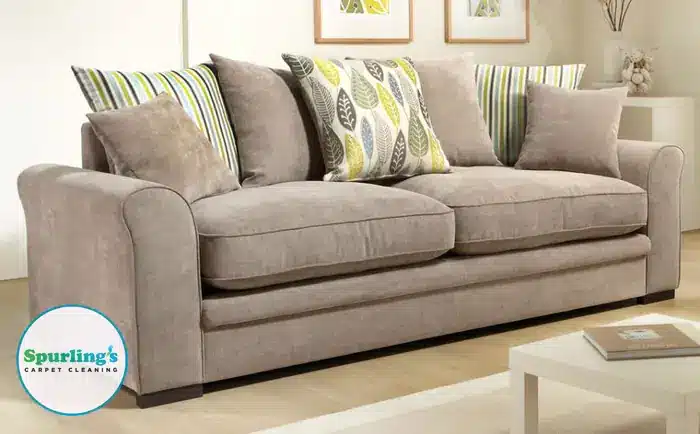
  • Cleaning revives the color and adds life back into the fabric.
  • Trapped odors are removed so upholstery smells clean and fresh again (especially if you have pets allowed on the furniture).
  • Spots, soil build up and everyday air bourne particles are removed.
  • An application of furniture protector shields against oils, dry soil damage from everyday “wear & tear”, and permanent staining.

Our Advanced Upholstery Cleaning System

For upholstery cleaning in Rochester, NY, Spurling’s uses the same deep-extraction methods that keep your carpets fresh — applied safely to sofas, chairs, and fabric furniture.

“Our upholstery cleaners go through a thorough 11-Step cleaning system so you get the cleanest, freshest and healthiest furniture possible. Other upholstery cleaners in Rochester don’t do half of the steps we do. Skipping any of them will leave soil and spots behind.”

1
Pre-inspect: Measurements taken, questions answered, areas of concern addressed. The exact cleaning investment is given before the cleaning begins.
2
Move: Each piece of furniture is pulled out away from walls or surrounding furniture so all sides can be accessed.
3
Vacuum: Dry soil is thoroughly removed using a high quality commercial vacuum. This is the most important step — most other cleaners skip this step to reduce time.
4
Pre-condition: A pre-conditioner solution is applied to break down soil, body oils and general spots. Heavily soiled areas receive extra conditioner.
5
Spot Pre-treat: Difficult spots are pre-treated with special spotting agents to increase chances of removal.
6
Agitate: The pre-cleaning solutions are brushed into the upholstery to further loosen soil below the surface for a deeper cleaning.
7
Rinse & Extract: Furniture is disinfected by repeatedly rinsing using hot water without over-wetting or leaving a soil attracting residue behind.
8
Repeat: Any spots or stains still remaining get a second treatment with our spotting agents.
9
Protect (Optional): A safe green protector is evenly sprayed on the entire piece of furniture.
10
Groom: The upholstery is brushed to help it dry faster and bring up the nap.
11
Turbo Dry: Airflow is started and moving to help decrease drying time.
12
Post Inspect: The technician will have you inspect the results before we leave your home.

Mattress Cleaning

Just as Important…..Maybe Even More Important To Have Cleaned Than Carpet & Upholstery!

Most people don’t feel a mattress needs to be cleaned unless there is an accident. What they don’t realize is a mattress needs to be cleaned more frequently than your carpet and upholstery does.

Having a mattress pad doesn’t reduce the need for cleaning. Dead skin, dust mites, body oils from sweat and other unmentionables from pets and children still reach the mattress.

Note: Mattress fabric is not made to be stain resistant. Cleaning is primarily done for sanitary reasons as it does disinfect and extract soil.

Upholstery Protector

Upholstery manufacturers recommend having a protective coating applied after a professional cleaning every 12–36 months. Over time it wears away similar to wax on a car.

Benefits of Protector

  1. Helps keep it beautiful, reduces permanent stains: Protected upholstery releases most spots with just plain water.
  2. Helps save upholstery from wear patterns: Protected upholstery allows the release of dry soil and oils making vacuuming and spot cleanings more effective.
  3. Professional cleanings are more effective: Protector allows soil, oil and spots to be released much easier, making your professional cleaning significantly better.

Frequently Asked Questions

We clean synthetic upholstery — microfiber, polyester blends, and similar materials — on sofas, sectionals, loveseats, chairs, ottomans, and dining room chairs. We typically do not clean natural fabrics, with one exception: solid-color cotton may be cleanable depending on the piece. It has to be a solid color — no patterns — and we need to see it first before we can say for sure. Before any cleaning we always do a fabric test in an inconspicuous area to confirm the process is safe for your specific material. If we can’t clean it safely, we’ll let you know before we start.
Yes, when done correctly. We use low-moisture cleaning methods and professional-grade, pH-balanced solutions that are safe for upholstery fabrics. We always test the fabric first and adjust our technique based on the material and soil level. We recommend keeping the furniture out of direct sunlight while drying to prevent any potential color shift. If you have concerns about a specific piece, mention it when you call and we can advise.
A typical sofa takes 30–60 minutes to clean. Drying usually takes 2–4 hours depending on fabric type, humidity, and air circulation. Opening windows and running fans significantly speeds drying. We recommend avoiding heavy use of the furniture until it’s fully dry. We’ll give you a drying time estimate on the day of your appointment based on conditions.
For most households, once every 12–18 months is a good rule of thumb. If you have pets, children, or anyone with allergies, cleaning every 6–12 months is better. Regular vacuuming between professional cleanings helps remove surface dust and pet hair before it works deeper into the fabric. Furniture that isn’t cleaned regularly tends to look dull and wear faster — the soil acts like sandpaper on the fibers.
Professional cleaning significantly reduces pet odors from upholstery by removing the organic material causing the smell. For lighter odors, standard cleaning is often enough. For heavier or deeply embedded odors, we can treat with enzyme-based solutions that break down odor-causing proteins. Keep in mind that pet-related issues are excluded from our standard guarantees, but we will always do our best to get the best result possible and will be upfront with you about what’s achievable.