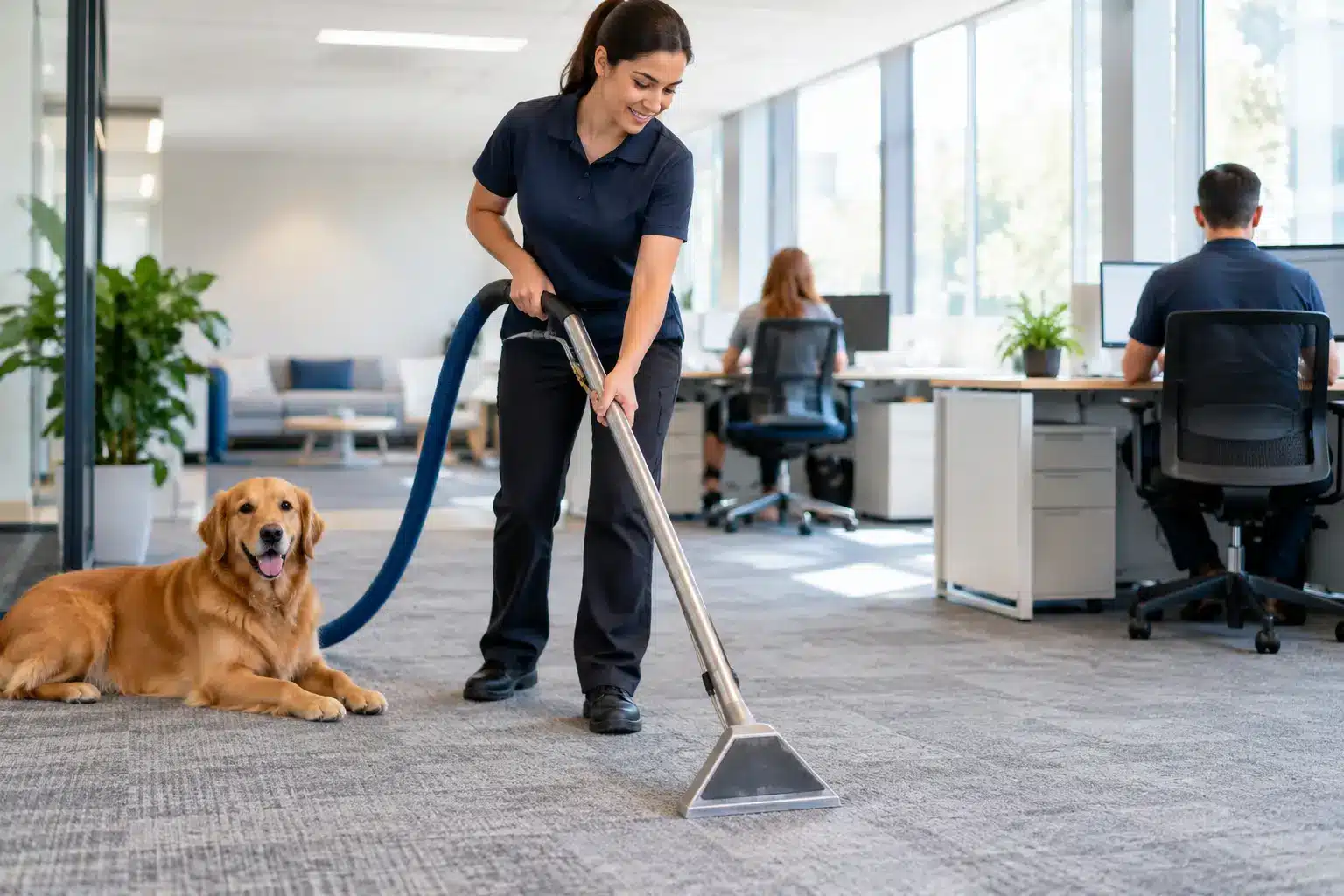
Coffee drips outside the conference room, salt tracks through the lobby, and rolling chairs grind soil into carpet fibers long before a stain looks serious. Knowing how to clean office carpets means managing those daily pressures before they become permanent traffic lanes, odors, and a costly replacement decision.
A clean office carpet does more than improve appearances. It supports a more professional first impression, reduces the gritty soil that wears carpet down, and helps employees and visitors feel comfortable in the space. The right plan is not simply vacuuming more often or renting a machine when the carpet looks dark. It is a practical combination of prevention, prompt spot response, routine maintenance, and periodic professional deep cleaning.
Start With the Soil That Causes the Most Damage
Most commercial carpet soil is dry, abrasive material brought in on shoes: sand, grit, parking-lot debris, road salt, and dust. These particles settle deep into the pile, where foot traffic rubs them against the fibers. That friction dulls the carpet and causes premature wear even when the floor does not look especially dirty.
The entryway deserves the most attention. Use large, commercial-grade walk-off mats both outside and inside every entrance, and make sure they are long enough for several footsteps. A small mat may catch surface moisture, but it will not remove enough dry soil to protect the carpet beyond the door. Vacuum or shake out those mats frequently. A dirty mat quickly becomes another source of tracked-in debris.
In Rochester-area winters, this step matters even more. Moisture, salt, and slush can travel well beyond the lobby, especially in busy offices, medical spaces, property management offices, and retail environments. Place additional runners along the routes employees use most often, such as from rear entrances to break rooms or workstations.
Vacuum More Strategically, Not Just More Often
Vacuuming is the foundation of office carpet care, but a quick pass after hours is not always enough. High-traffic areas need slow, overlapping vacuum passes so the machine has time to lift embedded dry soil. Hallways, entrance paths, reception areas, copy rooms, break rooms, and the space under desk chairs usually need attention several times each week, if not daily.
Low-traffic private offices may need less frequent vacuuming, but they should not be ignored. Dust migrates, and soil follows people wherever they walk. For looped commercial carpet, use equipment suited to the carpet construction. An aggressive beater bar can snag or fuzz certain looped fibers, while weak suction leaves grit behind. Your carpet manufacturer’s care instructions should guide the equipment setting.
Keep vacuum filters, bags, and brush rolls in working order. A poorly maintained vacuum can look busy without removing much soil. If the office has a cleaning crew, make high-traffic routes clear on the service checklist rather than relying on a general instruction to vacuum the floors.
How to Clean Office Carpets When Spills Happen
The first few minutes after a spill often determine whether it becomes a permanent stain. Train employees or designated staff to respond calmly and correctly. The goal is to remove the spill without spreading it, driving it deeper, or leaving sticky residue that attracts more soil.
Start by blotting, never scrubbing. Use clean white absorbent towels and press from the outer edge of the spill toward the center. White towels help prevent color transfer and make it easier to see whether the spill is lifting. Continue replacing towels as they absorb moisture.
For many water-based spills, lightly apply a small amount of plain water, blot again, and avoid soaking the backing. Coffee, food, and sugary drinks may require a carpet-safe spotter, but test it in an inconspicuous area first. Follow the label precisely, use only a small amount, and rinse or blot away residue afterward. Too much product can leave the carpet feeling clean at first but create a fast-returning dark spot as it attracts soil.
Avoid household shortcuts such as bleach, dish soap, laundry detergent, or harsh all-purpose cleaners. These products can discolor carpet, damage fibers, or leave residue that makes the affected area worse. Do not pour cleaner directly onto the carpet. Apply it to a towel when possible, then blot.
Some spots need a professional response from the start. Ink, paint, grease, rust, dye, pet contamination, recurring beverage stains, and unknown dark spots can become more difficult after the wrong treatment. When in doubt, protect the area from traffic, note what caused the spot, and have it assessed before experimenting.
Address Odors at the Source
Office carpet odors are rarely solved by fragrance. Perfume sprays may temporarily cover a smell, but they do not remove the source. Food spills, moisture, bacteria, mold concerns, and urine contamination each require a different approach.
If carpet remains damp after a spill, extraction and thorough drying are priorities. Persistent moisture can affect the padding or subfloor, particularly around planters, water coolers, entrances, and plumbing leaks. If an odor returns after surface cleaning, there may be contamination below the carpet face fibers. That calls for inspection, targeted treatment, and in some cases cleaning or replacing affected backing or padding.
Schedule Deep Cleaning Before the Carpet Looks Bad
Waiting until office carpet looks visibly dirty is one of the costliest maintenance habits. By then, the fibers may already hold abrasive soil and oily residue that routine vacuuming cannot remove. Professional hot water extraction is often the best method for restorative commercial carpet cleaning because it flushes embedded soil and cleaning solution from the carpet instead of merely moving it around.
Frequency depends on traffic, carpet color, weather exposure, food and beverage use, and the image your business needs to maintain. A quiet office with limited visitors may need professional cleaning once or twice a year. A busy lobby, call center, medical office, daycare, or property-management space may benefit from quarterly or more frequent service in its highest-traffic zones.
There is a trade-off to consider. Encapsulation or low-moisture maintenance cleaning can be useful between deeper cleanings because it offers fast dry times and helps manage surface soil. However, it is not always a substitute for periodic hot water extraction, especially where soil, salt, stains, or odors have built up. The best program may use both methods at the right intervals.
Before booking service, ask what process will be used, whether pre-treatment and agitation are included, how drying is managed, and what happens if a spot reappears. A premium provider should be able to explain the plan clearly without pressure or vague promises.
Protect Carpet After It Is Cleaned
A freshly cleaned carpet can stay attractive far longer when the office returns to a disciplined maintenance routine. Keep furniture pads under heavy pieces, use protective mats in areas with rolling chairs, and avoid placing wet umbrellas, plant containers, or drink stations directly on carpet. Moveable entrance mats should be cleaned regularly instead of left in place indefinitely.
After a deep cleaning, allow the carpet to dry fully before returning normal traffic. Short dry times are valuable, but rushing chairs and foot traffic back onto damp carpet can cause resoiling and transfer dirt from shoes. If the office must remain open, schedule cleaning in sections or after business hours so the work does not interfere with staff or visitors.
For offices in Victor, Webster, Fairport, Pittsford, and surrounding Rochester communities, a professional cleaning schedule is often easier to manage than repeated emergency spot calls. Spurling’s Carpet Cleaning uses a multi-step, truck-mounted hot water extraction process designed to remove deeply embedded soil while keeping downtime practical for busy businesses.
Your carpet is one of the largest surfaces in the office and one of the first things visitors notice without consciously realizing it. Treat it like an asset: stop soil at the door, remove spills correctly, vacuum with purpose, and bring in qualified help before neglected traffic lanes become permanent.
Our Services
Learn more about our commercial carpet, tile and upholstery cleaning services in Rochester, NY, or call 585-955-6300 for a free estimate.