
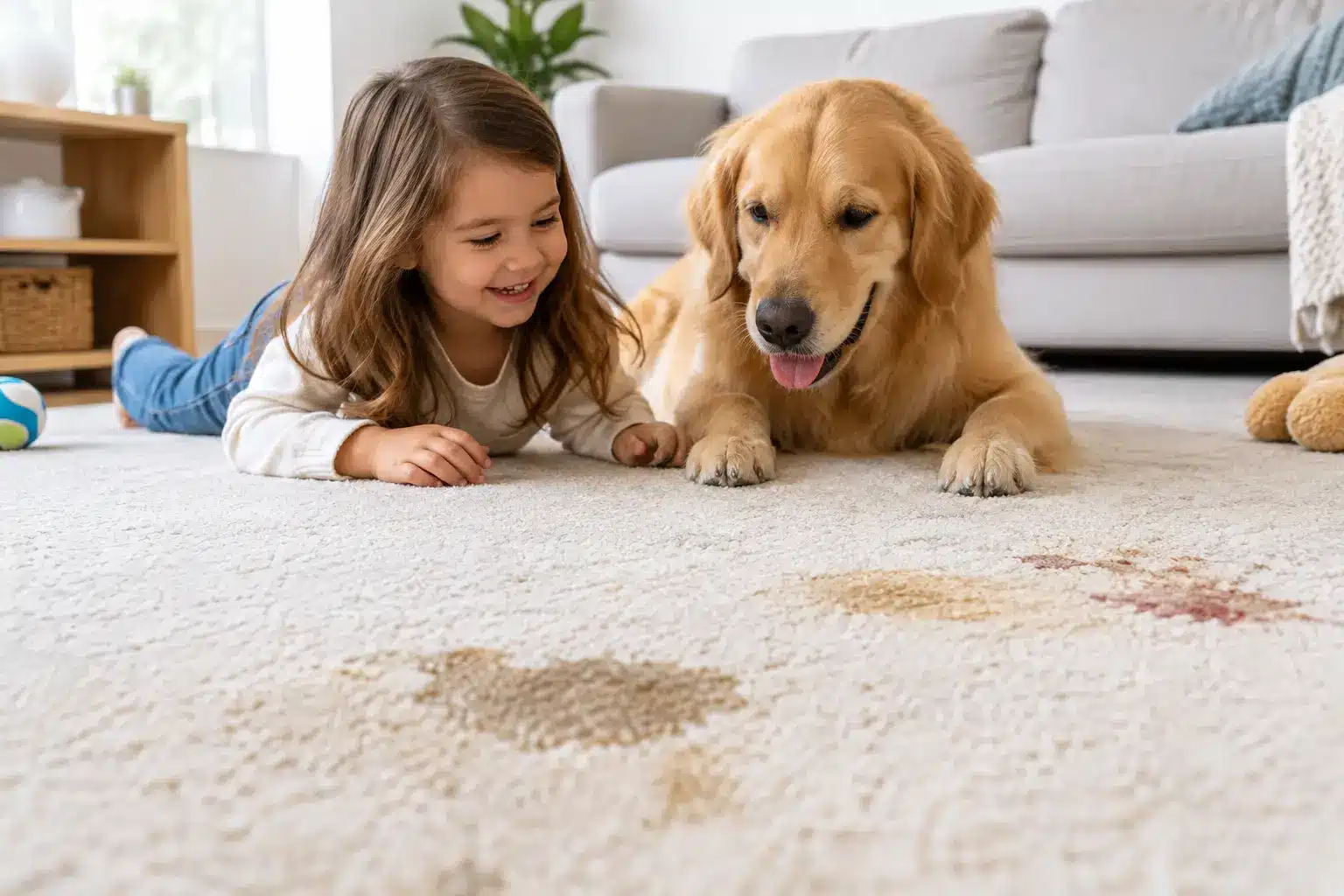
A carpet spot can look completely gone when it is still damp, only to return a day or two later in the same exact place. That is frustrating, especially after you spent time blotting, spraying, and renting equipment. So, what causes recurring stains? Usually, the visible mark is only part of the problem. The source may still be hiding deep in the carpet fibers, backing, pad, or even the floor beneath it.
Recurring stains are not always a sign that your carpet is beyond saving. They are often a sign that the original spill was treated at the surface but not fully removed. The right solution depends on what caused the spot, how far it traveled, and what cleaning products have already been used.
What Causes Recurring Stains in Carpet?
Most recurring spots come back for one of two reasons: material is rising from beneath the carpet as it dries, or leftover residue is attracting new soil. Both problems can make a freshly cleaned area look worse again, even when the initial cleaning seemed successful.
Wicking pulls hidden soil back to the surface
Wicking is one of the most common reasons a stain reappears after cleaning. When a spill soaks through the carpet fibers and reaches the backing or pad, the moisture carries dissolved soil, food coloring, tannins, or other contaminants downward. During drying, that moisture can travel back upward through the fibers.
Think of it like a candle wick drawing liquid upward. As the carpet dries, the hidden material migrates to the surface and leaves a new visible ring or dark spot. Coffee, juice, soda, muddy water, and pet accidents can all wick back, particularly when the original spill was large or allowed to sit.
Surface spot cleaning may improve the appearance temporarily, but it cannot always reach the contamination below. Professional hot water extraction, paired with the right treatment and drying process, is often needed to flush and remove the source rather than simply clean the top of the pile.
Sticky cleaning residue attracts soil
Not every returning stain is the original stain coming back. Sometimes the spot looks dark again because a cleaning product was left behind. Many store-bought spot removers, rental-machine shampoos, and overly concentrated soaps can leave a sticky residue in the carpet.
That residue acts like a magnet for shoes, socks, pet paws, dust, and everyday traffic. The area may look clean at first, then turn gray or brown faster than the surrounding carpet. This is called rapid resoiling, and it is especially common in hallways, entryways, in front of couches, and near dining areas.
More product is not the answer. Using too much cleaner can make the issue worse. A proper process includes rinsing away both the soil and the cleaning solution, then leaving the carpet as residue-free as possible.
The spill reached the padding or subfloor
A small surface stain can be handled differently than a deep saturation problem. If a drink, pet accident, or water leak has penetrated into the carpet pad, the padding may hold contamination long after the carpet face fibers look clean.
Urine is a common example. The liquid can spread wider underneath the carpet than the visible spot suggests. As humidity rises or the area gets damp, odor and discoloration can return. In more serious cases, contaminants reach the subfloor, where ordinary carpet cleaning alone may not fully solve the issue.
This is why a thorough inspection matters. A trained technician can identify whether the problem is limited to the carpet fibers or whether deeper treatment is needed. Depending on the situation, the best approach may involve targeted urine treatment, flushing, odor control, or addressing the pad and subfloor directly.
Too much moisture slows drying and encourages wicking
Overwetting is another factor behind recurring spots. Rental machines and do-it-yourself cleaning methods can leave too much water in the carpet, especially if extraction is weak. A wet carpet takes longer to dry, increasing the chance that soil from the backing or pad will wick upward.
Long dry times can also create inconvenience for busy homes and commercial spaces. Furniture cannot be returned promptly, traffic has to be avoided, and odors may become more noticeable. High-powered truck-mounted extraction equipment removes more moisture than many consumer machines, which helps support a cleaner result and shorter drying time.
Pet accidents are chemistry problems, not just stains
Pet urine can be one of the most stubborn causes of repeat spots and odors. Once urine dries, it can leave behind crystals and residues that reactivate with moisture. That is why an area may smell fine one day and noticeably worse during humid weather or after steam from a shower moves through the house.
A deodorizing spray can mask the odor, but masking is not removal. Effective treatment has to address the urine deposits themselves. The method depends on the age of the accident, the amount of saturation, the carpet construction, and whether the contamination has traveled into the pad or subfloor.
Avoid using heat before the area has been properly treated. Heat can sometimes set certain stains, while heavy fragrance products can make it harder to tell whether the odor source is actually gone.
When a Recurring Mark Is Not Actually a Stain
Some marks cannot be cleaned away because they are not soil. Bleach spots, color loss, worn traffic lanes, sun fading, and fiber damage may resemble stains but require a different solution. In these cases, repeated scrubbing can damage the carpet further without improving the appearance.
There is also a difference between a stain and a permanent dye change. Red beverages, ink, certain medications, hair products, and bleach can alter carpet color. A qualified cleaner may be able to improve some dye-related issues with specialty techniques, but no honest professional should promise that every color loss or permanent stain will disappear.
If a spot is lighter than the surrounding carpet, feels rough, or has no change after proper rinsing, it may be damage rather than removable residue. Getting a clear assessment before trying more chemicals can protect your carpet from unnecessary wear.
What to Do When a Spot Keeps Returning
Start by avoiding repeated scrubbing. Aggressive rubbing can fray carpet fibers, spread the stain, and push contamination deeper. Blot fresh spills with clean white towels, working from the outside toward the center. Then use only a small amount of an appropriate spotter and blot again rather than soaking the area.
If the spot has already returned once or twice, stop adding product. The carpet may need a complete rinse and extraction rather than another layer of cleaner. Keep foot traffic off the area while it dries, and use airflow from fans when possible. Faster, more even drying reduces the likelihood of wicking.
For pet-related spots, recurring dark areas, old spills, or stains that return after rental cleaning, a professional evaluation is usually the most cost-effective next step. It prevents the cycle of buying more products, applying more moisture, and ending up with a carpet that looks worse around the original stain.
A Longer-Lasting Clean Starts Below the Surface
The goal is not merely to make a spot disappear for the afternoon. It is to remove the material causing the spot, rinse away residues, and dry the carpet properly. That takes the right chemistry, adequate extraction, and experience recognizing the difference between wicking, resoiling, urine contamination, and permanent damage.
For homeowners and businesses around Rochester, Spurling’s Carpet Cleaning uses a multi-step, truck-mounted cleaning process designed to address the soil beneath the surface, not just improve the immediate appearance. When a spot qualifies for treatment, a no-reappearing-spot guarantee provides real accountability rather than a vague promise.
If a stain keeps coming back, treat it as useful information: your carpet is telling you the source is still there. A careful inspection and the right deep-cleaning approach can give that area the clean, fresh result it should have had the first time.