
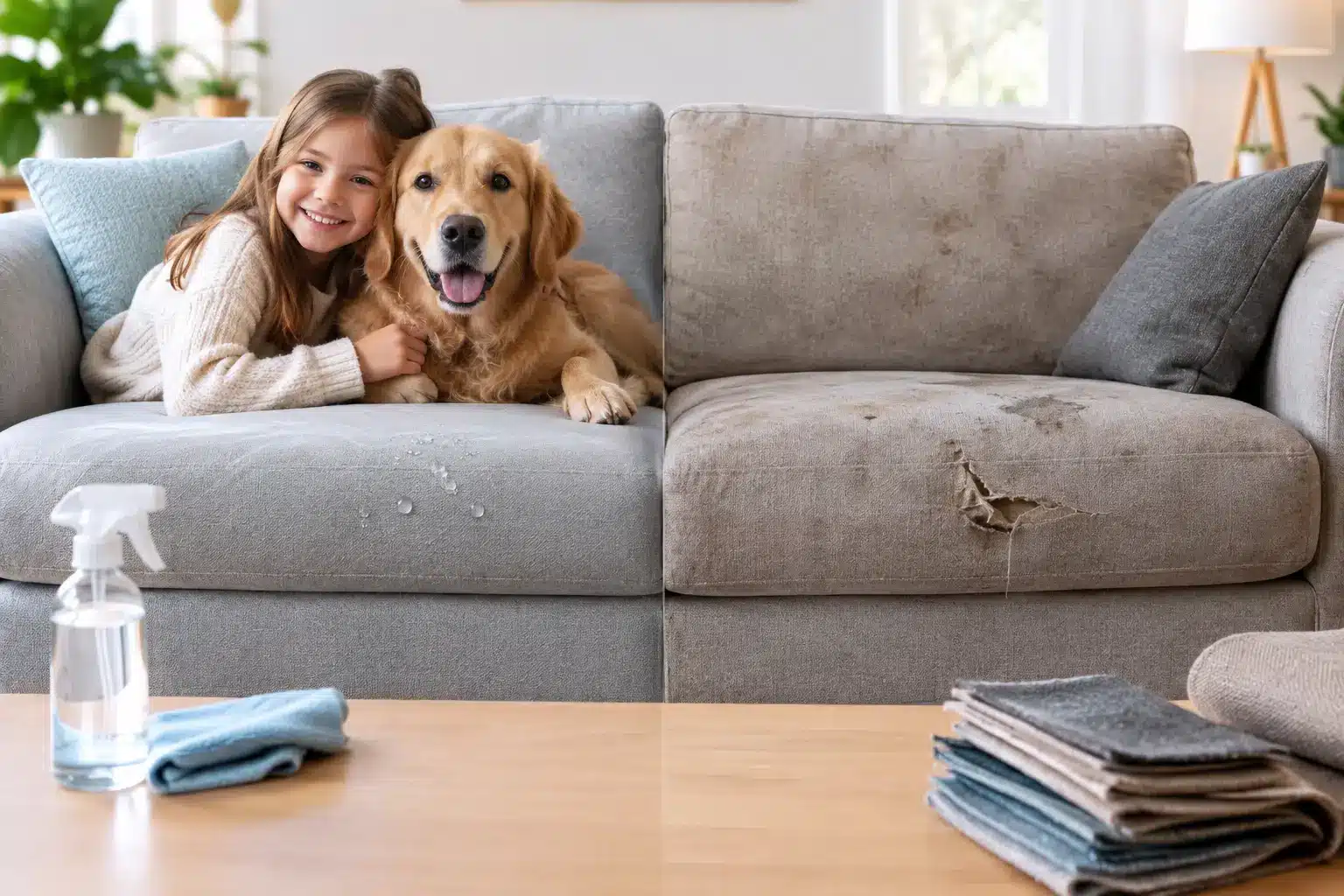
That coffee spill on the armrest, the darkened seat cushion, and the faint odor that returns on humid days can make a perfectly solid sofa feel ready for the curb. But fabric protector versus upholstery replacement is not a simple choice between spraying a product and buying new furniture. The condition of the fabric, the age and construction of the piece, the type of staining, and the quality of the cleaning all matter.
For many homeowners and property managers, a professional upholstery cleaning followed by fabric protection is the smarter investment. For others, replacement is the honest answer. The goal is not to keep furniture beyond its useful life. It is to avoid replacing quality furniture when a professional cleaning and protector can restore its appearance, make future spills easier to manage, and extend its service life.
Fabric Protector Versus Upholstery Replacement: Start With the Furniture Itself
A good fabric protector is designed to create a barrier around individual fibers. It does not make upholstery waterproof, and it cannot prevent every stain. What it can do is slow down absorption, giving you more time to blot a spill before it sinks deep into the fabric and cushion padding.
That extra time matters. Many permanent-looking spots begin as an ordinary spill that was rubbed into the fabric, treated with the wrong household product, or left to absorb. A professionally applied protector can help spills release more easily during routine care and during a future professional cleaning.
Replacement makes more sense when the upholstery has structural problems, not just surface problems. If the frame is broken, springs are failing, cushion foam has collapsed, seams are tearing, or fabric is severely worn through, protector will not solve the underlying issue. The same is true when sunlight has permanently faded large sections of fabric or when the material is brittle from age.
However, a sofa that looks tired is not necessarily worn out. High-quality furniture often has a sound frame and durable fabric beneath years of body oils, everyday soil, food residue, and airborne dust. That buildup changes the color and feel of upholstery gradually, so many people do not realize how much brighter it can look after a thorough, multi-step professional cleaning.
What Fabric Protector Can Actually Do
Fabric protector works best as part of a complete upholstery-care plan, not as a shortcut around cleaning. Applying protector over soil, sticky residue, or old spills simply seals in a problem. The fabric should first be carefully evaluated and cleaned using methods appropriate for its construction and condition.
After cleaning, protector can provide several practical benefits. It can reduce how quickly spills soak in, help dry soil vacuum away more readily, reduce friction wear on frequently used areas, and make future professional cleaning more productive. Families with light-colored furniture, children, frequent guests, or busy living rooms often see the greatest value because the furniture faces more daily exposure.
It also helps protect the investment you already made. Replacing a sectional, dining chair set, or office seating can involve delivery delays, disposal hassles, and the uncertainty of whether the replacement will hold up as well as the original. If the furniture is structurally sound, professional cleaning and protector can be a sensible way to get more years from it.
Still, protector has limits. It cannot remove existing dye loss, repair frayed fibers, restore a crushed cushion, or erase every old stain. It is also not a license to wait days before addressing a spill. Blot promptly with a clean, absorbent towel, avoid aggressive rubbing, and skip the temptation to soak the area with store-bought chemicals.
The Difference Between a Store-Bought Spray and Professional Protection
A retail spray may seem like an easy fix, but application quality affects results. Uneven coverage can leave unprotected areas, while overapplication can cause undesirable texture changes or residue. Some products are also poorly matched to particular upholstery fibers or manufacturer finishes.
Professional application begins with inspection. An educated technician considers the fabric type, color stability, wear, prior spotting attempts, and the piece’s overall condition. The protector is applied evenly after appropriate cleaning and drying steps, helping provide consistent coverage without turning the service into a rushed add-on.
At Spurling’s Carpet Cleaning, the focus is not on a quick surface treatment. Our upholstery process is built around deep cleaning, careful attention to problem areas, and results that last longer than a basic cleaning. Protector is most valuable when it follows that level of preparation.
When Cleaning and Protection Are the Better Investment
If your upholstery has accumulated normal household soil but remains physically sound, cleaning and protection usually deserve serious consideration before replacement. This is especially true for furniture that was well-made, fits the room properly, or would be expensive to replace with comparable quality.
Consider a dining chair with a few food spots, a favorite recliner with darkened arm areas, or a sectional that has lost its fresh appearance after years of family use. These are common situations where cleaning can create a noticeable improvement. Once the fabric is clean, protector gives the household a better chance of managing the next spill before it becomes a bigger issue.
Commercial settings can benefit, too. Waiting-room chairs, office seating, and common-area furniture take repeated use from many people. Replacing them every time they start looking dingy is rarely efficient. Scheduled professional cleaning and fabric protection can support a cleaner appearance, help preserve the furnishings, and present a better impression to customers, tenants, and employees.
The value calculation is not only about appearance. Upholstery holds dust, oils, crumbs, and residues that routine vacuuming cannot fully remove. A professional cleaning can refresh the fabric and improve comfort, while a protector helps preserve that cleaner condition between appointments.
When Upholstery Replacement Is the Smarter Call
There are times when a reputable cleaning company should tell you not to spend more money on a piece. Replacement is often wiser when damage extends below the fabric. Persistent moisture damage, degraded foam, a failing frame, extensive tearing, or widespread fabric thinning are signs that the furniture may be at the end of its useful life.
Replacement can also be the better option when the fabric has been repeatedly exposed to harsh cleaning chemicals. Certain spot removers can strip color, leave rings, stiffen fibers, or create permanent texture differences. If large areas are visibly altered, even excellent cleaning cannot recreate the original finish.
Odor issues require an especially realistic assessment. Surface deodorizing is not the same as correcting contamination that has reached cushion inserts, backing materials, or the furniture’s internal structure. A professional inspection can help identify what is possible, but no responsible company should promise that every heavily affected piece can be restored.
If you do replace furniture, do not assume a new piece is automatically easier to maintain. Many modern upholstered items use lighter-weight fabrics and lower-density cushions than older, well-built furniture. Applying a quality protector after the appropriate initial care can help you preserve the new purchase from day one.
Make the Decision Based on Value, Not Frustration
It is easy to judge furniture at its worst, right after a spill or when stains seem more obvious in afternoon light. Before scheduling a replacement delivery, look at the full picture: Is the frame sturdy? Are the cushions still supportive? Is the fabric intact? Are the issues limited to soil, spots, and normal use? If the answer is yes, professional upholstery cleaning and protector may offer a far better return than replacement.
A qualified technician can set expectations before work begins. That matters because honest evaluation prevents disappointment. Some stains may be permanent, wear may remain visible, and certain fabric conditions cannot be reversed. But when the furniture has good bones, deep cleaning can reveal a level of improvement that everyday vacuuming and rental machines simply cannot deliver.
For homeowners and businesses throughout the Rochester-area service region, the best choice is usually the one that protects both your furnishings and your budget. Give quality upholstery a fair opportunity to be professionally cleaned and protected before deciding it has reached the end of the road.
Spurling’s cleans carpet, upholstery and furniture, spot and stain removal, ceramic and porcelain tile and grout, and synthetic area rugs for homes and businesses across Monroe, Ontario, Wayne, Livingston and Seneca Counties.