
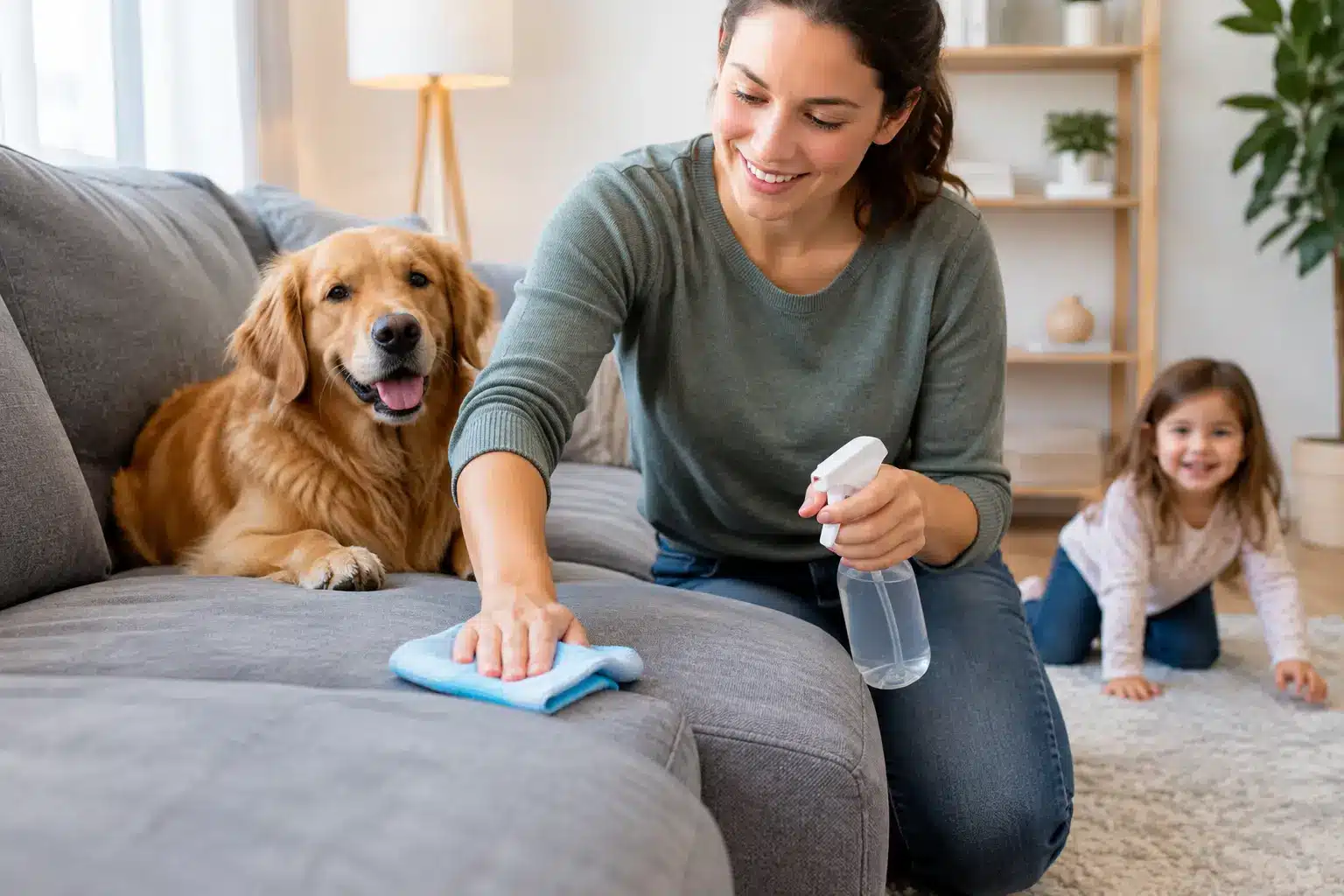
A microfiber sofa can look almost new one day and covered in dark arm marks, water rings, and mystery spots the next. The good news is that you can clean microfiber furniture successfully without ruining its soft finish – but needs a more delicate and strategic cleaning method. The wrong product, too much moisture, or aggressive scrubbing can leave a larger, more noticeable problem than the original spot.
Microfiber is durable, comfortable, and popular in busy homes for good reason. It also has a very fine, tightly woven surface that holds body oils, dust, food residue, and everyday soil. A careful routine protects the fabric, keeps colors looking even, and helps your furniture stay fresh between professional cleanings.
Start With Dry Soil, Not Stain Remover
Most upholstery gets dull long before it gets visibly stained. Fine dust, crumbs, lint, and dry soil settle into the fibers and get pressed deeper into the fabric every time someone sits down. Removing that material first makes spot treatment more effective and reduces the chance of creating muddy streaks. Homes with pets have even more to take care with pet oils and dander.
Vacuum the entire piece with an upholstery tool that has a rotating brush if possible, including cushion seams, creases, under loose cushions, and the back of the furniture. Use gentle passes rather than dragging a hard plastic attachment across the fabric.
If there is a dried spill or crusted residue, gently loosen it with a soft brush before applying cleaner. Do not scrape at the fabric with a knife, fingernail, or stiff brush. Microfiber can develop a permanently rough or flattened patch when its pile is damaged.
Treat Spots With the Right Amount of Moisture
The safest approach is controlled cleaning, not soaking. Work on one small area at a time and apply your approved cleaner to a clean white towel rather than spraying the furniture heavily. A white towel helps you see whether color or soil is transferring and avoids dye transfer from colored cloths.
Blot the spot from the outside toward the center. That keeps the spill from spreading. Avoid rubbing in circles or grinding the towel into the upholstery, especially on armrests and cushion fronts where the fabric already receives heavy use.
For W-code microfiber, use a mild water-based upholstery cleaner as directed on the label. For S-code fabric, use an upholstery-safe solvent cleaner and provide ventilation. Products such as household dish soap, laundry detergent, disinfecting wipes, glass cleaner, and all-purpose sprays are poor substitutes. They can leave residue, alter the feel of the fabric, or cause water marks.
A spot may look gone while the fabric is wet, then reappear as it dries. That does not always mean the cleaner failed. It can mean the spill penetrated beyond the surface, or that residue and moisture wicked upward from deeper in the cushion. Repeating the same home treatment several times often makes this worse by adding more product and moisture.
Why Water Rings Happen on Microfiber
Water rings are one of the most frustrating microfiber problems because they can appear after a small spill, an attempted spot treatment, or even a damp cloth. They happen when moisture dries unevenly and carries soil or dissolved residue to the outer edge of the wet area.
On W-code microfiber, a carefully controlled, even cleaning of the full cushion panel may sometimes blend a ring better than treating the ring alone. The key is using minimal moisture and drying the area evenly. On S-code fabric, do not try to solve a water ring by adding more water. That can enlarge the damage.
Once the fabric is fully dry, use a clean, soft upholstery brush to reset the nap. Brush in one consistent direction, then lightly cross-brush if needed to blend the texture. This final step is often the difference between a clean-looking cushion and one with visible light and dark shading.
Don’t Forget Body Oils and High-Use Areas
Darkened armrests, headrest areas, and favorite seat cushions are not always “stains” in the usual sense. They are often a buildup of body oils, skin cells, hair products, lotion, and airborne soil. These areas need more than a quick wipe because oil attracts and holds additional dirt.
A suitable upholstery cleaner can help with light buildup, but heavy soil needs more care. Overworking the fabric with home products may leave it stiff or blotchy. The fabric can also look clean at first while residue remains below the surface and attracts new soil soon afterward.
For homes with children, frequent entertaining, or heavily used family-room furniture, routine vacuuming makes a meaningful difference. Address fresh spills promptly, but do not turn every small mark into a wet-cleaning project. Preventing buildup is easier than correcting years of embedded soil.
When Professional Microfiber Upholstery Cleaning Makes Sense
Professional upholstery cleaning is the better choice when an entire sofa looks dingy, several cushions have uneven shading, odors linger, or spots keep returning after they dry. It is also wise when the fabric code is uncertain, the piece is expensive, or a previous DIY attempt left rings or texture changes.
A trained technician evaluates the fiber, construction, cleaning code, soil level, and type of contamination before selecting a process. Quality upholstery cleaning is not simply applying steam to every fabric. The right method uses appropriate solutions, controlled agitation, thorough rinsing, and powerful extraction to remove suspended soil while avoiding excess moisture.
At Spurling’s Carpet Cleaning, trained technicians use a multi-step upholstery cleaning system and professional extraction equipment designed to deliver a deeper clean with short drying times. That matters because leaving soil, detergent residue, or too much moisture in furniture can shorten the fresh appearance of the cleaning.
Some spots have limits. Permanent dye loss, bleach damage, worn fabric, sun fading, and fibers damaged by harsh cleaners cannot be washed away. Honest cleaning service means identifying those conditions clearly rather than making unrealistic promises. Even when a mark cannot be fully removed, professional cleaning can often improve the overall appearance by removing surrounding soil and restoring a more even finish.
Keep Microfiber Looking Better Between Cleanings
A few habits help protect the results after cleaning. Vacuum upholstery regularly, especially where people sit most often. Rotate and flip reversible cushions when the furniture design allows it so wear develops more evenly. Use a clean throw on the favorite seat if it receives daily use, and blot fresh spills immediately with a dry white towel.
Avoid applying fabric protectors, deodorizing sprays, or stain-removal products unless they are appropriate for your specific upholstery code. More product does not mean better results. In microfiber, leftover residue can make fabric feel rough and cause new soil to cling to the surface faster.
Your furniture is one of the most used surfaces in your home. Giving it the right care protects its comfort, appearance, and life – and when a stain or overall soil level is beyond a careful home treatment, a professional inspection is the smart next step.
For any questions, contact us by phone 585-955-6300 or on our website’s contact form. We enjoy helping whenever we can.
Spurling’s cleans carpet, upholstery and furniture, spot and stain removal, ceramic and porcelain tile and grout, and synthetic area rugs for homes and businesses across Monroe, Ontario, Wayne, Livingston and Seneca Counties.