
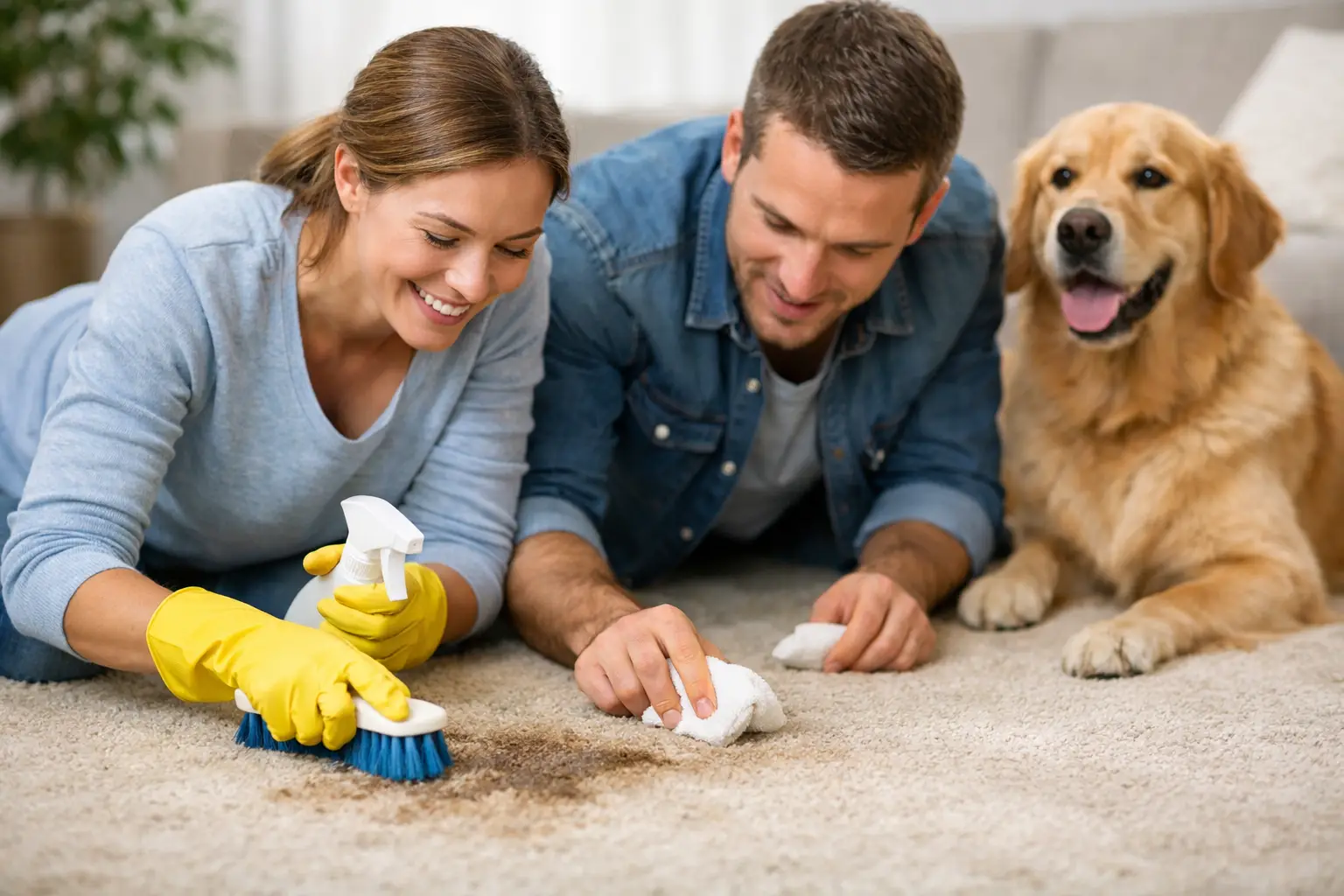
That yellowed spot you stopped noticing until the sunlight hit it again is exactly why people ask, can old pet stains be removed? The honest answer is yes, many of them can be improved dramatically, and some can be removed completely. But old pet stains are not all the same, and the age of the stain is only one part of the story.
What matters more is what the stain soaked into, how many times it was treated, whether urine reached the carpet backing or pad, and whether the stain changed the dye in the carpet itself. That is where surface cleaning and true corrective cleaning start to separate.
Can old pet stains be removed from carpet?
Sometimes yes, sometimes partly, and sometimes the stain is no longer just a stain. That distinction matters.
A fresh accident usually sits near the surface at first. An old pet accident often moves deeper. It can wick into the backing, the pad, and even the subfloor. As it dries, the proteins, salts, and waste compounds stay behind. Every time humidity rises, those residues can reactivate odor. Every time someone does a quick spray-and-scrub, the visible spot may lighten while the deeper contamination stays put.
That is why old pet stains can look like they came back after cleaning. In many cases, they did not return from nowhere. They wicked up from below as the carpet dried.
There is also the issue of discoloration. Pet urine can permanently alter certain carpet dyes, especially in lighter carpet. When that happens, cleaning may remove the contamination and odor, but some color change can remain. A trustworthy cleaner should tell you that upfront instead of promising a miracle on every spot.
Why old pet stains are harder to fix
Time changes the chemistry. The longer a pet stain sits, the more it bonds with fibers and the more likely it spreads beneath the visible area. By the time a homeowner spots a recurring urine area, the true footprint can be much larger than the mark on top.
DIY products can make this worse if they leave residue behind. Store-bought spot removers, soap-heavy cleaners, or too much water can push contamination deeper into the carpet. Some products mask odor for a while, but they do not fully flush out what is underneath. Others bleach or set the stain, especially when mixed with the wrong chemistry.
Older stains also tend to come with odor issues, and odor is often the bigger complaint. A spot you can live with visually is one thing. A room that smells worse every humid afternoon is another.
What actually works on old pet stains
The right method depends on the material and depth of contamination. That is why one-size-fits-all advice usually disappoints people.
For minor older spots near the surface, an enzyme-based treatment can help break down organic residue. These products work best when they have enough dwell time and stay in contact with the actual contamination. The problem is that homeowners often treat only the visible area, while the urine spread wider underneath.
For deeper contamination, flushing and extraction are usually needed. This is where professional equipment makes a real difference. Thorough rinsing, controlled solution use, and strong extraction can remove material that household machines leave behind. A truck-mounted hot water extraction system is especially effective because it combines heat, agitation, rinse, and powerful recovery. That gives you a much better chance of removing the source instead of just cleaning the symptom.
Some cases also need targeted odor treatment after extraction. If the stain has soaked into the pad or subfloor, corrective steps may include specialty treatments designed to neutralize odor at the source, not simply cover it.
Can old pet stains be removed without replacing the carpet?
Often, yes. But not always.
If the contamination is mainly in the carpet fibers and backing, a professional multi-step cleaning and urine treatment process can often save the carpet and improve the room dramatically. If the urine has repeatedly saturated the pad or reached the subfloor, the solution may be more involved. In severe cases, partial replacement of pad, sealing of subfloor, or repair of the affected section may be the better long-term answer.
That is not bad news. It is just the truth. The goal should be lasting results, not the cheapest temporary fix.
A premium cleaning company should be willing to tell you when cleaning is enough and when it is not. That kind of honesty protects you from wasting money on repeat service that never fully solves the problem.
How to tell if a pet stain is permanent
A permanent stain usually shows one or more of these signs. The color remains after thorough cleaning. The affected area feels clean but still looks lighter or darker than surrounding carpet. The spot may have a bleached, yellowed, or browned appearance that does not respond to stain removal.
This usually means the carpet dye has changed, or the stain caused long-term fiber damage. In those cases, the contamination may still be removable, but the color issue may need repair, dye work, or replacement rather than cleaning alone.
That is why a careful inspection matters. You want to know whether you are dealing with removable residue, recurring wicking, odor contamination, dye damage, or some combination of all four.
What you can do before calling a professional
If the stain is old, resist the urge to keep attacking it with more products. Repeated spot treatment can create a larger cleaning challenge.
Blot if the area is damp, avoid over-wetting it, and stop using soap-based cleaners that leave sticky residue. If you have already tried multiple products, be ready to tell the technician what was used. That information helps avoid chemistry conflicts and gives a clearer picture of why the stain is behaving the way it is.
If odor is part of the issue, mention that too. A visible stain and a urine odor problem are related, but they are not always treated exactly the same way. The best results come from addressing both.
Why professional treatment gets better results
Old pet stains are one of those problems where experience matters. It is not just about owning equipment. It is about recognizing what kind of stain you are looking at, knowing how different carpet fibers respond, and using the right sequence of treatment, rinse, and extraction.
A professional process should not be rushed. Effective pet treatment often includes inspection, identification of affected areas, specialty spotting, flushing, extraction, and follow-up evaluation. When done properly, this approach can deliver a cleaner carpet, less odor, and a much lower chance of spots reappearing.
That is especially important for busy households, rentals between tenants, and businesses that cannot afford lingering odor or recurring stains. In those settings, a quick cosmetic cleaning is usually the most expensive choice in the long run because it fails.
Companies that stand behind their work with clear guarantees bring added value here. If you have dealt with spots that seem to come back no matter what you do, the difference is not usually more spray. It is a better system and a technician who knows how to use it.
Can old pet stains be removed from upholstery and rugs too?
Yes, but the same rule applies – it depends on the fabric, the dyes, and how deeply the accident penetrated.
Upholstery can be more delicate than carpet, so aggressive DIY treatment can create water rings, texture changes, or dye movement. Area rugs vary even more. Some synthetic rugs respond well to treatment, while natural fibers can hold odor differently and may need specialized cleaning. An inspection is the safest place to start, especially with valuable or light-colored pieces.
When it is time to stop guessing
If the stain is older than a few weeks, keeps coming back, smells stronger when it rains, or has survived several DIY attempts, you are probably past the point where a grocery-store solution will fix it. That does not mean the carpet is ruined. It means the problem needs a deeper approach.
For homeowners and property managers around Rochester, this is exactly where a trained professional can save time, frustration, and often the flooring itself. Spurling’s Carpet Cleaning handles these situations with advanced treatment methods, powerful extraction, and the kind of honest guidance people deserve when they are tired of temporary results.
Old pet stains can be stubborn, but stubborn is not the same as hopeless. The right treatment can make a bigger difference than most people expect.





1 Comment