A carpet can look clean while still holding the residue that bacteria feed on: tracked-in soil, spilled drinks, food oils, and moisture. So, does steam cleaning kill bacteria? It can reduce bacteria significantly when the cleaning process delivers enough heat for enough time and then thoroughly removes the loosened contamination. But the honest answer is not as simple as pointing a steamer at a surface.
For homeowners, rentals, and commercial cleaning spaces, the goal should be more than a quick fresh scent. A properly cleaned surface should have soil, residue, and excess moisture removed – the conditions that allow odors and microbial activity to persist in the first place.
Does steam cleaning kill bacteria on carpets and furniture?
Heat is a powerful part of sanitation. Many bacteria are sensitive to high temperatures, and steam can be extremely hot at the point where it leaves a machine. The catch is that the temperature on the actual carpet fiber, upholstery fabric, grout line, or hard surface can be much lower by the time the heat reaches it.
That is why contact time matters. A quick pass may warm a surface without holding it at a bacteria-reducing temperature long enough to make a meaningful difference. The material matters, too. Thick carpet pile, dense upholstery cushions, textured grout, and heavily soiled areas all behave differently than a smooth, nonporous countertop.
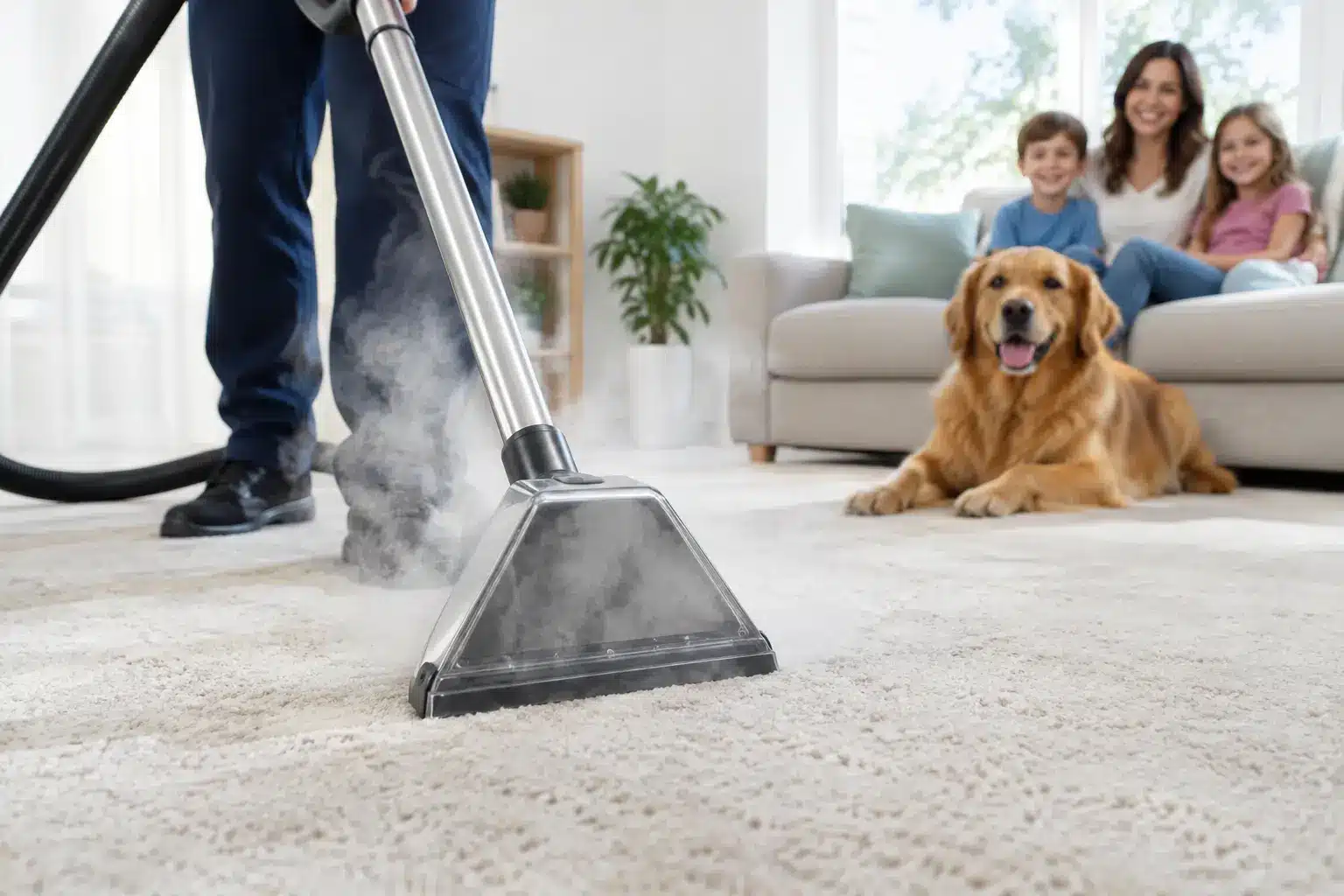
Cleaning professionals also use the phrase “steam cleaning” in more than one way. It can mean dry vapor steam, but it is also commonly used to describe hot water extraction for carpet and upholstery. These are not identical methods. Hot water extraction applies heated cleaning solution, agitates and loosens embedded soil, then uses powerful vacuum recovery to pull out moisture, contaminants, and cleaning residue.
For carpet and furniture, that extraction step is just as important as heat. Bacteria do not exist in isolation. They are often attached to dirt, oils, spills, and organic residue. Removing that material helps improve the cleanliness of the surface rather than simply heating what is left behind.
Heat alone is not the whole cleaning job
A handheld steam unit can be useful for certain small, hard-surface tasks. It may help loosen grime along a ceramic or porcelain tile edge, refresh a tightly defined area, or address residue on a durable surface. However, it has limitations when the problem is deep soil, widespread contamination, or moisture trapped below the surface.
Using too much steam on carpet or upholstery can create another concern: over-wetting. If a fabric, carpet backing, pad, or cushion stays damp for too long, moisture can contribute to musty odors and create conditions that are harder to manage. Steam can also damage heat-sensitive materials, loosen adhesives, distort some fibers, or leave behind soil that was loosened but not extracted.
A high-quality cleaning process is built around control. The technician needs to manage solution temperature, cleaning chemistry, agitation, dwell time, extraction strength, and drying conditions. One setting or one pass does not fit every surface.
For example, a busy hallway with embedded soil needs a different approach than a lightly used bedroom. A heavily used office chair may need targeted upholstery cleaning, while ceramic tile and grout may require a dedicated process to break up the buildup that ordinary mopping leaves behind.
What professional hot water extraction does differently
Professional hot water extraction is designed to clean beyond the visible surface. The system applies heated solution where appropriate, lifts the soil bonded to the fibers, and recovers the dirty water with strong vacuum power. Truck-mounted equipment can provide the heat and extraction performance needed for a more thorough cleaning and faster drying than many rental or consumer machines.
The difference is easy to understand: cleaning solution must reach the soil, but dirty solution must also come back out. If the machine leaves behind too much moisture or residue, the carpet can resoil more quickly and may not feel as fresh as it should.
At Spurling’s Carpet Cleaning, the focus is a multi-step process rather than a one-pass surface treatment. That means evaluating the material and level of soil, addressing spots appropriately, using professional-grade equipment, and extracting thoroughly. It is how a cleaning service earns the standard of Thee Longest-Lasting Clean.
Professional extraction also supports shorter dry times when performed correctly. Faster drying is not just convenient. It helps you get back to normal use sooner and reduces the window in which damp fibers can develop a stale smell.
Bacteria reduction is not the same as disinfection
This distinction matters, especially for health-conscious households and businesses. Cleaning removes soil and can reduce bacteria by physically removing contamination. Disinfection is a separate claim and usually requires a product registered for that purpose, used exactly according to its label directions, including the required wet contact time.
Steam may reduce bacteria on a properly treated surface, but it should not automatically be described as full disinfection. Results vary with temperature, contact time, surface type, soil load, and technique. No responsible cleaner should promise that every microorganism has been eliminated from every inch of carpeting, upholstery, tile, or grout.
Steam cleaning also does not replace practical hygiene. High-touch surfaces such as door handles, light switches, faucets, keyboards, and phones need their own routine. If there has been a sewage backup, a significant water intrusion, or a situation involving known infectious contamination, the right response may require specialized remediation rather than standard cleaning.
Where steam-based cleaning is most useful
When used correctly, heat and extraction are especially valuable in spaces where soil buildup affects appearance, odors, and comfort. Carpeted traffic lanes collect outdoor debris and oils. Upholstered furniture absorbs body oils, food residue, and everyday dust. Ceramic and porcelain tile can look dull when grime settles into grout lines.
A professional cleaning plan can make sense when you notice any of the following:
- Carpet traffic lanes that remain dark after vacuuming
- Upholstery that looks dull, feels sticky, or holds everyday odors
- Tile grout that has become noticeably darker than the surrounding tile
- Spots that return after home spot treatment
- A stale indoor smell that improves only temporarily after air freshener
These signs do not prove a bacteria problem, but they do tell you that ordinary surface cleaning is no longer enough. Removing the source of the buildup is more useful than covering it up.
How to get better results between professional cleanings
Routine care makes professional cleaning more effective and helps your home or business stay cleaner longer. Vacuum high-traffic carpet areas slowly and often, not just when dirt is visible. Address spills promptly by blotting rather than rubbing, because rubbing can push material deeper into fibers and spread the spot.
Avoid saturating carpet or furniture with store-bought spot removers. More product is not always better. Excess solution can leave a sticky residue that attracts new soil, and some products can alter color or texture. Test any product in a hidden area first and follow its directions.
For tile, regular dry soil removal and neutral cleaning can help prevent a heavy film from building up. Skip harsh acids and abrasive tools unless you know the surface can safely handle them. Ceramic and porcelain tile are durable, but grout still needs the right chemistry and technique.
Good indoor habits matter as well. Use entry mats, remove or wipe footwear during messy weather, keep humidity under control, and do not let spills sit. These simple steps reduce the soil and moisture that make surfaces harder to maintain.
The practical answer for a cleaner space
Does steam cleaning kill bacteria? Under the right conditions, heat can reduce bacteria, and professional hot water extraction adds the crucial benefit of removing the soil and moisture associated with it. Yet the best results come from treating steam cleaning as a complete cleaning system, not a magic sanitizing shortcut.
If your carpet, upholstery, or ceramic and porcelain tile needs more than a surface refresh, choose a service that explains its process, respects the materials in your space, and has the equipment to remove what it loosens. A truly clean result should look better, feel better, dry properly, and hold up long after the appointment is over.