A textured tile floor can look dirty even after you mop it. The raised pattern that gives ceramic or porcelain tile its slip-resistant character also collects soil, cleaner residue, cooking oils, and fine grit in thousands of tiny low spots. Effective textured tile cleaning is not about making the floor wet. It is about breaking loose what a mop leaves behind, then fully removing it.
That distinction matters in kitchens, entryways, bathrooms, laundry rooms, commercial cleaning spaces, and rentals. When buildup remains in the texture, tile can develop a dull, uneven appearance and grout lines often darken faster. Worse, repeated mopping with the wrong products can leave a film that attracts even more dirt.
Why Textured Tile Is Harder to Clean
Smooth tile gives soil fewer places to hide. Textured ceramic and porcelain tile do the opposite. Their ridges, pits, and embossed finishes create miniature traps for debris. Shoes carry in grit. Cooking residue settles near work areas. Everyday cleaners leave behind detergent or mineral deposits when they are not rinsed away completely.
The result is frustrating: a floor may feel clean underfoot but still look gray, blotchy, or dingy from across the room. Many homeowners assume the tile itself has changed color. Often, the original color is simply buried under embedded soil and residue.
Grout compounds the issue. Because grout is more porous than glazed tile, it absorbs spills and ground-in dirt quickly. A basic mop may spread dirty water across the floor and push it into grout joints rather than lifting it out. That is why an apparently clean floor can continue to look worn after a weekend of scrubbing.
The Problem With Mops and Store-Bought Cleaners
Mopping has a place in routine floor care, but it is maintenance, not deep cleaning. A mop cannot create enough agitation to reach the low points of a heavily textured surface. It also cannot reliably extract loosened contamination. If the water in the bucket is dirty, the floor may receive a diluted layer of that same soil with every pass.
Some popular products create another problem. High-gloss cleaners, soaps, and overly concentrated detergents can leave a sticky or hazy film. The floor may initially look shiny, yet the shine fades as fresh dust and dirt bond to the residue. Heavy use of harsh chemicals can also be a poor choice for grout and surrounding surfaces.
Aggressive hand scrubbing is not always the answer, either. It can take hours, produce inconsistent results, and put unnecessary strain on your back and knees. A stiff brush may help with a small spot, but it does not provide the controlled cleaning and recovery needed for an entire floor.
What Professional Textured Tile Cleaning Does Differently
A quality tile and grout cleaning process addresses the floor in stages. Each step has a purpose: identify the type of soil, apply the correct cleaning solution, agitate the texture and grout, then remove the loosened buildup rather than leaving it behind.
At Spurling’s Carpet Cleaning, trained technicians clean ceramic and porcelain tile using a multi-step approach designed for real-world buildup. The goal is not a quick surface pass. It is a noticeably cleaner floor with refreshed grout lines and no leftover cleaning residue to attract soil.
First, the Floor Is Evaluated
Not every floor needs the same treatment. The cleaning approach depends on the tile finish, the amount of buildup, grout condition, traffic patterns, and the type of contamination present. An entryway with winter salt and tracked-in grit needs different attention than a kitchen floor with cooking film.
This assessment also helps set honest expectations. Deep cleaning can dramatically improve many ceramic and porcelain tile floors, but permanent discoloration, damaged grout, cracks, worn coatings, and old staining may not disappear completely. Premium service means being clear about what cleaning can restore and what may require repair or replacement.
Then, Soil Is Loosened From the Texture
Professional-grade cleaning solutions are applied to break down oily residue and bonded soil. Proper dwell time matters. If a solution is wiped away too quickly, it has not had time to work into the grooves and grout lines.
Next comes mechanical agitation. This is where textured floors benefit most from professional equipment and technique. Agitation reaches into the uneven surface so soil can be released instead of merely pushed around. Corners, edges, traffic lanes, and areas around fixtures receive the detailed attention that broad mopping often misses.
Finally, Dirty Solution Is Extracted
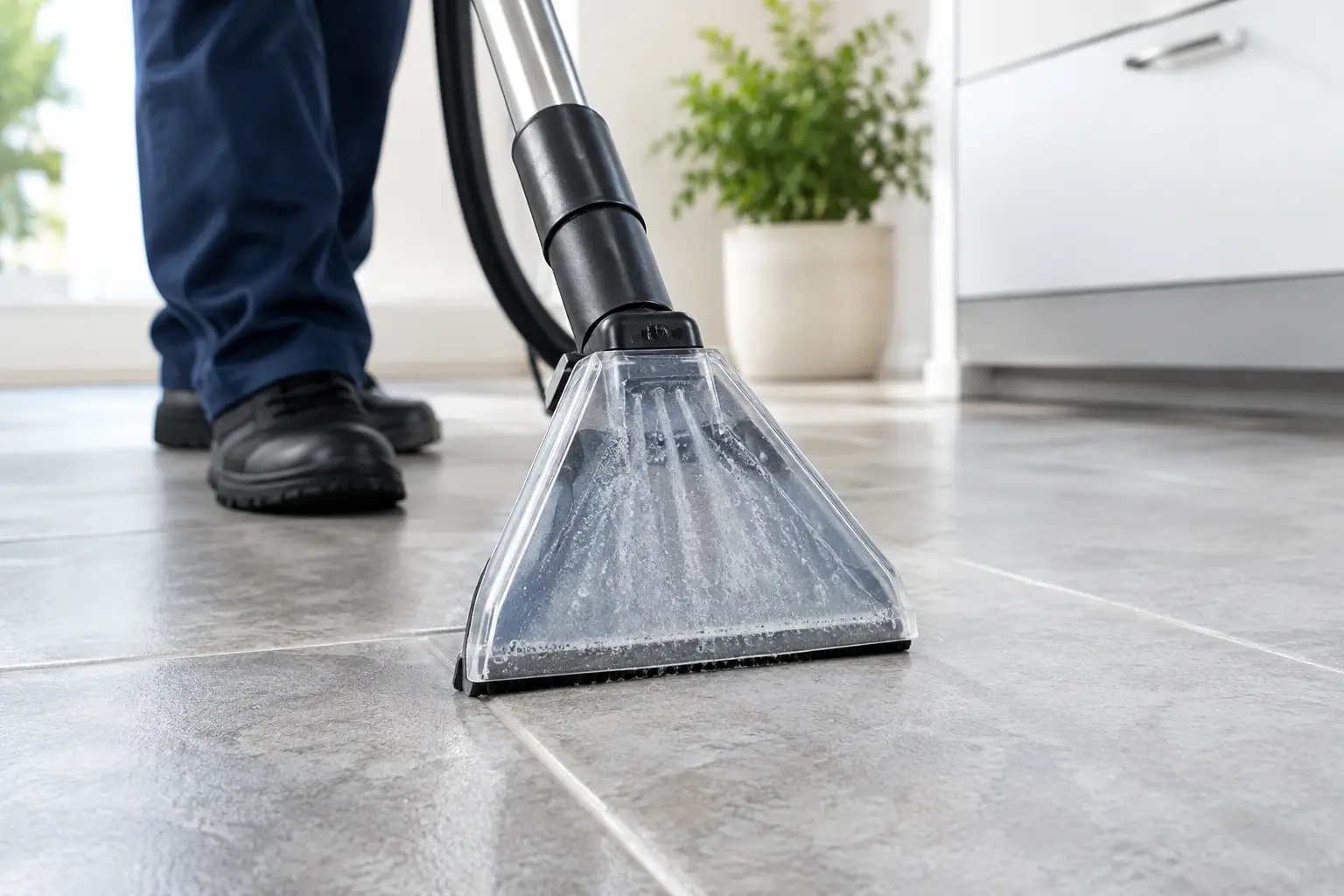
The extraction stage separates a true deep cleaning from a cleaning product application. High-powered, truck-mounted equipment uses hot water extraction to rinse away loosened soil and recover dirty water from the surface. The objective is a clean finish, not a floor coated in detergent.
This method can make a significant visual difference on tile that has appeared permanently dull. Colors often look clearer, texture looks more defined, and grout lines appear brighter because the hidden buildup has been removed. Drying times vary with the floor, ventilation, humidity, and amount of rinsing needed, but proper extraction helps avoid leaving excessive moisture behind.
When Your Tile Is Due for Deep Cleaning
A floor does not need to look terrible before professional service makes sense. The best time to schedule service is often when regular care no longer delivers the results it used to.
Look for a few telling signs: the tile stays dull right after mopping, grout looks darker in walkways, bare feet feel a film on the surface, or the floor has uneven-looking areas that do not match the surrounding tile. A recurring haze is another common clue that cleaning residue has built up over time.
For busy households and commercial spaces, frequency depends on traffic. A lightly used bathroom may need professional attention less often than a main entrance, break area, or heavily used kitchen. Seasonal weather also affects local floors. Salt, slush, and grit tracked in during colder months can quickly work into textured tile and grout.
Keep the Freshly Cleaned Look Longer
Once the floor has been professionally cleaned, simple habits can slow the return of buildup. Sweep or vacuum dry debris frequently, especially near exterior doors. Grit is abrasive, and leaving it on the floor allows it to work into both tile texture and grout.
Use a neutral floor cleaner sparingly and follow dilution instructions exactly. More product does not mean more clean. In fact, too much cleaner is one of the fastest ways to create a residue problem. Change mop water often, use clean pads, and avoid applying waxes or shine-enhancing products unless they are specifically approved for your floor.
Place quality mats at entrances and clean spills promptly. In kitchens, wiping up grease splatter before it has time to settle can make a substantial difference. These small steps will not replace periodic professional cleaning, but they protect the results and help your floor stay cleaner between visits.
Choose Results Over a Quick Surface Pass
Textured tile is designed to be practical, durable, and attractive. It should not require endless scrubbing just to look presentable. When mopping no longer reaches the grime embedded in the surface, a detailed ceramic and porcelain tile cleaning service can restore the cleaner, more even appearance you expected from the start.
If your floor looks darker than it should, feels filmy after cleaning, or has grout that never seems to brighten, treat it as a cleaning-system problem rather than a permanent flaw. The right process, equipment, and experienced technician can make the difference between a floor that is merely wet and a floor that actually looks clean.