A urine spot can look small, then announce itself again when the room gets warm or humid. The reason is simple: urine rarely stays only on the carpet surface. To treat carpet urine spots safely, you need to address the moisture, residue, backing, and sometimes the pad beneath the carpet without damaging fibers or setting the stain.
Quick action helps, but aggressive cleaning does not. Bleach, ammonia, excessive soap, and repeated soaking can turn one spot into a larger cleaning problem. A careful process gives you the best chance of improving the area while protecting your carpet and the indoor air in your home.
Treat Carpet Urine Spots Safely: Start With Containment
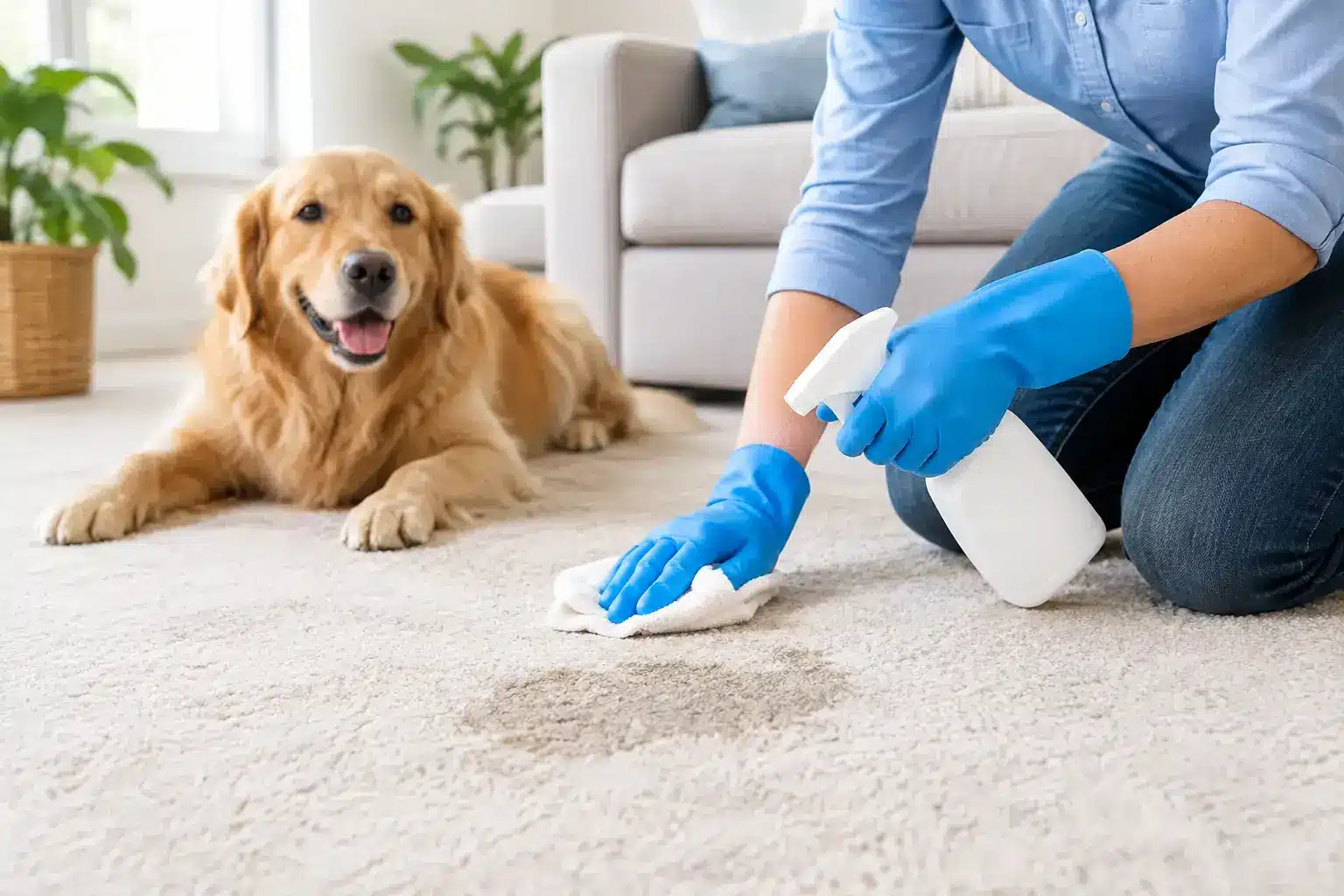
If the spot is fresh, begin by blotting it immediately with clean white towels or plain paper towels. Press down firmly and replace towels as they become wet. Do not scrub. Scrubbing can force urine deeper into the carpet backing, spread it outward, and roughen the carpet pile.
Continue blotting until the towels come up only slightly damp. If the affected area is large, stand on a folded towel for a few seconds to apply even pressure. This pulls up more moisture than wiping with your hand.
Avoid adding large amounts of water right away. It is tempting to rinse the area heavily, especially when you are worried about odor. But over-wetting can push contamination farther into the pad and subfloor, make drying slower, and create a bigger odor issue later. The goal is controlled moisture removal, not flooding the spot.
Identify What You Are Dealing With
Fresh urine is usually easier to treat than an older, dried spot. A fresh spot may appear darker than the surrounding carpet and feel damp. An older spot may leave yellowing, stiffness, or a recurring odor that becomes more noticeable on humid days.
The visible stain is not always the full size of the problem. Urine can wick outward and upward as the carpet dries, which is why a spot sometimes seems to reappear after a homeowner has cleaned it. The carpet face may look better while residue remains lower in the carpet construction.
Color matters, too. Light-colored carpet can show yellowing quickly, while darker carpet may hide discoloration but still hold odor. If you have no idea how long the spot has been there, treat it as an older contamination issue and avoid assuming a surface cleaner will solve it.
Use the Right Type of Cleaner, Carefully
For urine residue, an enzyme or bacteria-based urine treatment is generally the right category of product. These products are designed to break down the organic material that causes lingering odor. Choose a cleaner labeled for use on carpet and follow its directions exactly.
Before applying anything broadly, test the product in a hidden area of the carpet. Apply a small amount, blot it, and allow it to dry completely. Look for color change, texture change, or dye transfer. This small step matters, especially on patterned carpet or carpet with vivid colors.
Apply only enough product to reach the affected fibers without saturating the entire area. For a fresh, shallow spot, a light and even application may be enough. For an older spot, the treatment may need to reach beneath the surface to be effective, but this is where do-it-yourself cleaning has limits. Soaking a carpet without the ability to thoroughly extract and dry it can create more trouble than it solves.
Give the product its required dwell time. Enzyme treatments need time to work. Spraying, immediately blotting, and declaring the job finished often leaves odor-causing material behind. After the recommended dwell time, blot up excess moisture with clean towels and allow the area to dry completely.
Keep These Chemicals Out of the Process
Never mix cleaning products. Combining common household cleaners can create hazardous fumes or leave chemical residues that are difficult to remove from carpet.
Ammonia is a poor choice for urine spots because urine contains ammonia-related compounds. Its smell can also be confusing in a home where animals are present. Chlorine bleach should not be used on carpet. It can permanently remove color, weaken fibers, and leave harsh residue. Strong alkaline cleaners, heavy degreasers, and dish soap are also risky because they may leave the carpet sticky, attract soil, or cause rapid resoiling.
Hydrogen peroxide is often promoted as a stain remedy, but it is not a universal answer. It can lighten carpet dyes, especially when used at stronger concentrations or left in place too long. If you use any peroxide-based product, it should be a carpet-safe formula, spot-tested first, and used with caution.
Drying Is Part of Safe Treatment
A treated spot needs to dry quickly and completely. Open airflow across the area with a fan, and keep people off the damp carpet until it is dry. Avoid placing furniture over the spot or covering it with a rug while moisture remains.
Slow drying can lead to odor returning from the backing or pad. It can also cause brownish discoloration to wick up as moisture moves through the carpet. If the carpet still feels damp the next day, or if the affected area is larger than expected, it is time to stop adding products and consider professional help.
Do not use intense heat from a hair dryer or space heater directly on the carpet. High heat can affect some carpet fibers, set certain stains, and create uneven drying. Steady room-temperature airflow is the safer approach.
When a Spot Needs Professional Urine Treatment
Professional service is often the smarter decision when odor returns after cleaning, the spot keeps reappearing, or the affected area is large. It is also worth calling when you are dealing with multiple incidents, urine that has dried repeatedly, or contamination near baseboards, seams, stairs, or furniture edges.
These situations require more than a quick surface spray. A trained technician can evaluate the carpet face, backing, pad, and surrounding area to determine how far the contamination traveled. The correct treatment depends on the carpet fiber, the condition of the stain, the amount of contamination, and whether urine reached materials below the carpet.
At Spurling’s Carpet Cleaning, urine spot concerns are approached with the same care given to every detailed cleaning issue: inspect first, use the appropriate treatment, and clean with professional-grade extraction equipment when conditions call for it. Hot water extraction can remove suspended soil and cleaning residue, but urine problems may require additional targeted steps based on what is found in the carpet.
There is no honest one-size-fits-all promise with urine. Some spots respond well to treatment, while older or deeply saturated areas may have permanent color change or require more extensive corrective work. A reputable professional should explain the likely outcome clearly before work begins, rather than oversell what a surface cleaning can do.
Protect the Carpet After the Spot Is Gone
Once the area is clean and dry, check it again over the next few days. Smell the carpet at close range, especially when the room is warm. Look for discoloration, stiffness, or a darker ring around the original spot. Catching a recurring issue early is easier than waiting until it has spread or become embedded.
For future incidents, keep white towels and a carpet-safe urine treatment accessible. Fast blotting and measured application are far better than frantic scrubbing. If urine spots are becoming a repeat issue, a professional assessment can save your carpet from repeated soaking, harsh chemicals, and cleaning attempts that only mask the problem.
A clean carpet should feel like a relief, not a question mark. Treat the spot gently, dry it thoroughly, and bring in experienced help when the odor or stain tells you the problem goes deeper than the surface.