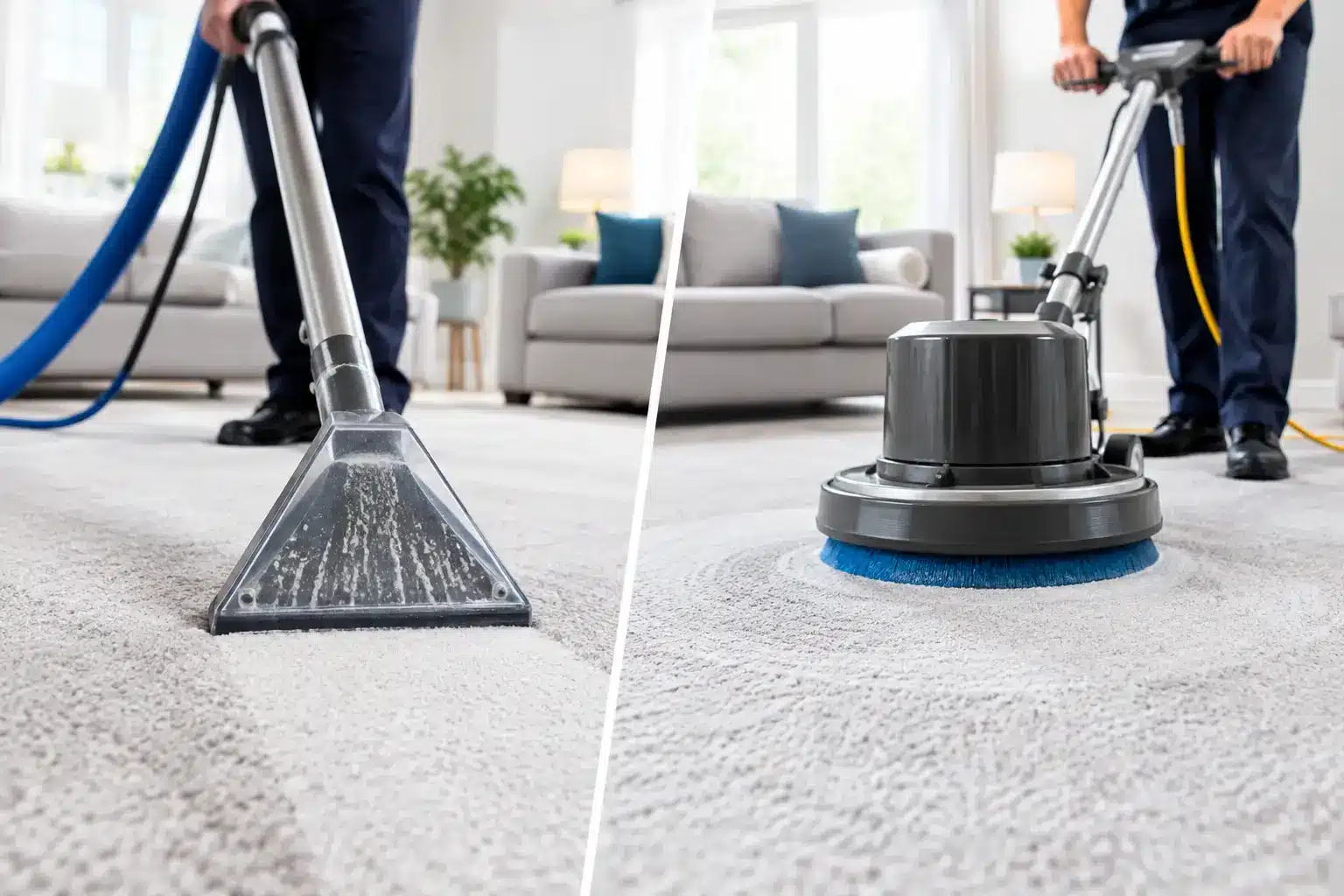
A carpet can look better after a surface cleaning and still hold a surprising amount of soil below the fibers. That is the real difference in carpet extraction versus bonnet cleaning: one method is designed to flush out embedded buildup, while the other is primarily designed to improve the carpet’s visible appearance at the surface.
For homeowners, rental property managers, and business owners, the right choice depends on what the carpet needs right now. If traffic lanes are dark, spots keep returning, or the carpet simply does not feel clean, a deeper process matters more than a quick cosmetic improvement.
What Is Hot Water Extraction?
Hot water extraction is the deep-cleaning method many people call steam cleaning, although the cleaning process itself uses heated water and professional cleaning solution rather than dry steam. A trained technician pre-treats the carpet, agitates areas that need extra attention, then uses a powerful extraction tool to rinse and remove loosened soil, cleaning solution, and moisture.
With a truck-mounted system, the extraction power is a major part of the result. It is not enough to put cleaning solution into a carpet. The system must also remove as much suspended soil and moisture as possible. That is how carpet fibers are refreshed instead of simply dampened and brushed.
This method is especially well suited to synthetic residential carpet and commercial carpet with accumulated traffic soil. It reaches beyond the tips of the fibers where grit, oily residue, allergens, and tracked-in debris tend to settle. Properly performed extraction can also help reduce the conditions that cause spots to wick back as a carpet dries.
At Spurling’s Carpet Cleaning, the focus is a multi-step hot water extraction process built around deep soil removal, careful spot treatment, and efficient drying. The goal is not a temporarily brighter carpet. It is Thee Longest-Lasting Clean possible for the condition of the carpet.
What Is Bonnet Cleaning?
Bonnet cleaning is a low-moisture method often used for interim maintenance in commercial cleaning spaces. A machine with a rotating pad, called a bonnet, moves over the carpet after a cleaning product is applied. The pad absorbs soil from the upper portion of the carpet pile and can make a carpet look noticeably cleaner in a relatively short time.
That fast visual improvement is why bonnet cleaning has a place in certain maintenance programs. An office, lobby, or other business space that needs to remain open may value the short drying time and quick appearance refresh.
But bonnet cleaning is not built to flush large amounts of embedded soil from deep within the carpet. The rotating action primarily works near the surface. On heavily soiled carpet, it may remove enough dirt to improve the look while leaving deeper contamination and cleaning residue behind. If the carpet has not been deeply cleaned in a while, that limitation becomes more obvious.
Carpet Extraction Versus Bonnet Cleaning: The Real Differences
The simplest way to compare the two methods is to look at their purpose. Hot water extraction is restorative deep cleaning. Bonnet cleaning is usually appearance-focused maintenance.
Soil removal
Extraction has the advantage when soil has worked into the carpet backing and lower fibers. The combination of pre-treatment, agitation, rinse water, and strong vacuum recovery is intended to remove what ordinary vacuuming and surface methods cannot reach.
Bonnet cleaning can pick up surface soil well, particularly where carpet is lightly soiled and regularly maintained. Yet a clean-looking traffic lane is not always a deeply cleaned traffic lane. That distinction matters in busy homes, rentals between occupants, and business spaces where foot traffic is constant.
Drying time
Bonnet cleaning generally dries faster because it uses less moisture. That can be useful when a space needs a quick touch-up.
Professional hot water extraction uses more water, but that does not mean carpets should stay wet for days. Proper equipment, controlled water use, strong extraction, airflow, and indoor humidity all influence dry time. In many situations, carpets are dry within several hours, though heavier soil conditions, dense carpet, weather, and ventilation can extend that window.
A good cleaning company should set realistic expectations rather than promise the same drying time for every carpet. Opening windows when humidity is low, running ceiling fans, and keeping the thermostat at a comfortable setting can help carpets dry more efficiently.
Residue and recurring spots
One concern with any cleaning method is residue. If excess detergent remains in carpet, it can attract new soil and cause the carpet to look dirty again sooner than expected.
A properly performed extraction process includes rinsing and powerful recovery, which helps reduce residue. This is one reason deep cleaning often produces a longer-lasting result. Bonnet cleaning can be effective as maintenance, but if it is repeatedly used without periodic extraction, soil and product buildup may become harder to manage.
Some spots also return because contamination below the surface migrates upward during drying. Extraction can improve the odds of removing that source, although no responsible cleaner should pretend every stain can be erased. Fiber type, prior treatments, age of the spill, dyes, bleach damage, and heat-set stains all affect what is possible.
Wear and carpet appearance
Both methods require correct technique. Aggressive bonnet cleaning, improper pads, or excessive repeated passes can stress carpet fibers, especially in the same high-traffic areas. It may also alter the texture of certain commercial carpet when used too aggressively.
Extraction is gentler when performed by educated technicians using the correct tools, solutions, and moisture control for the carpet. It does not rely on scrubbing the same area merely to create a quick visual change. Instead, the cleaning system works to suspend and remove soil while protecting the carpet’s appearance.
When Bonnet Cleaning Makes Sense
Bonnet cleaning is not a bad method. It is simply not the same service as deep extraction. It can make sense when a business needs a fast appearance refresh between scheduled deep cleanings, when soil is light and mostly on the surface, or when an area must return to use very quickly.
Think of it as maintenance, not a substitute for periodic restorative cleaning. A well-run commercial carpet care plan may use low-moisture maintenance at select intervals and schedule hot water extraction to remove the soil that inevitably builds up below the surface.
For a homeowner preparing for guests, bonnet cleaning may sound appealing because of the fast dry time. But if the reason for cleaning is dingy traffic lanes, accumulated soil, sticky residue, or stubborn spots, the quicker method can be disappointing. The carpet may look improved briefly without receiving the thorough reset it needs.
When Extraction Is the Better Choice
Choose hot water extraction when the priority is cleaner carpet from top to bottom, not just a rapid surface change. It is usually the stronger choice after a long period without professional cleaning, before or after a move in a rental, after a busy season in a home, or when a commercial carpet is starting to show ground-in traffic patterns.
It is also the better fit when you have already paid for a bargain cleaning that left carpets looking better for only a few days. A low price can become expensive when the cleaner skips pre-treatment, uses weak recovery equipment, rushes through the job, or leaves behind residue that attracts fresh soil.
The best results come from matching the process to the condition of the carpet. That means inspecting the fibers, identifying spots, treating problem areas appropriately, and using enough cleaning power to remove soil without over-wetting the carpet. There is no one-size-fits-all pass with a machine.
A Cleaner Carpet Should Last Beyond the First Look
The choice between extraction and bonnet cleaning should not be based on which method sounds faster. It should be based on whether your carpet needs maintenance or a true deep clean. If the carpet is carrying months of foot traffic, surface-only cleaning may be a short-lived fix.
For homes and businesses that value professional care, trained technicians, and cleaning that holds up after the carpet dries, hot water extraction is often the smarter investment. A carpet that feels fresh, looks even, and stays cleaner longer gives you a result worth coming home or coming back to.