
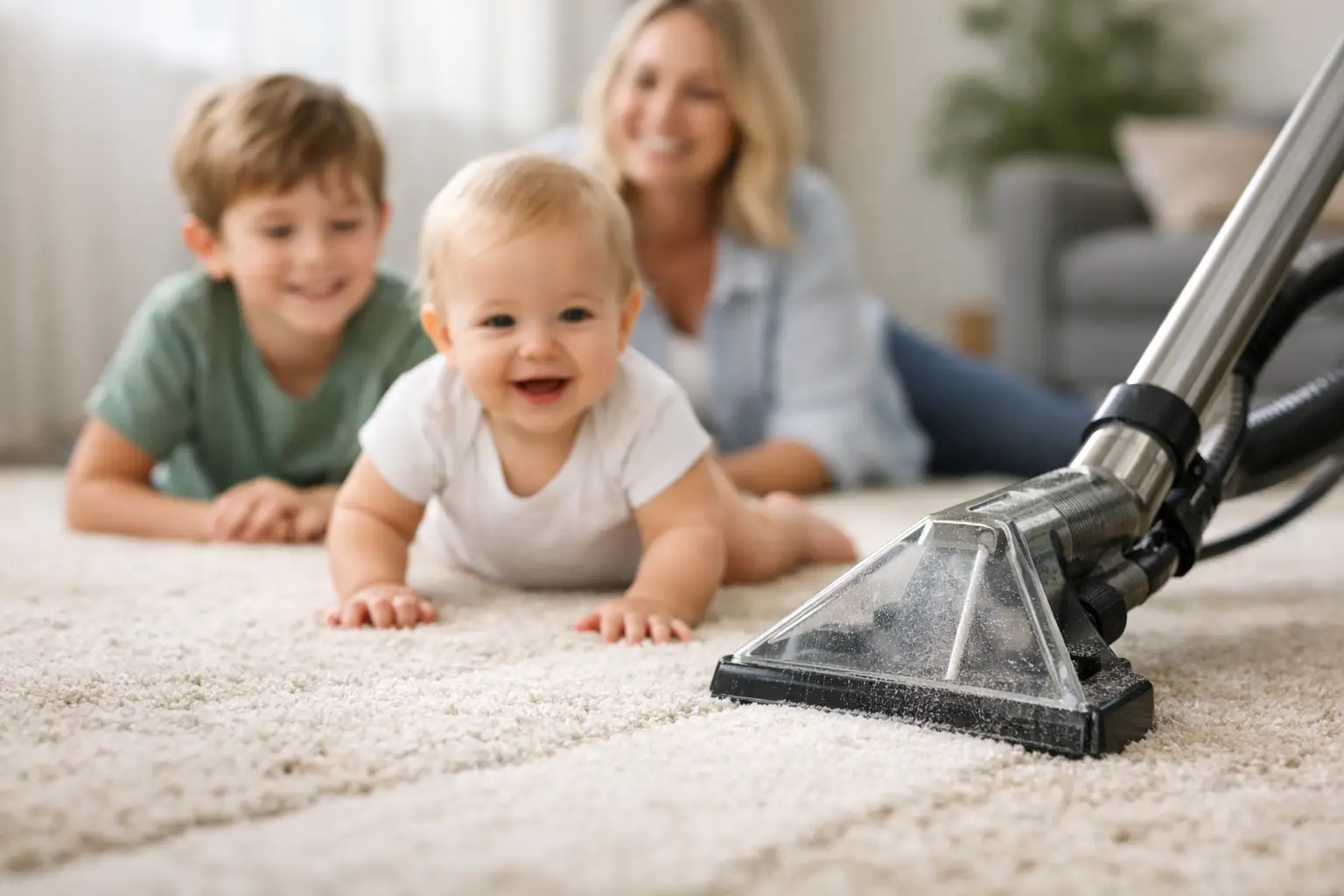
A carpet can look clean from the doorway and still hold the particles that make a room feel uncomfortable. Pet dander, pollen, dust, outdoor soil, and fine debris settle deep into the fibers, especially in high-traffic areas where shoes, paws, and daily life keep pressing them down. Carpet cleaning for allergy relief is not about chasing a spotless appearance. It is about removing the buildup your regular vacuum cannot always reach.
For Rochester-area families, this matters through every season. Spring pollen gets tracked inside, summer humidity can make indoor air feel heavier, and winter keeps homes closed up for long stretches. If someone in your home wakes up congested, sneezes more in certain rooms, or feels worse after spending time on the floor with kids or pets, the carpet may be contributing to the problem.
Why Carpets Can Hold Allergy Triggers
Carpet acts like a filter. That can be a benefit because it captures particles that might otherwise remain airborne. The downside is that the filter needs to be cleaned properly. Without regular maintenance, foot traffic and furniture pressure push dry soils and allergens farther into the carpet pile.
Common allergy triggers found in carpeting include dust mite debris, pet dander, pollen, mold spores, and microscopic particles brought in from outdoors. A carpet does not create all of these contaminants, but it can become a storage place for them. Every step, vacuum pass, or playful pet can disturb some of that material and move it back into the air.
This is also why a quick rental-machine cleaning may disappoint. Surface moisture alone is not the same as thorough soil removal. If cleaning leaves residue behind, dries slowly, or does not adequately extract suspended soil, the carpet may look brighter for a short time without delivering the deeper clean a sensitive household needs.
How Carpet Cleaning for Allergy Relief Works
The goal is not to promise a cure for allergies. Allergies have many causes, and carpet cleaning should be one part of a sensible indoor-cleaning routine. A professional deep clean can, however, reduce the accumulation of irritants in the carpet and make the space easier to maintain.
Hot water extraction is often the preferred method for carpets carrying embedded soil. A trained technician applies the appropriate cleaning solution, agitates the fibers as needed, rinses thoroughly, and uses powerful extraction to pull moisture and loosened debris from the carpet. With truck-mounted equipment and a multi-step process, more of the cleaning action happens below the visible surface, where ordinary vacuuming has limits.
The rinsing step is particularly important. Cleaning solutions should help release soil, not remain in the carpet as a sticky residue that attracts more dirt. When the process is done correctly, homeowners get cleaner fibers, a fresher feel underfoot, and shorter drying times than they may expect from lower-powered equipment.
At Spurling’s Carpet Cleaning, the focus is on deep, long-lasting results rather than a fast cosmetic pass. That means evaluating the carpet’s condition, treating problem areas appropriately, and using a cleaning system designed to remove what is hiding in the fibers, not simply brighten the traffic lanes.
Vacuuming Helps, but It Has a Different Job
A quality vacuum with a sealed system and HEPA filtration can be a valuable tool for allergy-conscious homes. Vacuuming once or twice a week, and more often in homes with pets or heavy traffic, helps remove loose dry particles before they settle deeper.
But even an excellent vacuum cannot fully replace professional extraction. Vacuums are strongest at removing dry debris near the surface. They do not rinse away the fine soil, oily residue, and compacted buildup that can cling to carpet fibers over time. Think of vacuuming as ongoing maintenance and deep cleaning as the reset that keeps the carpet from becoming overloaded.
When Should You Schedule a Deep Cleaning?
For many households, professional carpet cleaning every 12 to 18 months is a practical baseline. Homes with pets, young children, frequent visitors, smokers, or family members with allergy sensitivities may benefit from cleaning more often. The right schedule depends on what your carpet experiences, not just what it looks like.
Do not wait only for visible staining. By the time traffic lanes appear dark or the carpet feels matted, there may already be a considerable amount of embedded soil. Scheduling before the carpet reaches that point can preserve its appearance and make each cleaning more effective.
There are also moments when an earlier appointment makes sense: after a high-pollen season, after indoor renovation work, when a pet accident leaves odor behind, or when moving into a previously occupied home. Property managers and business owners should consider traffic patterns too. An office entryway or waiting area can collect outdoor debris quickly, even when it receives routine janitorial attention.
What Makes a Real Difference for Sensitive Households
Deep carpet cleaning works best alongside a few practical habits. Keep entry mats clean, remove shoes when possible, and address spills or pet accidents quickly. Wash bedding regularly, replace HVAC filters on schedule, and maintain reasonable indoor humidity. These steps reduce the amount of new material that settles into the carpet between professional visits.
Upholstery deserves attention as well. Sofas, chairs, and fabric dining seats collect dander and dust much like carpet does. If a family member reacts most strongly while relaxing on the couch, carpet may not be the only soft surface that needs cleaning. A whole-room approach can make more sense than treating one surface while leaving another heavily used fabric untouched.
Be cautious with heavy fragrances and harsh DIY products. A strong scent can make a room seem clean, but fragrance is not proof of soil removal. Some people with respiratory sensitivities also find heavily scented products irritating. The better standard is a carpet that has been thoroughly cleaned, properly rinsed, and dried efficiently.
Drying Time Matters More Than Most People Think
A carpet that stays wet too long can be inconvenient and, in certain conditions, can create avoidable concerns. Proper extraction removes a substantial amount of water during the cleaning process, helping carpets dry faster. Airflow, indoor temperature, carpet type, and humidity all affect the final drying time, so no honest company should promise the exact same result in every home.
Homeowners can help by running ceiling fans, keeping the thermostat at a comfortable setting, and limiting foot traffic until the carpet is dry. Your technician should give you clear, straightforward after-care instructions instead of leaving you to guess.
Choose Cleaning That Is Built Around Results
Not every carpet needs the same treatment. Wool, delicate fibers, heavily soiled synthetic carpet, pet-affected areas, and commercial carpet tiles each require the right products, process, and technician judgment. The cheapest offer is not always the best value if it skips inspection, leaves spots behind, or requires another cleaning sooner than expected.
Look for a company that explains what it is doing, uses professional-grade extraction equipment, respects your home or business, and stands behind its work. Friendly, uniformed technicians and no-pressure recommendations matter because cleaning service should feel dependable from the first conversation through the final walkthrough.
A cleaner carpet will not replace medical care or eliminate every source of allergens in a home. It can give your household a cleaner foundation – one where the dust, dander, and tracked-in soil beneath your feet are no longer being ignored. If your carpets have been carrying more than they show, a professional deep cleaning is a practical place to start.