That smell usually tells the truth before the stain does. If you are searching for how to remove pet urine odor, you are probably dealing with more than a simple surface mess. Pet urine has a way of soaking past the carpet fibers, into the backing, pad, subfloor, and even nearby upholstery. Wipe the spot, spray a fragrance, and the room may smell better for an hour. Then the odor comes back, often stronger.
That is the frustrating part for homeowners and property managers alike. Pet urine odor is stubborn because it is not just dirt. It is a biological contamination problem. The right fix depends on how old the accident is, what surface it reached, and whether previous cleaning attempts made it harder to remove.
Why pet urine odor keeps coming back
Fresh urine starts one way, but old urine becomes something else entirely. As it dries, the liquid leaves behind concentrated waste compounds and crystals that can stay buried in carpet and fabric. Humidity can reactivate those deposits, which is why a room may smell worse on rainy days or after steam from a shower drifts down the hall.
This is also why many store-bought sprays disappoint people. They often mask odor instead of neutralizing it at the source. Some products work reasonably well on a very fresh accident caught quickly on a washable surface. They are much less effective when urine has soaked through multiple layers or has been there for weeks or months.
How to remove pet urine odor from fresh accidents
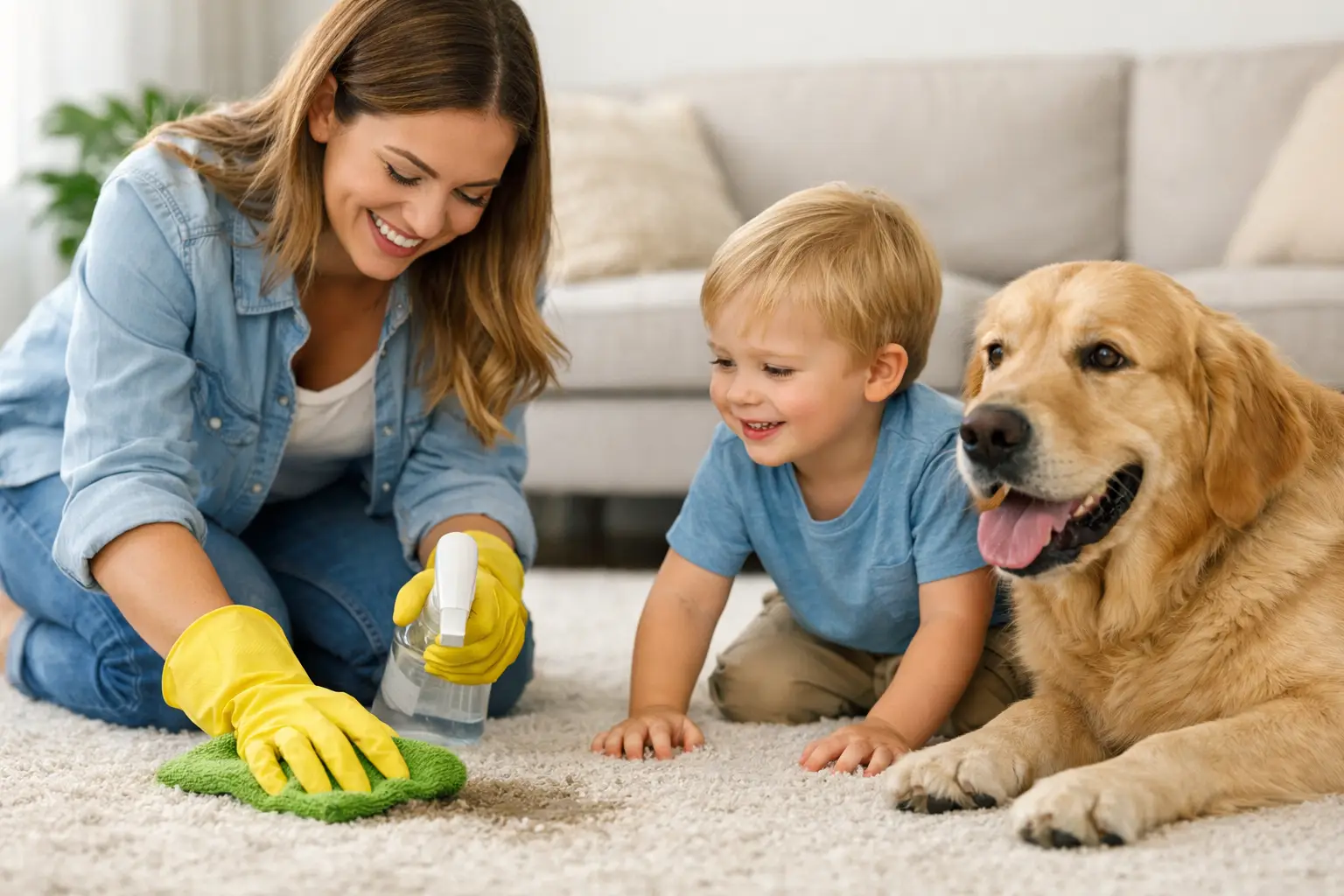
If the accident just happened, speed matters. Start by blotting, not scrubbing. Use white towels or paper towels and press firmly to absorb as much liquid as possible. Scrubbing can spread the urine and push it deeper into the fibers.
After blotting, rinse lightly with cool water and blot again. The goal is dilution without flooding the area. Too much water can carry the urine farther into the pad, which creates a bigger problem than the one you started with.
Next, apply an enzyme-based urine treatment made for pet accidents. This type of product is designed to break down the organic material causing the odor. Follow the label carefully. More product is not always better, and drying too quickly can limit how well the treatment works.
Let the area dry fully before judging the result. A damp carpet can still smell off. If the odor disappears once dry, you likely caught it early enough.
How to remove pet urine odor when the smell is old
Older urine odors require a different level of response. By that point, the contamination may be below the carpet surface, and simple spot treatment usually falls short. You may clean what you can see while leaving the real source untouched.
The first step is identifying the full extent of the affected area. That matters because the visible stain is often smaller than the odor zone. In many homes, the smell has spread farther than expected, especially if a pet returned to the same spot multiple times.
Enzyme treatments can still help, but they need enough contact time and enough reach to penetrate where the urine went. If the contamination is limited and has not reached the subfloor, a thorough treatment may solve it. If the urine has soaked deep into the cushion or wood underneath, the fix becomes more involved.
Carpet, pad, and subfloor all matter
This is where many do-it-yourself efforts break down. Carpet is only the top layer. Under it sits padding, which acts like a sponge. Under that may be wood or concrete, both of which can hold odor as well.
If urine has reached the pad, surface cleaning alone will not remove the smell for good. You may improve it temporarily, but lingering odor often remains trapped below. In more severe cases, the pad needs replacement, or the subfloor needs targeted sealing after contamination is addressed.
That does not mean every pet accident requires major restoration. It means the solution has to match the depth of the problem. A small fresh spot on a low-pile rug is very different from repeated accidents in a carpeted bedroom corner.
What not to do
The biggest mistake is over-wetting the area. People often pour water, vinegar, soap, or heavy amounts of deodorizer onto the spot hoping to flush it out. That can push contamination deeper and spread it wider.
Another common problem is using the wrong cleaner. Ammonia-based products can make the odor profile worse and may even attract pets back to the same place. Strong fragrances are also a poor substitute for real treatment. If a room smells like perfume and urine at the same time, the source is still there.
Heat can also be tricky. Some homeowners rent equipment or use a home machine without understanding that odor treatment is not just about extraction. If urine residues remain, cleaning can reactivate the smell rather than eliminate it.
When professional cleaning is the smarter move
If you have treated the same area more than once and the odor keeps returning, that is usually the point where professional help saves time and money. The reason is simple. A trained technician is not guessing. They are identifying contamination, choosing the right treatment, and using extraction methods built for deeper recovery.
High-end professional cleaning also matters because pet urine jobs are not all the same. Carpet type, age of the spot, prior chemicals used, and whether the issue affects furniture or area rugs all change the game. A quality company should explain the likely outcome honestly. Sometimes odor can be removed fully. Sometimes improvement is strong but not complete unless damaged materials are replaced. Straight answers matter.
For homeowners in the Rochester area, this is exactly why many people turn to experienced companies like Spurling’s Carpet Cleaning after home remedies fail. Advanced treatment, truck-mounted extraction, and a multi-step process give you a far better chance of removing the source instead of covering it up.
Upholstery and furniture need a careful approach
Pet urine on couches, chairs, and mattresses brings extra risk. These materials can be delicate, and over-saturating them can lead to odor spreading inside the cushion. The outer fabric may look fine while the filling underneath holds the smell.
The right approach depends on the fabric, cushion construction, and how much urine is present. Mild contamination on a cleanable fabric may respond well to targeted treatment. Heavier contamination can be much harder to resolve completely because internal materials do not dry quickly and may trap odor deep inside.
This is one of those situations where doing less is often smarter until you know what you are dealing with. A careful inspection beats aggressive scrubbing every time.
How to keep pets from returning to the same spot
Odor removal is not just about your nose. Pets can detect traces you cannot. If they still smell urine, they may revisit the area. That is why partial cleaning often turns one accident into a repeated habit.
Once the odor is properly treated, make the area less appealing during the reset period. Keep pets away from the spot when possible, clean nearby soiled items like rugs or blankets, and address any routine or medical issue if accidents are becoming frequent. Behavioral and health factors can be part of the problem, not just the flooring.
The real answer to how to remove pet urine odor
The honest answer is that it depends on where the urine went and how long it has been there. For a fresh accident, quick blotting and a proper enzyme treatment can work well. For older or repeated accidents, especially in carpet and upholstery, success usually requires deeper treatment and professional-grade extraction. And when contamination has reached the pad or subfloor, partial cleaning will rarely deliver lasting results.
People usually call for help after trying everything else. That makes sense. Nobody wants to pay for a service they do not need. But when the smell keeps coming back, the cheapest fix often becomes the most expensive one because it delays the right solution.
A cleaner home should actually smell clean, not just scented. If pet urine odor is hanging on, trust what your nose is telling you and deal with the source, not the cover-up.