A room can look spotless and still tell a different story the moment you walk through the door. Pet accidents, old spills, cooking residue, smoke, mildew, and moisture can settle into carpet backing, upholstery padding, grout lines, and subfloors. Real odor removal is not about adding a stronger fragrance. It is about locating the source, treating the affected material correctly, and removing the contamination that keeps the smell coming back. Here is how to remove carpet odors at the source instead of covering them up.
For homeowners, renters, property managers, and business owners, that difference matters. A quick spray may make a room tolerable for an afternoon. A professional process can help restore the space for the people who live, work, or visit there.
Why Odors Return After Cleaning
Most persistent odors are not sitting on the surface. They have traveled below it. When a pet urinates on carpet, for example, the liquid can pass through the fibers, into the backing and pad, and sometimes reach the subfloor. Surface cleaning may improve the appearance, but it cannot always reach every affected layer.
The same is true of spilled milk, food, vomit, dirty water, and moisture-related odors. As organic material breaks down, bacteria can produce odors that become stronger in warm or humid conditions. That is why a carpet may seem fine after cleaning, then smell again on a muggy Rochester day or when the heat turns on.
Smoke odors are another challenge. Tobacco, fireplace smoke, and cooking grease leave oily residues that cling to fibers and hard surfaces. They often require more than one treatment method because the source may be spread across furniture, carpeting, draperies, walls, and HVAC pathways.
A lasting result depends on what caused the odor, how long it has been there, how far it traveled, and what materials were affected. There is no honest one-size-fits-all answer. The right treatment begins with an inspection, not a perfume bottle.
How to Remove Carpet Odors Starts With Finding the Source
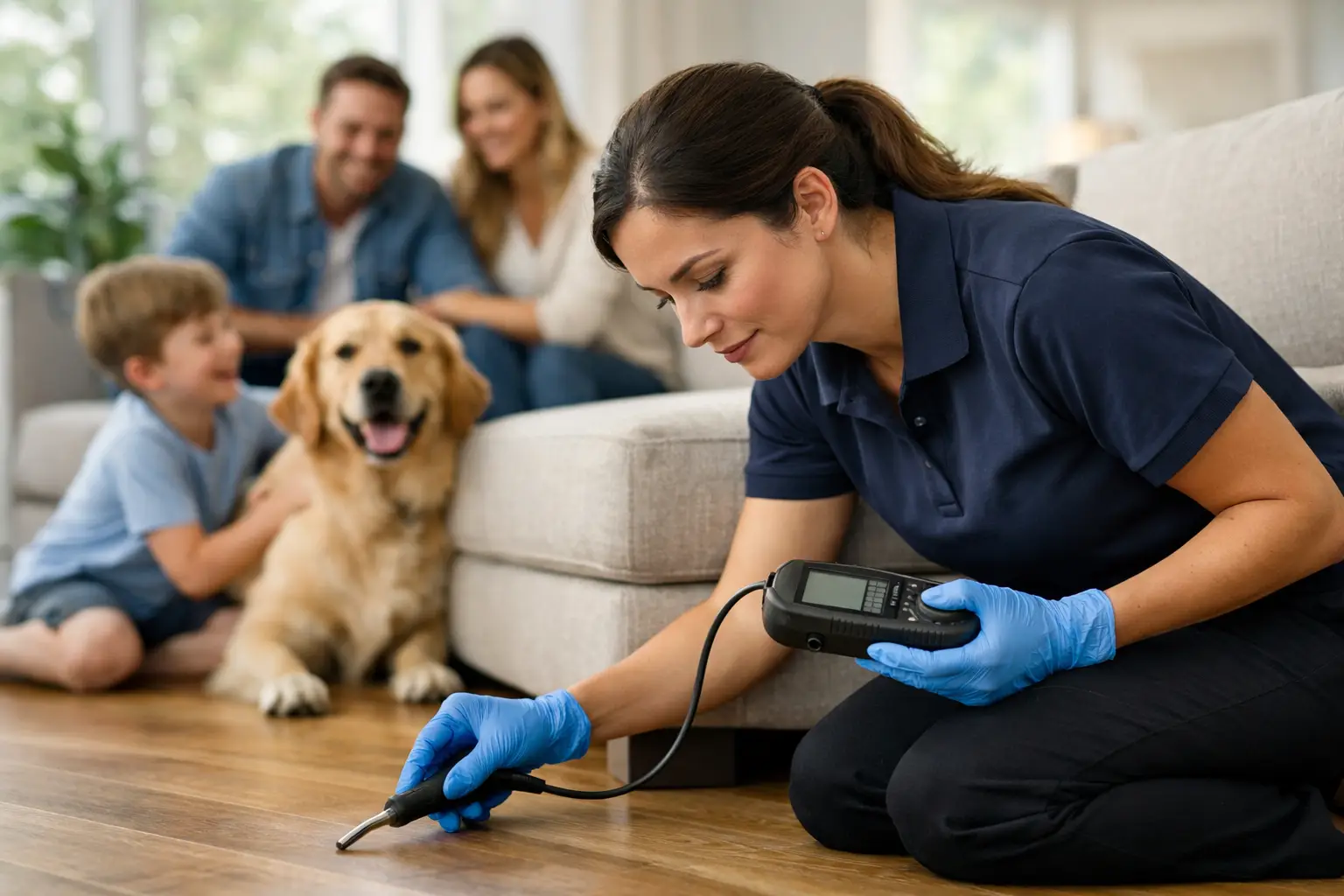
A quality cleaning technician does more than identify the room that smells. The technician needs to determine where the odor is concentrated and whether the issue is on the surface or beneath it. In pet-affected areas, specialized inspection tools can help identify urine deposits that are invisible under normal lighting.
This matters because odor treatment needs to be precise. Treating the entire room lightly can waste product while leaving the worst areas untouched. On the other hand, treating only the visible spot can miss the surrounding contamination. Urine often spreads wider beneath the carpet than it appears from above.
At Spurling’s Carpet Cleaning, the goal is not to rush through a generic cleaning package. It is to assess the conditions and recommend the level of treatment that gives the customer the best chance at a true, long-lasting result. That means clear expectations, no pressure, and a process built around the actual problem.
Pet Urine Requires More Than a Surface Spot Treatment
Pet urine is one of the most common and misunderstood odor problems. Fresh accidents are easier to address because the contamination has had less time to spread and dry. Older urine deposits can crystallize and reactivate with humidity, which is why homeowners may notice a stronger smell even when there has not been a recent accident.
Effective treatment may involve targeted odor-neutralizing solutions that work on the organic source, followed by deep extraction cleaning. In more severe cases, carpet may need to be treated from the back, or the pad and subfloor may need separate attention. If the contamination has deeply saturated multiple layers, no reputable company should promise that a basic cleaning alone will solve it.
That is not bad news. It is simply the truth needed to make a smart decision. A professional inspection can show whether restoration is realistic or whether replacement of a small component, such as carpet padding, is the better investment.
Moisture and Mildew Odors Need a Different Approach
A musty smell is often a moisture warning, not just a cleaning issue. It can come from a damp carpet after a leak, a wet basement, poorly dried upholstery, or hidden humidity problems. Cleaning the fabric without correcting the moisture source may leave the odor unchanged or allow it to return.
Before treating a mildew-type odor, the area should be evaluated for active leaks, water intrusion, or materials that have remained wet too long. Once the source is controlled, professional hot water extraction can remove embedded soil and residues while helping fabrics dry properly. Fast drying matters because excess moisture is exactly what you do not want to reintroduce.
What Professional Odor Treatment Looks Like
The best odor removal process is tailored, but the fundamentals are consistent. First comes a careful evaluation of the odor source and affected materials. Next comes targeted treatment, allowing appropriate dwell time for the solution to do its work. Then deep cleaning and powerful extraction remove loosened contamination, residues, and moisture.
Truck-mounted hot water extraction is especially valuable for carpet and upholstery because it combines cleaning power with strong recovery. More soil and solution are removed from the material rather than left behind to attract dirt or extend drying time. This is one reason premium professional cleaning can look and smell better longer than a rental machine or light surface service.
For upholstered furniture, technicians must also consider the fabric type, dye stability, cushion construction, and whether the odor has reached internal foam. A safe cleaning solution for one fabric may not be appropriate for another. The goal is always to clean thoroughly without over-wetting, shrinking, bleeding colors, or creating a new problem.
Hard surfaces deserve attention, too. Tile and grout can hold food residue, pet contamination, and moisture in porous grout lines. Bathrooms, entryways, and commercial break rooms may need deep cleaning to remove the buildup that contributes to unpleasant smells. A clean-looking floor is not always a clean-smelling floor.
Why Cover-Up Products Often Make Things Worse
Store-bought deodorizers have a place for temporary freshness, but they are rarely a solution for a persistent source. Heavy fragrances can combine with an existing odor and create an even more unpleasant smell. Some products also leave sticky residue in carpet fibers, which can attract soil and make the area look dirty again sooner.
Enzyme products can be helpful for certain fresh organic accidents when used exactly as directed. The challenge is getting enough product to every affected layer and giving it enough time to work. If urine reached the backing or padding, a light mist on top of the carpet is unlikely to be enough.
Avoid saturating carpet with random household chemicals, bleach, or excessive water. Bleach can damage fibers and discolor fabric. Too much moisture can spread contamination, weaken adhesives, and create drying problems. If you are unsure what caused the odor or how deeply it has traveled, it is safer to stop experimenting and have the area evaluated.
When to Call a Professional for Odor Removal
A professional assessment is especially worthwhile when the odor returns after cleaning, becomes stronger in humidity, covers more than one room, or is tied to repeated pet accidents. It is also a practical choice before moving into a home, listing a property for sale, welcoming a new tenant, or reopening a commercial space after water or smoke exposure.
For property managers, a source-focused approach can prevent the costly cycle of cleaning the same unit repeatedly without solving the issue. For families, it can mean less worry about lingering smells in the rooms where children and pets spend time. For businesses, it protects the first impression customers make before they have seen the quality of your service.
Professional odor work is not magic, and anyone promising a guaranteed fix before inspecting severe contamination should be questioned. Materials, age of the odor, and the extent of subfloor involvement all affect the outcome. What a trained technician can provide is a clear plan, the right equipment, and an honest recommendation based on the condition of the space.
A clean home or business should feel comfortable the moment the door opens. If a smell keeps returning, treat it as a signal that the source needs attention. The right odor removal process can replace temporary masking with the confidence that the space has been cleaned the way it should be – thoroughly, respectfully, and built to last.
Where to Learn More About How to Remove Carpet Odors
If you want to know how to remove carpet odors in your own home, start with a free estimate. Customers share their experience on our Better Business Bureau profile, and you can call 585-955-6300 to talk through your situation.