
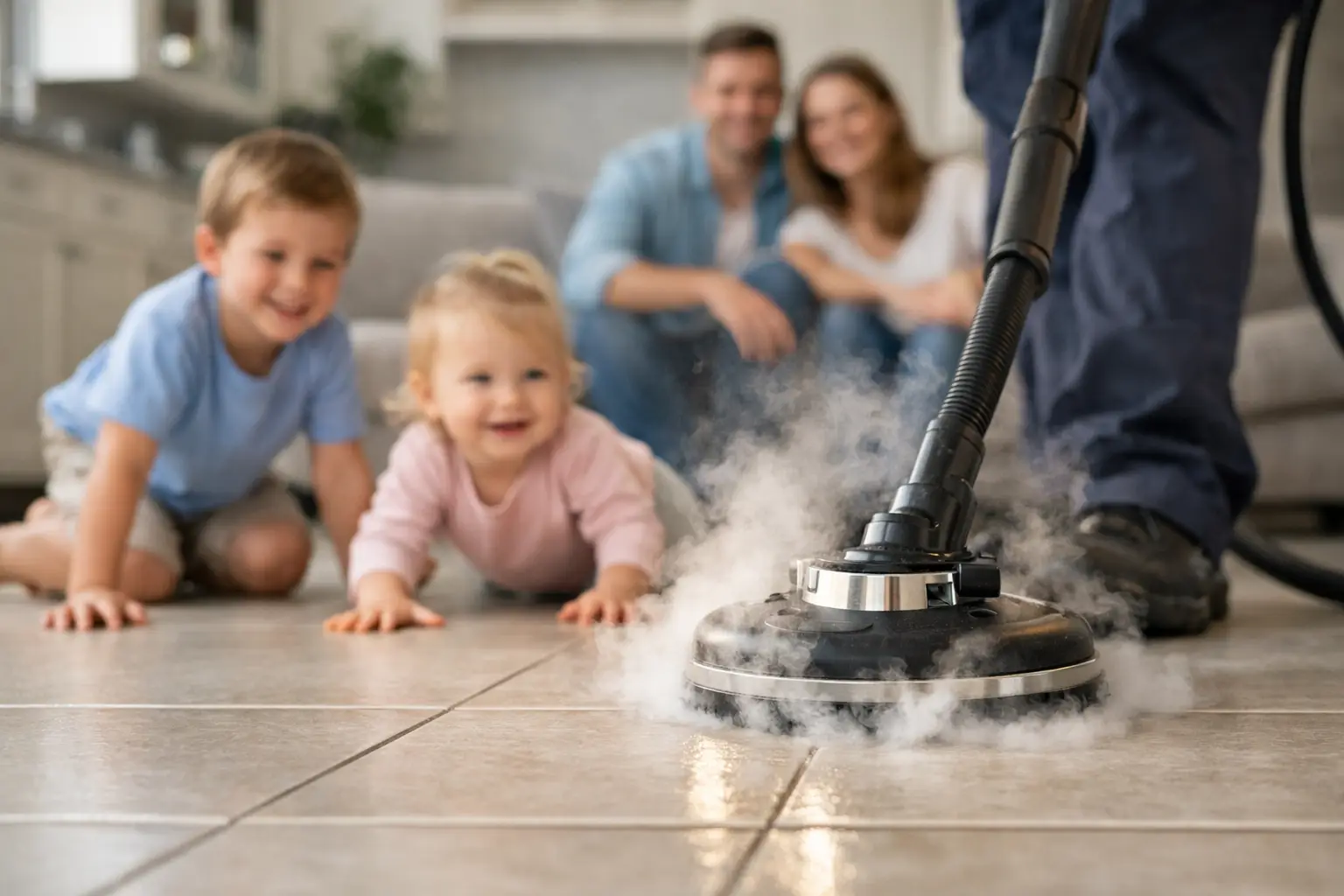
When your tile still looks dull after mopping, the problem usually is not the tile — it is the grout lines holding onto layers of embedded soil, spills, soap residue, and traffic buildup. That is where professional tile and grout steam cleaning services make a real difference. They do not just wipe the surface clean. They flush out the grime that everyday cleaning leaves behind and restore the crisp, fresh look most floors had when they were new.
For many homeowners and business owners, tile feels like the low-maintenance flooring choice until the grout starts darkening and the whole room begins to look older than it is. Kitchens, entryways, restrooms, mudrooms, showers, and commercial spaces all collect grime differently. A basic mop can spread residue around, and many store-bought cleaners leave behind films that attract even more dirt. If you want a cleaner floor that actually stays cleaner longer, the process matters.
Does steam cleaning grout actually work?
Yes — in most cases, it works very well. But the results depend on what you are starting with. Grout is porous. It traps soil deep below the surface, and once that dingy gray or brown haze sets in, ordinary floor cleaning cannot reach it. High-temperature steam penetrates those pores, loosens embedded grime, and allows it to be extracted — something a mop or scrub brush simply cannot do.
That said, steam cleaning has real limits. If your grout has permanent discoloration from mineral deposits, old sealers that have broken down, or physical damage like cracking, cleaning will improve the appearance but may not make it look brand new. Stains that have been set for years are harder to remove than fresh soil buildup. A professional can assess your floor before cleaning and give you an honest picture of what results to expect.
How does a professional tile and grout steam cleaner work?
Professional tile and grout steam cleaning uses high-pressure, high-temperature steam — typically between 200 and 300 degrees Fahrenheit — delivered through specialized rotary cleaning heads or handheld tools designed specifically for grout lines. The heat breaks down oils, soap film, and embedded particles while the pressure dislodges them from the porous grout surface.
At the same time, a powerful truck-mounted or commercial extraction system pulls the loosened debris and moisture out, leaving the floor clean and nearly dry. This is a key difference from consumer steam mops, which apply steam but have no extraction — they push moisture and loosened grime across the surface rather than removing it.
Professional machines operate at much higher temperatures and pressures than any household unit. A consumer steam mop typically reaches 200°F with minimal pressure. Commercial systems run hotter, deliver pressure in a controlled pattern, and pair with extraction that consumer models do not have. That combination is what makes professional results look and last so differently.
What does professional tile and grout steam cleaning actually do?
A professional cleaning service does several things at once. It removes embedded soil and grime from grout lines. It lifts grease, soap film, and traffic residue from tile surfaces. It sanitizes without leaving behind chemical residue. And it restores the original color contrast between tile and grout that tends to fade as buildup accumulates.
After a thorough professional cleaning, grout lines typically appear more even in color, tile regains its original finish, and the overall room looks brighter. In many cases, the improvement is dramatic — customers are surprised by how different a floor looks when the grout is actually clean rather than just scrubbed.
Most professional services also offer grout sealing after cleaning. Sealing fills those porous grout surfaces so future spills and soil cannot penetrate as deeply, which means the floor stays cleaner longer between appointments.
Can you steam clean all types of tile and grout?
Spurling’s professional steam cleaning is designed for ceramic and porcelain tile — the most common tile types in homes and businesses throughout the Rochester, NY area. Both materials handle high temperatures and pressure well, which is what makes them excellent candidates for professional steam cleaning. Textured tile holds onto dirt in ways that smooth tile does not, which can mean more cleaning time and specialized tooling, but the process is the same.
Textured tile holds onto dirt in ways that smooth tile does not, which can mean more cleaning time and more specialized tooling. Older grout that has never been sealed, or grout that is already cracking or crumbling, may need repair before cleaning rather than cleaning alone.
This is one reason DIY steam cleaning carries more risk than professional cleaning. A household steam mop does not let you adjust temperature or pressure for a specific tile type. A trained professional assesses the floor first and adjusts the process accordingly — which protects the tile while still getting it clean.
Is steam cleaning safe for tile and grout?
In most cases, yes — when done correctly. Professional steam cleaning at appropriate temperatures and pressures is safe for ceramic tile, porcelain tile, and properly sealed grout. The process does not require harsh chemicals, which makes it a safer option for homes with children, pets, or people sensitive to cleaning products.
The situations where steam cleaning can cause problems are specific. Applying steam to grout that is already loose, chipped, or missing can worsen the damage. Oversaturating unsealed grout can drive moisture into the subfloor over time. These are the conditions a professional inspects for before starting, and a good technician will flag them rather than clean through them.
A professional knows when to proceed, when to be more careful, and when to recommend repair before cleaning. That is one of the most important differences between hiring a trained technician and renting a consumer machine.
Why DIY steam cleaning often falls short
Consumer steam mops are marketed as powerful cleaning tools, but they have real limitations when it comes to grout. Most household units max out around 200°F with very low pressure. They apply steam but do not extract — which means loosened grime has nowhere to go except back into the grout and tile.
The result is often a floor that looks slightly better immediately after cleaning and then returns to its previous appearance within days as the redistributed soil settles back in. Many homeowners have experienced this: cleaning the floor, seeing improvement, and then finding it looks the same as before within a week.
Professional cleaning equipment operates at a different level entirely. Higher temperatures, controlled pressure, rotary cleaning heads designed for grout lines, and simultaneous extraction produce results that hold up. The floor gets genuinely clean rather than temporarily refreshed.
There is also the skill factor. Knowing how long to dwell on a section, how much pressure a specific tile type needs, which solutions to use, and how to handle problem areas like grout joints near transitions or walls — these are the details that separate a professional clean from a DIY attempt that leaves patchy results.
What can go wrong — and how to avoid it
The most common problems with tile and grout steam cleaning happen when grout is cleaned aggressively without inspecting its condition first. Over-pressurizing damaged grout can dislodge it. Leaving too much moisture behind on wood-subfloor installations can cause issues over time.
You can tell that your tile and grout may not be ready for steam cleaning when grout is visibly cracked, crumbling, or missing in sections. In those cases, repair or re-grouting should come first. A professional cleaning service should inspect the floor before starting and flag anything that needs attention.
Choosing a company with experience on a variety of tile types, and one willing to tell you honestly what condition your floor is in, protects you from having a cleaning appointment make things worse.
Where steam cleaning makes the biggest impact
The most noticeable results usually show up in the rooms you use hardest. Kitchen tile collects grease, food spills, and tracked-in dirt. Bathroom tile deals with soap film, body oils, and moisture-related buildup. Entryways and hallways take on everything from sand and outdoor grit to tracked-in debris. In commercial settings, traffic lanes can become visibly dark and uneven, which affects how the whole property looks.
Showers and wet areas often show the most dramatic before-and-after difference because grout in those spaces collects soap scum, mildew, and hard water deposits that build up fast and resist ordinary cleaning. A professional cleaning with the right temperature and tooling can restore shower grout to something close to its original appearance in a single appointment.
What to expect during a professional tile and grout cleaning
A typical professional tile and grout cleaning appointment starts with a walkthrough of the area being cleaned. The technician should identify the tile type, assess the grout condition, and note any problem areas like damaged grout, stains, or sensitive surfaces before any equipment is turned on.
The cleaning itself involves applying a pre-treatment solution to loosen embedded soil, followed by high-pressure steam cleaning using rotary heads or detail tools on grout lines. The truck-mounted or commercial extraction system removes the debris and moisture simultaneously. After the cleaning pass, a final rinse and extraction leaves the floor nearly dry.
If sealing is part of the service, it is applied after the floor has dried. Sealing typically adds 30 to 60 minutes to the appointment. The floor is usually ready for light foot traffic within an hour and back to full use within two to four hours, depending on ventilation and how much moisture was present.
How often should tile and grout be professionally cleaned?
For most residential kitchens and bathrooms, once a year is a reasonable starting point. High-traffic entryways, busy households, or rooms that see a lot of grease or moisture may benefit from cleaning every six months. Shower tile and grout in daily use often looks best on a six-month schedule.
Commercial floors with constant foot traffic — restaurants, offices, retail spaces — typically need professional cleaning two to four times a year to keep grout from darkening between appointments. The more heavily a floor is used, the faster soil accumulates in the grout.
Getting the floor sealed after each professional cleaning extends the time between appointments, because sealed grout resists soil penetration more effectively than unsealed grout.
Choosing a tile and grout cleaning company
The difference between a good cleaning job and a disappointing one often comes down to equipment, training, and how a company communicates. Commercial-grade truck-mounted systems consistently outperform portable units for tile and grout work. Technicians who are trained on different tile types and grout conditions produce better results and avoid the mistakes that damage floors.
A trustworthy company should be willing to walk through your floor before cleaning, tell you what results are realistic, and stand behind the work. Guarantees, technician training, and reputation matter. Companies with real experience tend to have a consistent process, better communication, and a stronger sense of accountability.
Price matters, but the cheapest option can cost more in the long run if the floor is left sticky, spots return quickly, or the results fade within a week. Stronger equipment, trained technicians, safe solutions, and a clear service guarantee usually deliver better value over time.
Spurling’s Carpet Cleaning serves homeowners and businesses throughout the Rochester, NY area with professional tile and grout steam cleaning, using premium equipment and methods designed to produce results that last. If your tile and grout have lost their clean, bright appearance, the answer may not be replacement. Often, it is the right cleaning process applied by someone who knows how to do it well.