A splash of red wine on a light sofa can turn a relaxing evening into a full-blown emergency. The good news: fast, careful action can make a major difference. The bad news: many do-it-yourself methods permanently set stains, spread them farther through the fabric, or leave behind residue that attracts more soil. This upholstery stain removal guide will help you respond confidently while knowing when your furniture needs professional attention.
First Rule: Identify the Fabric Before You Treat the Stain
Your sofa may look durable, but upholstery fabrics are not all cleaned the same way. Cotton, linen, microfiber, velvet, wool, silk, leather, and synthetic blends can react very differently to water, heat, and cleaning solutions.
Look for the cleaning tag under cushions, on the frame, or beneath the furniture. Most manufacturers use a simple code. “W” means water-based products are generally appropriate. “S” means use a solvent-based cleaner only. “WS” means either method may be acceptable. “X” means vacuuming only, with professional cleaning recommended for stains.
That tag is not a suggestion. It is your best protection against water rings, color loss, shrinkage, fabric distortion, and voided warranties. If the tag is missing or the fabric is delicate, test any product on a hidden area first. Let it dry completely before deciding it is safe.
Upholstery Stain Removal Guide: What to Do Right Away
The first few minutes matter most. Do not scrub. Scrubbing drives the spill deeper, damages fibers, and can create a fuzzy or worn-looking spot that remains visible even after the stain is gone.
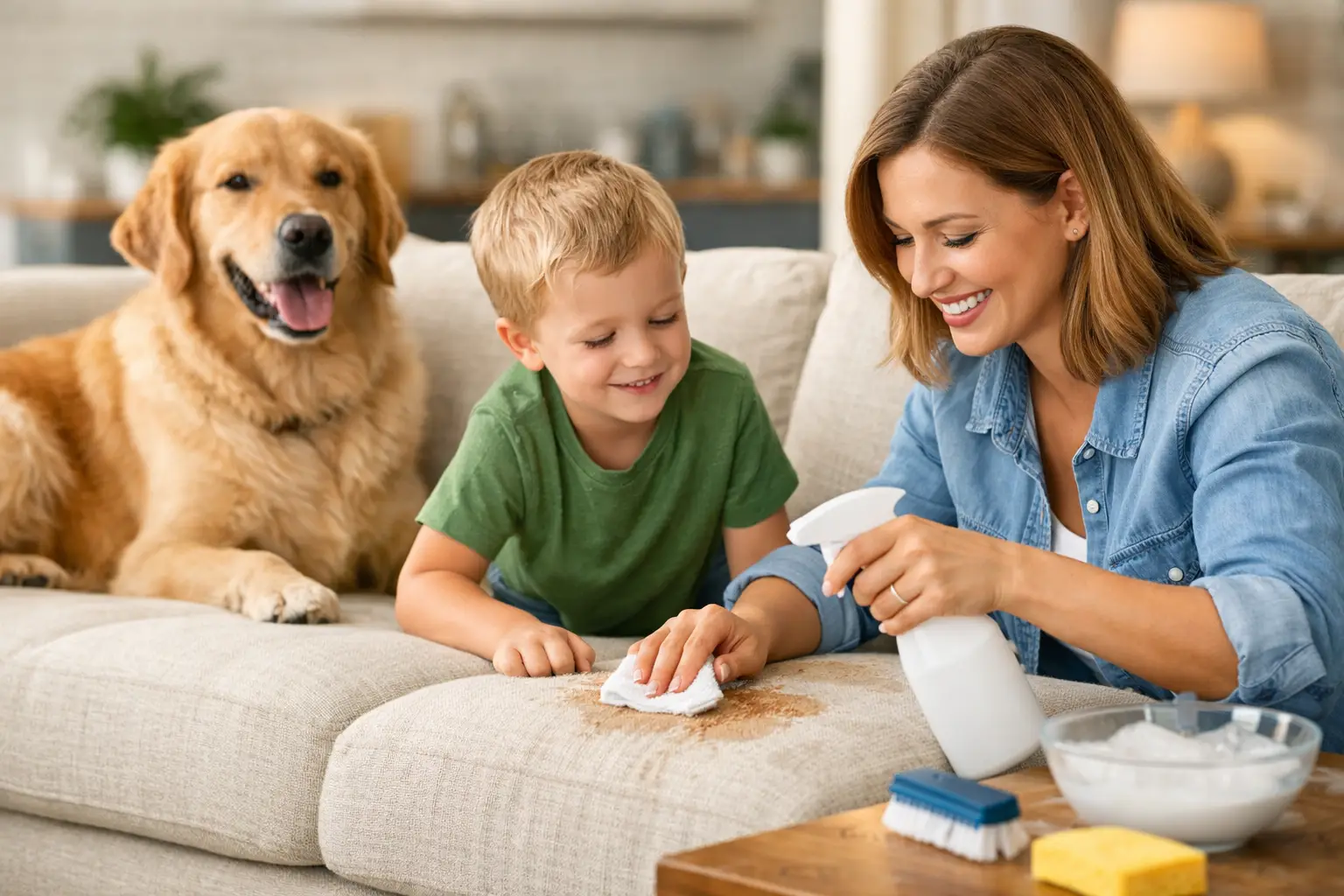
Instead, gently blot from the outside edge toward the center with a clean white towel. White is important because colored towels can transfer dye to damp fabric. Keep rotating to a clean section of the towel as it absorbs moisture.
For most fresh, water-safe spills, use this simple approach:
- Remove solid material with the edge of a spoon or dull knife.
- Blot liquid thoroughly without pressing hard.
- Apply a small amount of the correct cleaner to a towel, not directly onto the furniture.
- Blot again, working patiently in small sections.
- Allow the area to dry fully before judging the result.
Avoid soaking the cushion. Excess moisture can wick stains back to the surface, create water marks, affect cushion backing, or encourage mildew and odor problems inside the furniture.
How to Handle Common Upholstery Stains
Food and beverage spills
Coffee, soda, juice, wine, and sauces often contain dyes, sugars, tannins, oils, or all three. Blot immediately, then use a small amount of an appropriate water-based upholstery cleaner if your fabric code allows it. Work slowly. Repeated light blotting is safer than one heavy application.
Red wine deserves special caution. Do not pour salt, club soda, or random household products over the spill without checking the fabric type. These popular tricks can leave a larger ring or alter the fabric’s texture. A professional cleaner can often treat wine more effectively because they use stain-specific chemistry and controlled extraction rather than simply adding more moisture.
Grease, makeup, and body oil
Armrests, headrests, and favorite reclining seats often collect body oil, hair products, lotion, makeup, and cooking grease. These are not ordinary surface stains. Oil binds to upholstery fibers and also traps dry soil, which is why the area may look darker over time.
Water alone rarely solves an oily stain. The wrong cleaner can spread it or leave a sticky residue. If the fabric is labeled “S” or “WS,” a fabric-safe solvent product may be needed. Because solvent use requires good ventilation and careful application, this is often a smart time to call a trained upholstery cleaner.
Pet accidents and odors
Pet urine is more than a visible spot. It can travel through upholstery fabric and into cushion filling, backing, and even the furniture frame. Surface cleaning may make the area look better temporarily while leaving odor-causing contamination underneath.
Blot fresh urine right away and avoid heat. Heat can intensify odor problems and make stain removal more difficult. Enzyme treatments can help on some fabrics, but they must be compatible with the upholstery and able to reach the source of the contamination. If an odor returns on humid days or after someone sits on the cushion, the problem is likely below the surface.
Ink, paint, and mystery marks
Ink, marker, nail polish, paint, and adhesive residue are high-risk stains. Rubbing alcohol, acetone, and other internet-recommended remedies can remove color from upholstery as quickly as they remove ink. They may also dissolve backing materials or spread the stain into a larger halo.
For these stains, stop after gentle blotting and take note of what caused the mark. A clear photo and the product name, if known, give a professional technician a much better chance of selecting the right treatment.
The DIY Mistakes That Cost the Most
The biggest upholstery cleaning mistakes are usually made with good intentions. Homeowners want the stain gone fast, so they scrub, saturate, or mix several products together. Unfortunately, furniture fabric is less forgiving than many people expect.
Never use laundry detergent as a general upholstery cleaner. It can leave residue that attracts dirt and makes the cleaned area look worse weeks later. Avoid dish soap unless the manufacturer specifically supports it, since even a small amount can be difficult to rinse from dense upholstery.
Bleach is also a poor choice for nearly all upholstered furniture. It can strip dye, weaken natural fibers, and create permanent pale spots. Steam from a small consumer machine can be risky too, particularly on delicate, natural, or heavily soiled fabrics. High heat can set certain stains and may cause shrinkage or texture changes.
Mixing chemicals is another hard no. Combining products can create fumes, alter the intended chemistry, or cause unexpected bleaching. Use one appropriate product at a time, and never apply it without a spot test.
Why Stains Sometimes Come Back After Cleaning
A stain that returns after drying is frustrating, but it is not always a sign that the cleaner failed. In many cases, the visible spot was only the top layer of a deeper problem.
Wicking is one common cause. Moisture pulls dissolved soil from the cushion backing or padding up to the fabric surface as the area dries. Residue is another cause. If a product was not fully removed, it can collect new soil and make the same location appear dirty again.
This is where professional hot water extraction can make a meaningful difference. The goal is not to flood the furniture. It is to apply the right cleaning solution, agitate safely, and extract suspended soil and residue with controlled moisture. High-powered truck-mounted equipment can improve soil removal and shorten drying time when used by an educated technician.
When Professional Upholstery Cleaning Is the Better Call
Some fresh spills are manageable at home. But premium furniture, older stains, pet odors, unknown fabrics, and repeated spots deserve a more careful approach. The cost of replacing a damaged sofa or chair can easily exceed the cost of having it cleaned properly.
Professional cleaning is especially worthwhile when cushions look dull overall, armrests are darkened by body oils, a spill has reached the padding, or a previous cleaning attempt left rings or stiff fabric. It is also the best route for delicate materials and furniture with manufacturer cleaning restrictions.
At Spurling’s Carpet Cleaning, trained technicians use a multi-step upholstery cleaning system designed to address more than surface dirt. The process is built around safe solutions, thorough extraction, respectful in-home service, and results that support Thee Longest-Lasting Clean. For Rochester-area homes and businesses, that means a cleaner, fresher piece of furniture without pressure or guesswork.
Keep Furniture Looking Cleaner Between Appointments
Routine care protects your investment. Vacuum upholstered furniture with a proper attachment every week or two, especially beneath cushions and along seams where grit collects. Turn and rotate loose cushions when possible so wear is distributed more evenly.
Treat spills promptly, but do not overclean one small area. Repeated spot treatments can create uneven color or a cleaner-looking patch surrounded by embedded soil. A full professional cleaning restores a more uniform appearance and removes the buildup that daily vacuuming cannot reach.
Your furniture is where family movie nights happen, guests gather, pets nap, and daily life leaves its mark. Treat a fresh spill with patience, protect the fabric from aggressive home remedies, and call for expert help before a small accident becomes a permanent reminder.