A carpet can look like a lost cause after a pet accident, a wine spill, or years of tracked-in winter salt. But carpet replacement versus cleaning is not simply a question of whether the carpet looks dirty. The right decision comes down to the carpet’s age, condition, fiber type, the source of the problem, and whether a professional deep clean can restore the appearance and indoor comfort you expect.
Replacing carpet is a major investment. Before you pull up flooring that may still have years of useful life, it is worth finding out what a true hot water extraction cleaning can accomplish. On the other hand, cleaning is not a magic answer for carpet that is physically worn out, contaminated beyond treatment, or failing at the seams.
Carpet Replacement Versus Cleaning: Start With the Cause
Surface dirt and permanent damage are two very different problems. A carpet may look gray, matted, or stained because it is carrying deeply embedded soil, oils, residue, and allergens. Those issues often respond remarkably well to a professional cleaning system that flushes contaminants out of the fibers instead of simply wetting the surface.
Permanent wear is different. When foot traffic has worn away the carpet’s protective twist, the fibers may look flat or fuzzy even after cleaning. A technician can remove the soil hiding the carpet’s true color, but no cleaning process can rebuild fibers that have broken down from age and use.
Before deciding, consider what changed. If the carpet looked good until a spill, pet issue, plumbing leak, or neglected cleaning schedule, professional cleaning is usually the logical first move. If it has gradually become thin, frayed, rippled, and dull over many years, replacement may offer better long-term value.
When Professional Carpet Cleaning Makes the Most Sense
Cleaning is often the better choice when the carpet is structurally sound but visually disappointing. That includes carpets with heavy traffic lanes, food and drink spots, pet-related staining, everyday soil, and upholstery transfer from furniture. A quality cleaning can also remove the sticky residue left behind by many store-bought spot cleaners, which tends to attract more dirt over time.
For busy homes in Rochester, this matters. Mud, road salt, slush, pet paws, and family traffic can make perfectly serviceable carpet look much older than it is. The goal is not a quick surface refresh. It is to remove the packed-in material that is weighing down the fibers and shortening the carpet’s life.
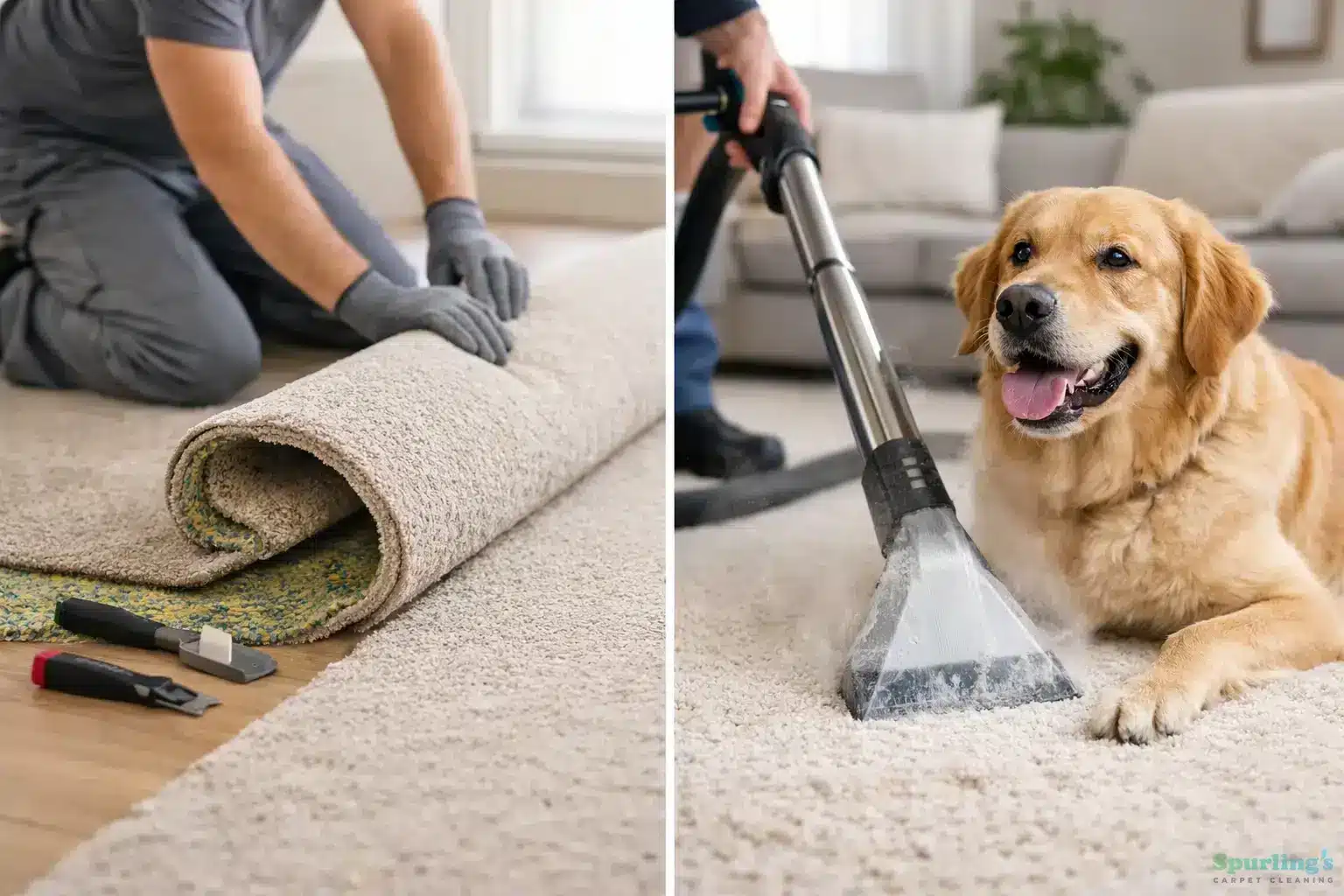
Professional hot water extraction is especially valuable because it combines pre-treatment, agitation, rinsing, and powerful recovery. With truck-mounted equipment and the right chemistry for the fiber, a trained technician can address soil that rental machines and consumer equipment often leave behind. Proper extraction also helps avoid the over-wetting that can lead to long dry times, odor concerns, or rapid resoiling.
Cleaning is a strong option when you want to:
- Restore the appearance of carpet that is still in good physical condition
- Treat common spots, traffic lanes, and dullness before they become more difficult to remove
- Address pet odor or urine issues with treatment aimed at the source, not just the visible mark
- Prepare a home, rental unit, office, or commercial space for guests, tenants, listing photos, or an inspection
The cost difference can be substantial. Even premium professional cleaning is typically far less expensive than purchasing carpet, paying for installation, moving furniture, removing old materials, and possibly repairing the subfloor underneath.
When Replacement Is the Smarter Investment
There are times when replacing carpet is the honest recommendation. If the backing is failing, seams are separating, or the carpet is buckling and cannot be properly re-stretched, cleaning will not solve the underlying issue. The same is true when fibers are severely worn down in hallways, entryways, and main living areas.
Odor also deserves a realistic assessment. A few isolated pet accidents can often be treated successfully when the contamination is identified and addressed at the carpet, backing, and padding level. But widespread, repeated urine contamination over a long period can saturate padding and reach the subfloor. In those cases, replacing the carpet and padding may be necessary, along with sealing or treating the subfloor to prevent odor from returning.
Replacement may also be preferable after significant water damage, especially if the carpet remained wet long enough to create microbial concerns. A professional can assess whether cleaning and drying are appropriate, but it is not wise to keep carpet simply because it can be made to look better for a few weeks.
Choose replacement when the carpet has major structural failure, widespread fiber loss, persistent contamination beneath the carpet, or a style and color you genuinely no longer want. Replacing a carpet that has reached the end of its usable life is not wasteful. It is a practical way to improve comfort, appearance, and confidence in the space.
Do Not Judge Carpet by Stains Alone
A visible stain can feel permanent, but appearances can be misleading. Some spots are removable once the correct solution and process are used. Others are discolorations caused by bleach, dyes, pet waste, rust, or chemical reactions. Those may not be removable because the color has been altered rather than deposited on the fiber.
That distinction matters because an honest cleaning company should set expectations before beginning. A professional assessment identifies whether a mark is likely soil, residue, a stain, or permanent damage. It also helps determine whether a spot needs specialized treatment rather than an aggressive cleaning approach that could harm the carpet.
Be cautious with repeated DIY attempts. Scrubbing can untwist fibers, spread the spill, and push contamination deeper into the backing. Heavy soaps and powders can leave residue behind. The more products that have been applied, the more complicated the correction can become.
Consider Carpet Age, Fiber, and Maintenance History
Most residential carpet does not fail on the same schedule. A well-made carpet in a low-traffic bedroom may look good for many years, while an entryway carpet in a home with children and pets may show wear much sooner. Fiber type matters too. Nylon is generally resilient and often cleans well, while polyester can resist certain stains but may mat in high-traffic areas. Wool requires a more careful process than synthetic carpet.
Maintenance history also changes the answer. Carpets that receive professional cleaning before soil becomes deeply embedded usually retain their texture and appearance longer. Waiting until the carpet looks beyond help gives dirt, oils, and abrasive grit more time to damage the fibers.
If your carpet is under five to seven years old and has no major physical damage, cleaning is usually worth serious consideration. If it is much older, that does not automatically mean it must go. The key question is whether the fiber still has life left after the soil is removed.
The Best Decision Is Usually Made After an Inspection
Photos and phone descriptions are helpful, but they cannot always reveal what is happening below the carpet surface. A trained technician can inspect traffic patterns, fiber condition, odors, spots, backing concerns, and the likelihood of improvement. That gives you a recommendation based on the carpet you actually have, not a generic rule.
Spurling’s Carpet Cleaning approaches this decision with the same standard used for every service: recommend the solution that makes sense for the customer, without pressure. When cleaning is the right answer, a multi-step, truck-mounted hot water extraction process is designed to deliver Thee Longest-Lasting Clean, with clear expectations about results and drying time. When replacement is the better choice, you deserve to hear that too.
A Better First Step Than Guessing
Do not replace carpet solely because it looks tired after a hard season of use. A professional cleaning may reveal that the carpet has more life, more color, and more comfort left than you expected. At the same time, do not spend repeatedly on cleaning if the carpet is worn through, structurally failing, or holding contamination that cannot be responsibly corrected.
The most useful next step is a straightforward evaluation of the carpet’s condition and the problem behind it. That one decision can save you from replacing carpet too soon or from putting money into a floor that has already reached the end of the road.