A sofa can look reasonably clean and still hold onto the things you notice the moment you sit down: pet odor, body oils, snack crumbs, dust, and that slightly stale smell that seems to return after the windows are closed. Knowing how to freshen upholstered furniture starts with more than spraying a scented product. The goal is to remove dry soil, address the source of odor, and avoid soaking or damaging the fabric beneath.
For busy households, renters preparing for guests, and anyone with pets or kids, a few careful habits can make furniture feel cleaner between professional appointments. But upholstery is not one-size-fits-all. The wrong cleaner, too much water, or aggressive scrubbing can leave rings, shrink fabric, weaken fibers, or drive stains farther into the cushion.
Start by Identifying Your Upholstery Fabric
Before cleaning anything, find the manufacturer’s care tag. It is often located under a loose cushion, beneath the sofa, or along the frame. The cleaning code determines what is safe to use.
A code of W means water-based upholstery cleaners are generally appropriate. S means use a solvent-based cleaner only. WS or SW indicates either type may be used. X is the most restrictive code – vacuuming or professional cleaning is usually the only recommended approach.
These codes are helpful, but they are not a guarantee that every product will behave the same way on your furniture. Fabric dyes, prior spot treatments, and wear patterns can all affect the result. Test any cleaner in a hidden area first, then allow it to dry completely before treating a visible section.
How to Freshen Upholstered Furniture Without Overwetting It
The most common DIY upholstery mistake is using too much moisture. Cushions and furniture backs contain foam, batting, wood, glue, and fabric layers that do not dry as quickly as a shirt or towel. If moisture reaches the cushion core, it can create lingering odor, water marks, and even mildew concerns.
Start with thorough vacuuming. Use the upholstery attachment, work slowly, and pull cushions out when possible. Vacuum seams, piping, cushion edges, beneath cushions, and the crevice where the back meets the seat. This matters because dry soil is abrasive. If it remains in the fabric while you rub or wet the surface, it can contribute to premature wear.
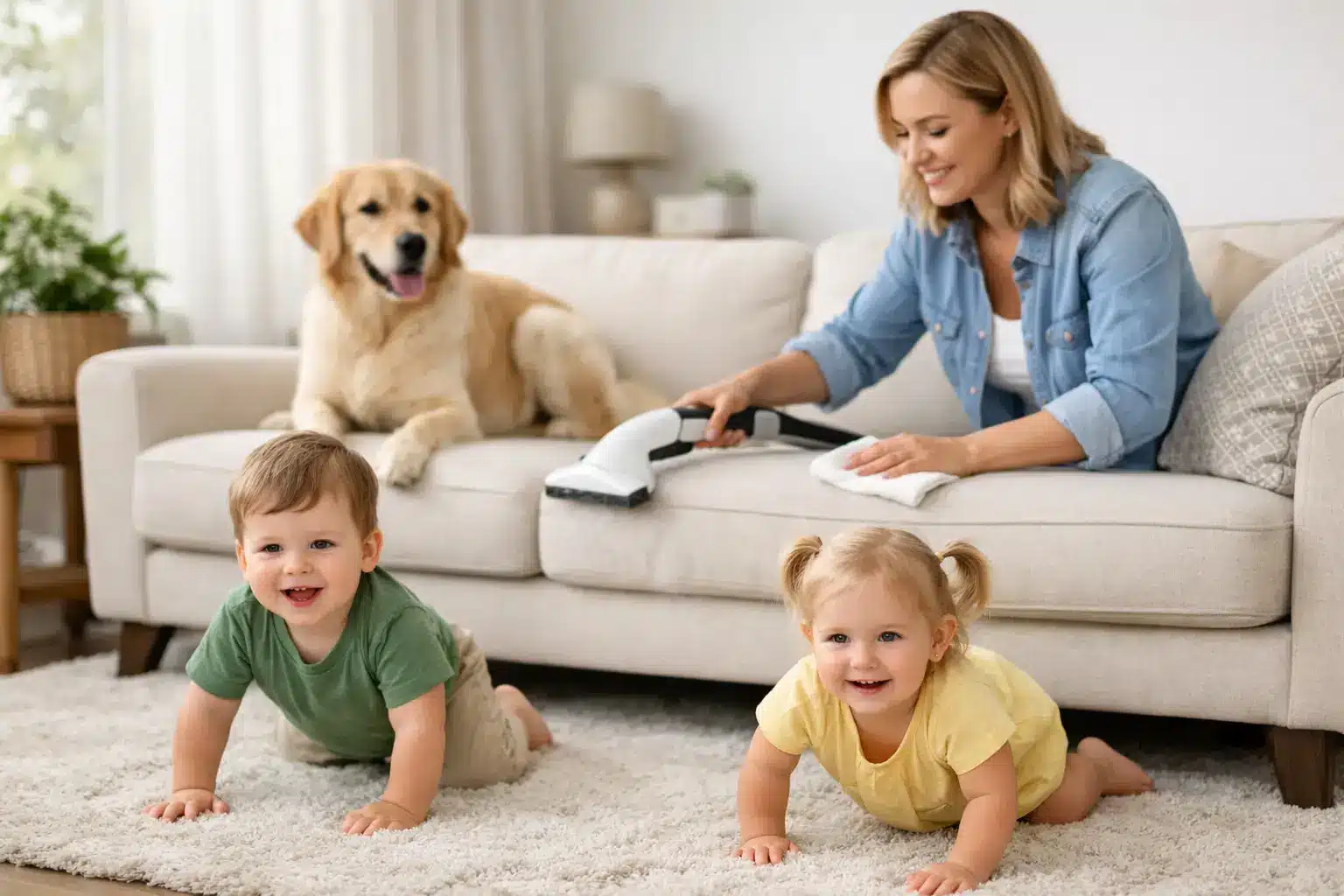
Next, freshen the fabric with a light hand. For W-coded upholstery, use a manufacturer-approved water-based upholstery cleaner or a small amount of mild cleaning solution made for the fabric. Apply it to a clean white microfiber cloth rather than spraying the furniture heavily. Gently blot and wipe a small section at a time, working from the outside of a spot toward the center.
Use a second clean, lightly damp cloth to remove residue, then blot with a dry towel. Open windows when weather permits, run ceiling fans, or place a fan nearby to speed drying. Furniture should feel dry to the touch before cushions are put back in place.
Do Not Scrub Stains Aggressively
A stain is frustrating, especially on a favorite chair or a light-colored sectional. Still, aggressive scrubbing is rarely the answer. It can distort the fabric texture, create a fuzzy patch, or spread the stain beyond its original edges.
Blot spills immediately with a dry white towel. For a fresh liquid spill, press firmly and replace the towel as it absorbs moisture. Avoid colored towels, as dyes can transfer. Avoid using dish soap, laundry detergent, glass cleaner, or random household products unless the furniture manufacturer specifically approves them. Many products leave sticky residue that attracts more soil, making the spot seem to come back.
If a stain has already dried, spot treatment may improve it, but complete removal depends on what caused it, how long it has been there, and what was applied previously. Red wine, coffee, ink, grease, pet accidents, and unknown mystery spots often require different chemistry and procedures.
Remove Odors at Their Source
Fragrance covers odors temporarily. Real odor control requires addressing what is trapped in the upholstery.
Pet odor is a good example. If urine reached the cushion foam, surface cleaning will not fully solve the problem. The odor may disappear while the fabric is dry, then return on humid days or when someone sits on the cushion and compresses the foam. The same is true of spilled milk, food residue, sweat, smoke exposure, and moisture from a wet coat or pet.
For light, general stale odor, vacuuming and proper airflow may be enough. A fabric-safe deodorizing product can help after testing it in an inconspicuous area. Do not saturate the upholstery, and do not rely on perfume-heavy sprays to fix a source problem.
For pet urine or strong recurring odors, professional treatment is often the better value. A technician can inspect whether contamination is limited to the surface or has reached the cushion insert, deck, or underlying materials. That distinction matters. Treating only what is visible may leave the actual odor source behind.
Keep Cushions Looking and Feeling Better Between Cleanings
Furniture freshens up faster when it is maintained before dirt becomes embedded. Rotate and flip reversible cushions regularly so one seating area does not carry all the wear. Plump loose back cushions and smooth fabric after vacuuming to keep the furniture looking more even.
If your upholstery is exposed to direct sunlight, close blinds during the brightest part of the day when practical. Sunlight can fade fabric and make old stains more noticeable. Throws and washable covers can also protect high-use spots, especially where pets nap or children eat snacks.
A simple maintenance routine is usually enough: vacuum monthly, address spills right away, and give the furniture a closer inspection every few months. Homes with shedding pets, multiple children, allergies, or frequent entertaining may need attention more often.
When DIY Freshening Is Not Enough
At-home care is excellent for routine upkeep. It has limits when upholstery is heavily soiled, smells persist, or the fabric has been treated repeatedly with products that leave residue.
Professional upholstery cleaning is especially worthwhile when you notice darkened armrests and headrests, dingy traffic areas on a sectional, recurring spots, sticky or crunchy fabric, smoke odor, pet accidents, or cushions that have not been cleaned in years. These are signs that soil has moved below the surface where a cloth and spray bottle cannot reach effectively.
The right professional process depends on the fabric and condition of the piece. Quality cleaning should begin with inspection and fabric testing, followed by the appropriate pre-treatment, agitation when safe, rinsing, extraction, grooming, and controlled drying. For many water-cleanable fabrics, hot water extraction removes embedded soil and residues while using far less uncontrolled moisture than a do-it-yourself soaking approach.
Spurling’s Carpet Cleaning uses a multi-step upholstery cleaning approach designed for deep results, safe cleaning solutions, and practical drying times. For Rochester-area homes and businesses, professional service can be the difference between furniture that merely smells masked and furniture that feels genuinely refreshed.
Be Careful With Rental Machines and Steamers
Rental upholstery tools and handheld steamers can seem like an easy shortcut. They can also create problems when used without the right solution, temperature control, or extraction power. Too much heat can affect delicate fibers or adhesives, while too much solution left behind can cause rapid resoiling.
Some furniture fabrics should not be wet-cleaned at all. Others can be cleaned successfully but need strong extraction and fast drying to avoid wicking, where soil deep in the cushion travels back to the surface as it dries. If you are unsure of the fabric code or concerned about a valuable piece, stopping before you experiment is a smart choice.
A Cleaner Sofa Should Feel Like a Better Room
Fresh upholstery changes more than the appearance of a couch or chair. It makes the room feel cared for, more comfortable for guests, and easier to relax in after a long day. Start with regular vacuuming, use moisture sparingly, and treat odors as a source issue rather than a fragrance problem. When the fabric needs more than a surface refresh, trained professional cleaning offers a dependable way to bring back the clean, comfortable feel your furniture was meant to have.