
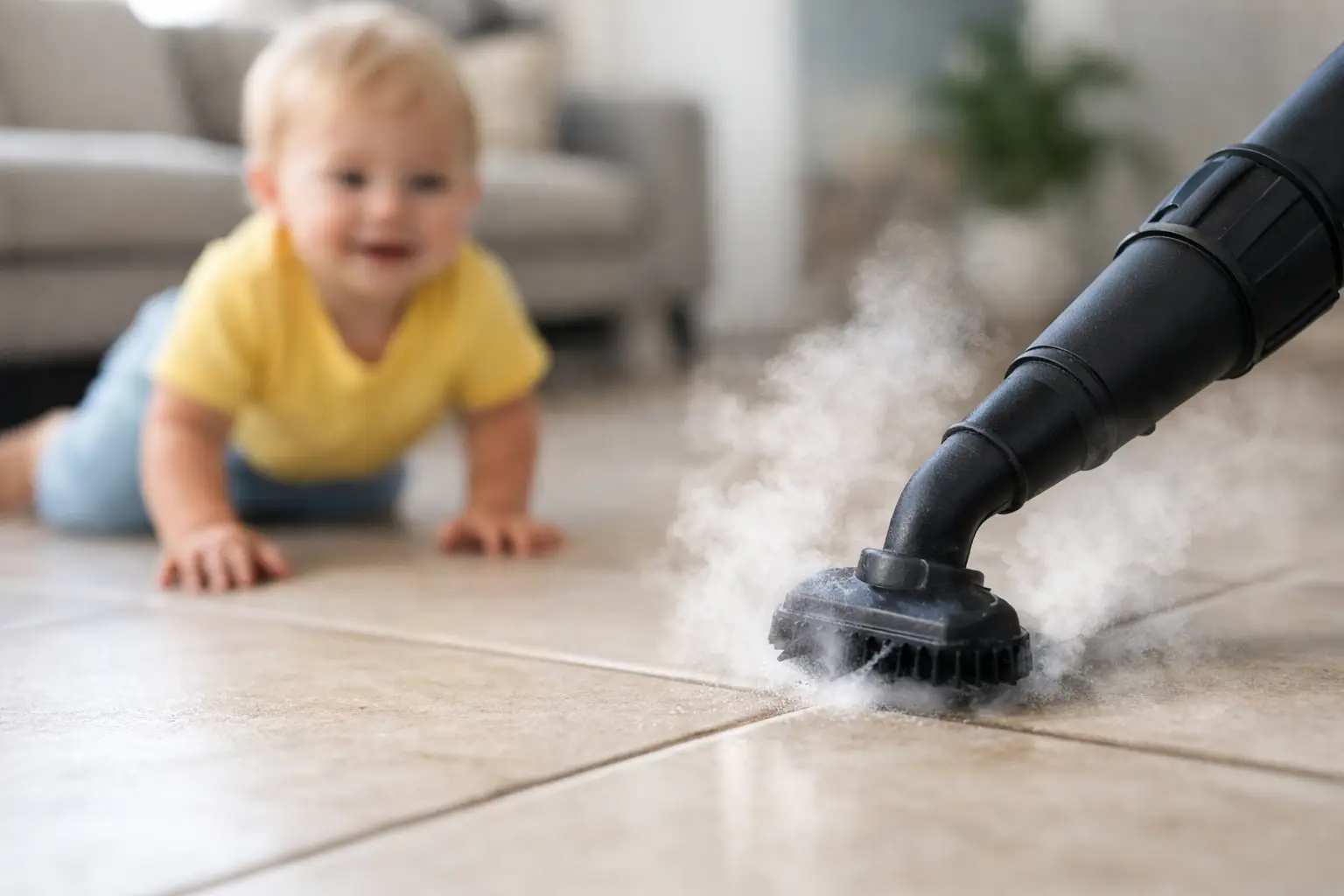
If your grout still looks dirty after mopping, you are not imagining it. Grout is porous, it traps soil deep below the surface, and once that dingy gray or brown haze sets in, ordinary floor cleaning barely touches it. So, does steam cleaning grout work? Yes – often very well – but only when the grout is dirty, not permanently discolored, and only when the right process is used.
That distinction matters. A lot of homeowners rent or buy a steam cleaner expecting bright, like-new grout in one pass. Sometimes they get a noticeable improvement. Sometimes they get streaky results, patchy color, or grout that still looks old because the real problem was staining, worn sealant, or years of embedded residue. Steam is powerful, but it is not magic.
Does steam cleaning grout work on real buildup?
For grease, tracked-in soil, soap residue, and everyday grime, steam cleaning can be very effective. Heat helps loosen residue, and pressure helps flush soil out of the grout lines. That is why steam is often part of a professional tile and grout cleaning process. It works especially well in kitchens, entryways, mudrooms, and commercial spaces where oils and dirt settle into the pores over time.
The bigger the buildup, the more noticeable the difference can be. When grout is loaded with sticky residue, steam can break that bond far better than a mop and bucket. It also reaches into textured tile and uneven grout lines that standard cleaning tools miss.
But there is a catch. Steam does best on removable soil. If the grout has been permanently stained by rust, dye, harsh cleaners, mildew damage, or years of neglect, steam may improve it without fully restoring the original color. That is where honest expectations matter.
Why steam helps – and where it falls short
Grout is different from tile. Tile is usually smoother and easier to wipe clean. Grout is porous, rougher, and more absorbent, which means dirt gets below the surface. Steam helps because it combines heat and agitation in a way that loosens grime without relying only on heavy chemicals.
That makes it a strong option for customers who want deep cleaning with a more controlled, residue-conscious process. It can also be a better choice than aggressive scrubbing with stiff brushes that wear grout down over time.
Still, steam cleaning grout has limits. If grout is crumbling, cracked, or missing in spots, steam will not repair it. If the floor has heavy mineral deposits or severe mildew, steam alone may not be enough. And if previous cleaning attempts left behind detergent residue, that layer may need to be broken down first before steam can do its best work.
In other words, steam is a tool, not the whole answer.
When steam cleaning grout works best
Steam tends to perform best when the grout is structurally sound and the main issue is embedded dirt. In homes with pets, kids, or high foot traffic, that is common. The grout may look permanently dark, but in many cases it is carrying years of oily soil, tracked-in debris, and cleaning residue.
Bathrooms are a mixed bag. Steam can help with soap scum and general buildup, but if the grout has deep mold staining or hard water deposits, results may vary. Kitchens usually respond better because grease and food soil soften well with heat.
A good technician knows how to spot the difference between soil and damage before cleaning starts. That saves customers from false promises and disappointing results.
DIY steam cleaning vs professional grout cleaning
This is where many people get frustrated. A consumer steam cleaner can help with light maintenance, but it often lacks the heat consistency, extraction power, and specialized tools needed for heavily soiled grout. You might loosen the dirt, but if you do not properly remove it, some of that grime can settle back into the grout line.
That is one reason professional systems usually outperform store-bought machines. Professional tile and grout cleaning is not just about blasting steam at the floor. The best results come from a multi-step process that may include pre-treatment, agitation, high-heat rinsing, and powerful extraction to pull suspended soil away instead of moving it around.
That process matters if you want Thee Longest-Lasting Clean, not just a quick cosmetic improvement. Heat without proper extraction can leave behind loosened residue. Extraction without the right pre-treatment may leave embedded oils behind. A premium result comes from the system, not one single step.
What can go wrong with steam cleaning grout?
Used correctly, steam is safe for many tile and grout surfaces. Used carelessly, it can create problems. Too much pressure on failing grout can worsen weak joints. Excess moisture left sitting in corners or along edges can be an issue in poorly maintained spaces. Some natural stone surfaces also need extra caution, since not every tile installation should be treated the same way.
There is also the expectation problem. If a floor has uneven grout color from age, previous repairs, or chemical damage, steam may clean it thoroughly but still not make it look uniform. Customers often think the grout is still dirty when it is actually clean but permanently discolored.
That is why a serious cleaning company should explain what is likely to improve and what may not. Real professionals do not oversell. They inspect, educate, and give you a realistic path forward.
Does steam cleaning grout work better than mopping?
In almost every case, yes. Mopping can remove surface dirt from tile, but it often pushes dirty water across the grout and leaves residue behind. Over time, that can make grout look worse, not better.
Steam, when paired with proper extraction or removal, goes deeper. It helps lift the grime that mopping cannot reach. That is why customers are often surprised at how different their floor looks after a true deep cleaning. The tile gets brighter, but the grout is usually where the biggest visual change happens.
If you have been mopping regularly and the floor still looks dull, the issue is probably not effort. It is that the cleaning method is no longer strong enough for the level of buildup.
How to get better, longer-lasting results
If your goal is cleaner grout that stays cleaner longer, the cleaning itself is only part of the equation. The condition of the grout, the type of traffic in the space, and whether the grout is sealed all affect the outcome.
Freshly cleaned grout can resoil quickly if residue is left behind or if the floor is cleaned afterward with products that attract dirt. That is why professional-grade rinsing and extraction make such a difference. A floor that is truly flushed clean generally stays better-looking longer than one that was only scrubbed on the surface.
Sealing can also help in the right situation. It does not make grout stain-proof, but it can reduce how quickly new soil penetrates. In busy homes and commercial settings, that added protection is often worth considering.
Routine maintenance matters too. Use a neutral cleaner, avoid over-wetting the floor, and do not assume more soap means a cleaner result. On grout, too much product is often the start of the problem.
The honest answer: yes, but it depends on the floor
So, does steam cleaning grout work? Yes – and for many floors, it works extremely well. It can remove deep grime, improve color, and restore a cleaner, fresher look that standard cleaning cannot match. But results depend on what is actually in the grout, how long it has been there, and whether the cleaning process includes more than just heat.
For homeowners and business owners around Rochester who are tired of floors that never look fully clean, this is where experience makes the difference. An educated technician can tell whether your grout needs deep cleaning, sealing, repair, or simply a more effective system than the one you have been using.
A clean-looking floor changes how the whole room feels. If your tile still looks tired after every mop and scrub, the grout may be asking for a deeper level of care than surface cleaning can deliver.