A carpet spot is rarely just a cosmetic problem. The wrong cleaner, too much water, or aggressive scrubbing can turn a small coffee drip into a larger, fuzzy-looking stain that keeps coming back. Knowing how to remove carpet spots correctly means acting fast, using the right method for the material, and avoiding the shortcuts that damage carpet fibers.
For Rochester-area homes with kids, pets, busy schedules, and light-colored carpet, a smart spot-cleaning routine can protect your floors between professional cleanings. The goal is not to soak the carpet or overpower the stain with chemicals. It is to remove the spill from the fibers while leaving behind as little moisture and residue as possible.
How to Remove Carpet Spots Before They Set
Start by identifying what landed on the carpet. A fresh water-based spill, such as juice, coffee, soda, mud, or most food, responds very differently than pet urine, grease, wax, ink, or a dark dye. When you treat every spot with the same all-purpose bottle, you risk setting the stain or leaving a sticky film that attracts dirt.
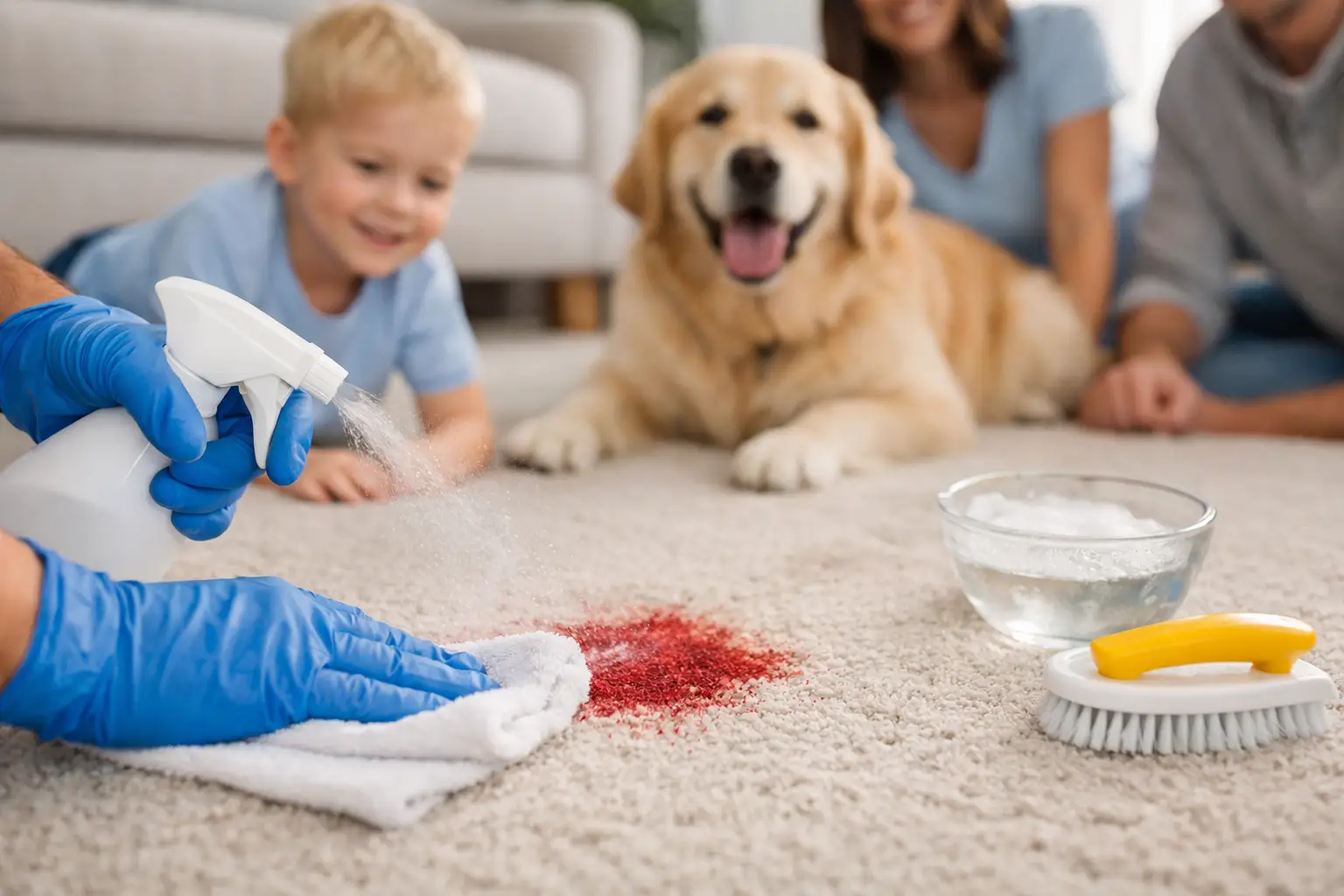
The first rule is simple: blot, do not scrub. Use a clean white cloth or plain white paper towels and press firmly into the spill. Begin at the outer edge and work toward the center so you do not spread it farther across the carpet. Switch to a dry section of cloth as it absorbs moisture.
Keep blotting until the towel is no longer picking up much liquid. This step may feel slow, but it is where most successful spot removal begins. The more of the spill you remove before applying a cleaning solution, the less product and agitation the carpet needs.
Avoid colored towels, printed napkins, and anything that could transfer dye to damp carpet. Also avoid pouring cleaner directly onto the spot. Saturating the backing can cause browning, odor, wicking, and longer dry times.
Use the Mildest Effective Cleaning Solution
For many fresh, water-based spots, begin with a small amount of a carpet-safe spotter applied to a white cloth, not directly to the carpet. Blot the spot gently, then blot with a second cloth lightly dampened with plain water to remove cleaner residue. Finish by pressing dry towels into the area.
If you do not have a proper carpet spotter, a very small amount of clear, mild dish soap mixed with water may help on certain food or beverage spills. The trade-off is residue. Too much soap can leave the carpet feeling stiff or create a dirt-attracting film that makes the spot look worse over the next few days.
Test any solution in an inconspicuous area first, especially on wool, specialty fibers, patterned carpet, or dark carpet. A cleaner that works on one carpet can alter color or texture on another. Bleach, ammonia, harsh degreasers, and high-alkaline products are not casual spot-cleaning tools. They can permanently change carpet color, weaken fibers, or create an unsafe chemical combination if another product was used previously.
Rinse and dry matter more than most people realize
A spot can appear clean while still holding detergent deep in the pile. That residue captures soil from shoes, socks, and pet paws, producing the familiar “it came back” complaint. After using a cleaning product, lightly blot with water and then dry the area thoroughly with towels.
Place a stack of clean white towels over the damp area and add a small, flat weight for 15 to 30 minutes. This helps pull remaining moisture and dissolved soil upward into the towel rather than allowing it to dry below the surface. Once the carpet is mostly dry, vacuum or gently groom the fibers to restore their appearance.
Treat Common Carpet Spots Based on the Cause
Coffee, tea, juice, and soda
Blot up as much liquid as possible right away. Use a carpet-safe spotter sparingly, working from the outside inward. Dark beverages may contain dyes or tannins, so repeated light blotting is better than forceful rubbing. If the spot lightens but does not disappear, stop before experimenting with stronger products. Overworking a colored spill can make professional removal more difficult.
Food and sauce spills
Lift solids carefully with a spoon or dull edge before blotting. Do not grind crumbs, frosting, sauce, or greasy food into the fibers. After removing the bulk of the spill, use a small amount of appropriate spotter and rinse lightly. Red sauces, curry, berries, and brightly colored candy can leave dye stains that require specialized treatment.
Mud and tracked-in dirt
Let mud dry completely before treatment. Trying to clean wet mud often spreads it deeper into the carpet. Once dry, vacuum thoroughly to remove loose soil, then address the remaining mark with a carpet-safe cleaner. If mud appears repeatedly in entryways, the real solution may be better mats, shoe removal, or regular professional cleaning rather than constant spot treatment.
Grease, oil, and makeup
Greasy spots need a product formulated to break down oil. Water alone will not solve the problem. Blot gently and use only a small amount of a carpet-approved solvent or degreasing spotter, following its label carefully. Too much solvent can spread the oily area or affect carpet backing. Makeup can also contain pigments, waxes, and oils, making it a good candidate for professional attention if the carpet is light or expensive.
Pet urine and odor spots
Pet accidents are different because the visible mark is only part of the issue. Urine can travel into the backing and pad, where odor-causing contamination remains even after the surface looks clean. Basic deodorizing sprays may mask the smell without removing the source.
For a fresh accident, blot immediately and use an appropriate enzyme-based pet treatment. Do not use steam or high heat before the contamination is properly treated, as heat can make odor problems harder to correct. If the smell returns on humid days, the pet revisits the same area, or yellowing continues to appear, the spot likely needs professional urine treatment at the source.
What Not to Do When Removing Carpet Spots
The most expensive carpet mistakes usually come from good intentions. Scrubbing frays and distorts fibers, especially in textured carpet. Over-wetting pushes the spill into the backing and may lead to wicking, where hidden soil rises back to the surface during drying.
Avoid mixing household cleaners. Vinegar, peroxide, dish soap, oxygen products, ammonia, and commercial spot removers are not automatically compatible. A mixture can discolor carpet, leave damaging residue, or create fumes. More product is not better either. High-quality cleaning is controlled: the right solution, correct dwell time, gentle extraction, and proper drying.
Rental machines can help with broad soil, but they are not always the right answer for a single spot. Many homeowners over-apply detergent or leave too much moisture behind. On difficult spots, that can produce a clean-looking area for one day and a reappearing spot later.
When a Carpet Spot Needs Professional Cleaning
Call a professional when the stain is old, keeps returning, has an odor, covers a large area, or involves urine, wine, ink, paint, bleach, wax, rust, or unknown chemicals. The same is true when the carpet is wool, delicate, high-value, or still under a manufacturer warranty.
Professional hot water extraction uses controlled water temperature, specialized solutions, and powerful recovery to remove soil rather than simply move it around. For deep spills, advanced treatment may be needed before extraction so the technician can address the stain chemistry, residue, and odor source separately.
At Spurling’s Carpet Cleaning, trained technicians use a multi-step process and truck-mounted equipment designed for deep cleaning with short dry times. That matters when you want more than a temporary improvement. A no-reappearing-spot approach starts with finding out why the spot returned in the first place, whether it is detergent residue, buried soil, moisture wicking, or contamination below the surface.
A clean carpet should not require guesswork or harsh chemicals. Blot quickly, treat gently, rinse away residue, and let stubborn spots be handled before they become permanent reminders of a busy day.