A rental carpet cleaner can feel like the practical answer on a Saturday morning. Pick it up, buy a bottle of solution, make a few passes, and the carpet looks better while it is still damp. But professional cleaning vs rental machine is not simply a question of who does the work. It is a question of extraction power, soil removal, drying time, stain treatment, and whether the improvement lasts after the carpet dries.
For Rochester-area homes with pets, kids, tracked-in winter grit, or carpets that have not been professionally cleaned in a while, that distinction matters. A rental machine has a place for small maintenance jobs. It is not designed to deliver the deep, controlled cleaning and faster recovery that a trained technician using truck-mounted equipment can provide.
Professional Cleaning vs Rental Machine: What Really Changes?
Both options apply moisture and cleaning solution, agitate the carpet to some degree, and attempt to pull soil back out. That is where the similarity largely ends.
Rental machines are built for broad consumer use, portability, and a lower upfront cost. They typically operate with less vacuum strength, less consistent heat, and less water recovery than professional truck-mounted hot water extraction equipment. They can improve the appearance of a lightly soiled carpet, especially in a small room, but they often leave behind more moisture and more suspended soil than homeowners expect.
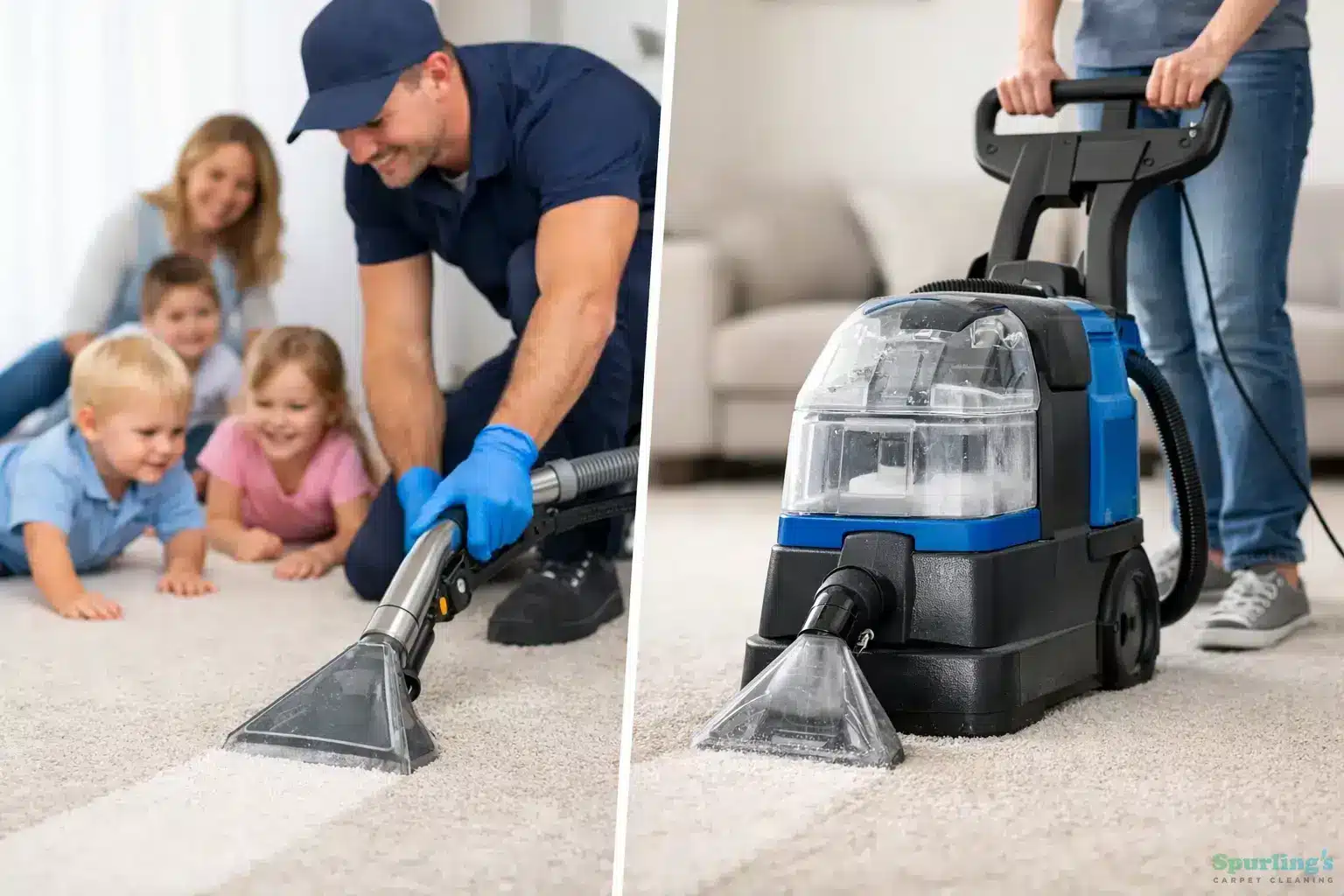
Professional cleaning is a system, not just a machine. A quality technician evaluates the carpet fiber, level of soil, spots, traffic patterns, and previous cleaning attempts before selecting the right solutions and process. Pre-treatment breaks down oily residue that ordinary shampoo may leave behind. Agitation helps release embedded soil. Hot water extraction flushes the carpet, while powerful vacuum recovery removes the dirty water more effectively.
The result should not merely be carpet that looks freshly wet. It should be carpet that feels cleaner, dries sooner, and stays cleaner longer.
The Biggest Difference Is Extraction
Most carpet soils are not loose dirt sitting on top of the fibers. They are a mixture of dry grit, oils carried in from outside, cooking residue, pet dander, body oils, spills, and cleaning product residue. Once those materials bond to carpet fibers, simply adding water and making a few passes is rarely enough.
A rental unit can struggle to rinse and recover that mixture thoroughly. When recovery is limited, moisture and detergent can remain in the carpet. That can lead to a longer dry time, a crunchy or stiff feel, and faster re-soiling as leftover residue attracts new dirt.
Professional truck-mounted equipment provides stronger water lift and recovery. That matters because a deeper cleaning requires both sides of the process: loosening soil and removing it. Without effective extraction, loosened grime may remain in the carpet backing or lower fibers.
This is also why a carpet can appear clean immediately after a rental job, then look dull again within days or weeks. The visible surface may have improved, but the deeper soil load was not fully removed.
Drying Time Is More Than a Convenience
Long drying times are one of the most common frustrations with rental machines. A carpet that stays wet for a day or more can disrupt family routines, create a musty smell, and make homeowners wonder whether they used too much solution. In some cases, excessive moisture can contribute to wicking, when spots rise from deeper in the carpet as it dries.
Professional cleaning does use water, but proper technique focuses on controlled application and high-powered recovery. Airflow, humidity, carpet type, and soil conditions all affect dry time, so no honest company should promise the same exact timing in every home. Still, professionally cleaned carpet commonly dries far sooner than carpet cleaned with a heavily saturated rental unit.
Shorter drying time also means you can return rooms to normal sooner. That is especially valuable for busy households, offices, rental turnovers, and homes where pets or children cannot realistically stay off the carpet all day.
Stains and Odors Need More Than General Shampoo
A rental machine treats the whole carpet with a general-purpose approach. That can be fine for a recent, mild spill. It is far less reliable for coffee, red wine, grease, makeup, old mystery spots, pet urine, or odor concerns.
Different spots require different chemistry. An oily stain needs a different approach than a tannin-based beverage spill. Pet urine can penetrate through the carpet into the backing and pad, where surface cleaning alone cannot reach the source. Applying the wrong product, scrubbing aggressively, or over-wetting an area can make a problem harder to correct.
A trained professional identifies the likely cause of the spot, tests fibers when appropriate, and uses targeted treatment before and after the main cleaning. Some permanent stains cannot be removed because they have changed the fiber’s color. A reputable cleaner will say so plainly rather than overpromise. But many spots that survive rental cleaning respond well when the correct treatment and extraction process are used.
Odor work requires the same honesty. If urine contamination is deep or widespread, it may require specialized treatment beyond a standard carpet cleaning. The goal is not to cover an odor with fragrance. It is to address the odor source as completely as the conditions allow.
When Renting a Machine Can Make Sense
Rental equipment is not useless. For a small, recently spilled area or light between-service maintenance, it can be a reasonable short-term option. It may also make sense when a household needs a quick refresh and understands the limits of the result.
The key is setting realistic expectations. A rental machine is best viewed as maintenance, not a substitute for periodic professional deep cleaning. Use minimal solution, make extra dry passes, avoid over-saturating the carpet, and do not assume a stronger-smelling product means a better clean.
Be especially cautious with wool, delicate area rugs, heavily soiled carpet, recurring spots, and pet odor. These situations are more likely to benefit from professional assessment before additional products or moisture are applied.
The Cost Comparison Is Not Just the Rental Fee
At first glance, renting a machine costs less than hiring a professional. But the real comparison includes the rental charge, cleaning solution, spot treatments, transportation, time, effort, and the risk of needing to redo the job. If the carpet remains damp, spots return, or residue makes it dirty again quickly, the low initial price can become less of a bargain.
Professional service costs more because it includes trained labor, commercial-grade equipment, specialized solutions, process control, and accountability for the experience. For many homeowners, the value is not just cleaner carpet. It is avoiding a full day of work, minimizing disruption, and knowing someone has taken responsibility for doing the job correctly.
At Spurling’s Carpet Cleaning, the focus is on a multi-step hot water extraction process designed for Thee Longest-Lasting Clean, not a quick cosmetic improvement. Friendly, uniformed technicians explain what they see, treat your home with respect, and provide recommendations without high-pressure upselling. That combination matters when you are trusting someone with your floors, furnishings, and indoor environment.
Which Option Is Right for Your Carpet?
Choose a rental machine when the carpet has light, recent soil and you are comfortable treating it as a temporary maintenance step. Choose professional cleaning when traffic lanes are dark, spots keep returning, odors are present, the carpet feels sticky or matted, or you want a deeper result with less moisture left behind.
It also depends on the carpet’s history. A newer carpet that receives regular care may respond well to a routine professional cleaning. A carpet that has gone years between cleanings, has endured pets and children, or has been repeatedly cleaned with detergent-heavy rental products may need more careful restoration.
The best time to call is before a carpet problem becomes a replacement conversation. If your carpet no longer looks, feels, or smells as clean as it should, a professional evaluation can give you a clear answer about what is realistic and what it will take to get the result you want.