That carpet may look clean right after a service, but what matters is how it looks a week later, how it smells on a humid afternoon, and whether the traffic lanes come right back. That is where steam cleaning vs shampooing carpets becomes a real decision, not just a technical difference on a cleaning invoice.
If you want the short answer, steam cleaning is usually the better choice for deep cleaning, faster drying, and longer-lasting results. Shampooing can still have a place in certain situations, especially with heavily soiled carpet or older maintenance methods, but for most homes and businesses, hot water extraction is the method that delivers the cleaner, healthier, and more professional result.
Steam cleaning vs shampooing carpets: what is the difference?
People often use the word steam cleaning loosely, but in professional carpet care, it usually refers to hot water extraction. The process uses very hot water, specialized cleaning agents, agitation when needed, and strong extraction to flush soil out of the carpet and remove it. The key difference is not just the hot water. It is the rinse and recovery. The system is designed to pull contamination back out of the carpet rather than simply scrub it around.
Shampooing carpets is an older method built around applying a foamy detergent and scrubbing it into the fibers with a rotary machine or similar equipment. That scrubbing can loosen soil, which sounds good in theory, but if the carpet is not thoroughly rinsed and extracted afterward, detergent residue can stay behind. That residue attracts fresh soil quickly, which is one reason some carpets seem to get dirty again almost immediately.
This is why the debate over steam cleaning vs shampooing carpets is really a debate about results that last. A carpet that looks bright for 24 hours is not the same as a carpet that stays cleaner longer, feels better underfoot, and dries without that damp, sticky feel.
Why steam cleaning usually gives the better result
Hot water extraction is trusted by carpet manufacturers and cleaning professionals for a reason. It reaches deeper into the pile, removes more suspended soil, and rinses out more of the material that causes dingy appearance and lingering odors. When performed with a multi-step process and strong extraction equipment, it does far more than improve appearance.
It also helps with the issues customers actually care about. Pet oils, tracked-in grime, beverage spills, body oils from socks and bare feet, and everyday dust do not just sit on the surface. They settle down into the carpet backing and lower fibers. Steam cleaning is better equipped to remove that buildup instead of masking it.
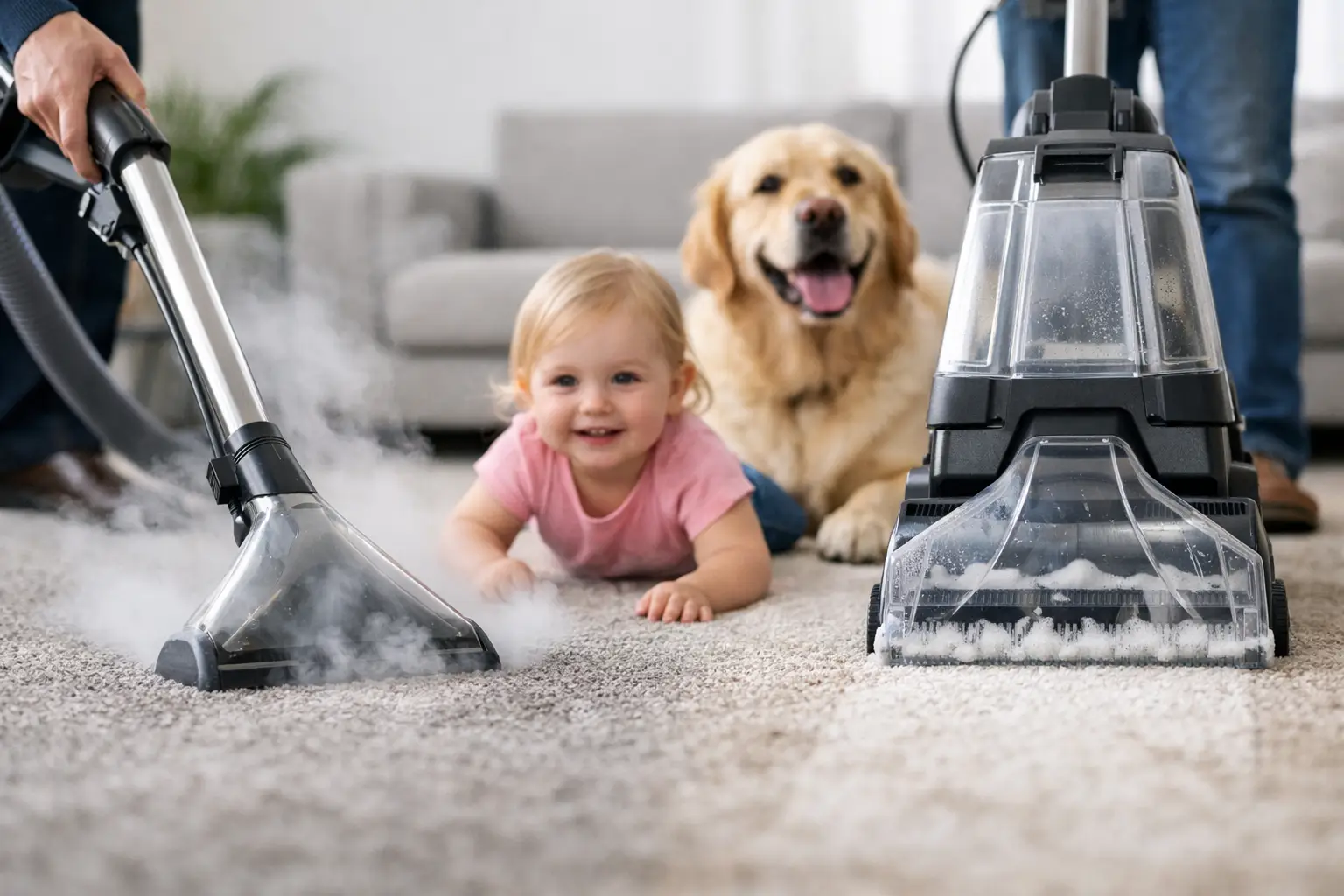
Dry time is another major advantage. Many people assume steam cleaning means soaking the carpet, but a professional hot water extraction system with powerful vacuum recovery often leaves carpets drier than old-fashioned shampooing methods. Less residue and better extraction usually mean shorter drying times and less chance of musty odors or wick-back.
That matters in busy households and commercial spaces. You do not want carpets staying wet all day. You want a process that cleans thoroughly and gets your room back to normal as quickly as possible.
When shampooing carpets can still make sense
To be fair, shampooing is not automatically wrong. In some heavily impacted commercial settings or on neglected carpet with thick oily soil, scrubbing action can help break up stubborn buildup. Some professionals may use a shampoo-like preconditioning step or agitation phase as part of a broader cleaning system.
The problem comes when shampooing is treated as the entire cleaning method rather than one step in the process. If detergent is applied aggressively and not thoroughly rinsed out, the carpet may feel crunchy, look matted, or resoil quickly. That is the trade-off.
So if someone is comparing steam cleaning vs shampooing carpets, the better question is not which one sounds stronger. The better question is which method removes the most soil while leaving the least residue behind. That is where hot water extraction has the clear edge.
What homeowners notice after each method
Most homeowners do not care about industry jargon. They care about whether the stains are gone, whether the room smells fresh, and whether the carpet still looks clean after kids, pets, and everyday traffic get back to normal.
With shampooing, the carpet may initially appear bright because detergents and surface foam can lift the nap and create a freshly scrubbed look. But if residue remains, traffic lanes often return faster. Spots may reappear as moisture moves trapped material back to the surface. Some carpets also feel stiff after drying.
With steam cleaning, the result is typically cleaner-looking fiber, less residue, better odor reduction, and a softer feel. Professional extraction also improves the odds of removing contaminants that contribute to indoor air quality issues. For families with pets, children, or allergy concerns, that is a meaningful difference.
This is one reason premium cleaning companies put so much emphasis on process, technician training, and equipment. The method matters, but how well it is performed matters just as much.
Steam cleaning vs shampooing carpets for pet issues and odors
Pet accidents are where the gap between these methods becomes even clearer. Shampooing can clean the surface and improve appearance, but it often falls short when urine has moved below the face fibers. Scrubbing the top of the carpet does not fully address contamination in the backing or pad.
Steam cleaning, especially when paired with the right spotting agents, odor treatments, and flushing techniques, is a much stronger option. It can rinse and extract more of what is actually causing the odor. It is not magic, and severe urine damage may require more advanced treatment, but hot water extraction gives you a far better chance at meaningful odor reduction.
The same principle applies to spills, food soils, and mystery spots. Surface cleaning can make the problem look better. Deep extraction is what helps prevent it from returning.
Commercial carpet needs a practical answer
Business owners and property managers usually care about three things: appearance, dry time, and how long the carpet holds up between cleanings. In that environment, shampooing can create problems if residue leads to rapid resoiling. A lobby or office hallway that looks dull again in a few days is not a savings. It is a repeat expense.
Professional steam cleaning is often the better investment because it removes more abrasive soil and leaves less behind to attract fresh dirt. That supports both appearance and carpet life. In a commercial setting, that longer-lasting clean is what really counts.
For offices, rental properties, medical spaces, and customer-facing businesses around Rochester, that difference shows up quickly. The carpet either stays presentable, or it does not.
The real issue is not cheap cleaning. It is incomplete cleaning.
A lot of disappointment in carpet cleaning comes from one simple problem. The carpet was cleaned enough to look different, but not enough to stay clean. That usually points to residue, weak extraction, rushed work, or a one-step approach on carpet that needed a more thoughtful process.
That is why experienced professionals lean on hot water extraction with quality pre-treatment, careful spot work, and strong vacuum recovery. It is not about using a fancier label. It is about delivering measurable performance and a better customer experience.
When people ask whether shampooing is cheaper, sometimes it is. But the better value is the method that gives you cleaner carpet for longer, fewer recurring spots, and less frustration after the appointment is over.
Which method should you choose?
If your goal is the deepest clean, better rinse-out, shorter dry times, and results that hold up better under real life, steam cleaning is the stronger choice for most carpeted spaces. If a carpet is severely soiled, agitation and specialty treatments may still be part of the plan, but they should support extraction, not replace it.
That is the difference between cleaning that looks good on the way out and cleaning that still looks good after the room is back in use. For most homeowners and businesses, that is not a small detail. It is the whole point.
A good carpet cleaning method should do more than freshen the surface. It should leave you confident that the job was done right, the first time.