A urine accident on carpet rarely stays a simple spot for long. What looks minor on the surface can sink into the backing, pad, and even the subfloor, which is why effective urine spot treatment for carpet has to do more than lighten the visible stain. If the odor keeps coming back, or the spot seems to reappear after cleaning, that is usually a sign the contamination was never fully removed.
Why urine spots are harder than they look
Urine is one of the most misunderstood carpet problems because it changes over time. Fresh urine is easier to treat. Once it dries, the water evaporates and leaves behind concentrated salts, proteins, and uric compounds that cling to carpet fibers and hold odor. Add warmth or humidity, and those residues can reactivate, which is why a room may smell worse on damp days.
That is also why store-bought spotters often disappoint people. Many products can improve the surface appearance, at least for a while, but they do not always reach the full depth of the contamination. If urine has soaked below the face fibers, a quick spray and blot may leave the real source untouched.
For homeowners, renters, and property managers, this is where frustration starts. The stain looks gone, then it returns. The odor fades, then comes back. In some cases, aggressive scrubbing or the wrong cleaner can make the area look worse by setting the stain, spreading it, or damaging the carpet texture.
The right urine spot treatment for carpet depends on the age of the spot
There is no single fix for every urine spot. Fresh accidents and old, set-in contamination are two different jobs.
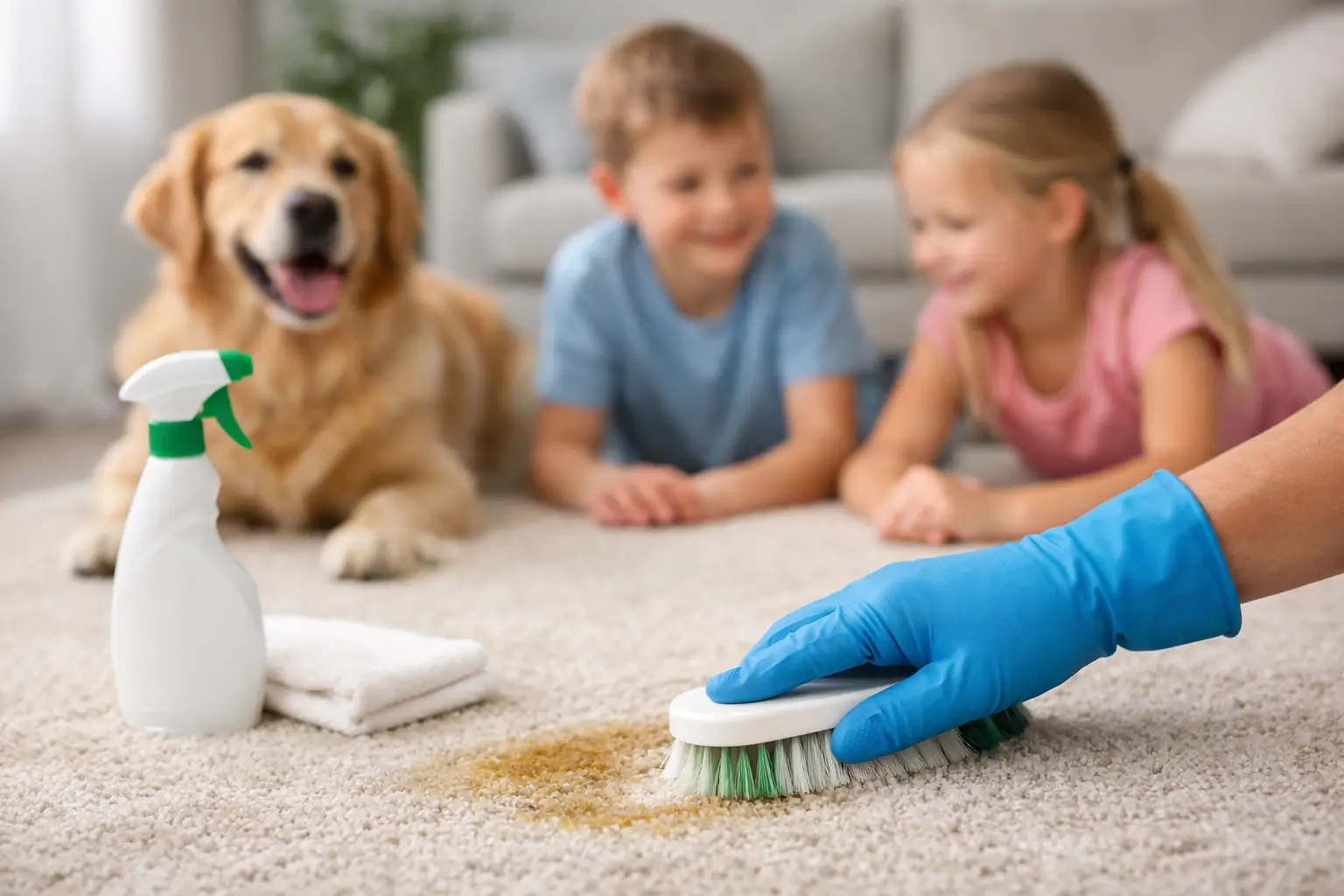
With a fresh spot, speed matters. Blotting immediately with clean white towels can remove a meaningful amount of moisture before it settles deeper. Press firmly, avoid rubbing, and keep rotating to a dry section of the towel. If you have a wet vacuum, that can help lift more liquid out of the carpet before treatment begins.
For older spots, the challenge changes. At that point, you are not just removing liquid. You are dealing with residue, odor compounds, and possible dye change in the carpet. Some yellowing is not a removable stain at all. It can be permanent color damage caused by the chemistry of the urine itself. A trustworthy cleaner should be honest about that, because not every discolored spot can be restored to like-new condition.
That said, many urine issues can be dramatically improved when the treatment matches the problem. The key is identifying whether you are dealing with a recent accident, a repeat pet area, or long-term contamination that has penetrated beneath the carpet.
What actually works on urine spots
The most effective treatment usually combines the right chemistry with thorough extraction. That order matters.
Specialized urine treatments are designed to break down the compounds that cause odor and staining. General carpet shampoos are not built for that job. In fact, heavily fragranced products can temporarily mask the smell while leaving the source in place. It may smell cleaner for a day or two, but the room tells the truth once the fragrance fades.
Deep extraction is what separates temporary improvement from a longer-lasting result. If contamination remains in the carpet and pad, the spot can wick back to the surface as the carpet dries. This is one reason professional cleaning companies invest in truck-mounted hot water extraction and multi-step systems rather than relying on simple surface cleaning.
Heat, pressure, rinse, and powerful vacuum recovery all play a role, but technique matters just as much as equipment. Overwetting a urine spot can push contamination deeper. Too little flushing can leave residue behind. A trained technician knows how to balance chemistry, dwell time, agitation, and extraction for the specific carpet and severity of the problem.
Common mistakes that make urine spots worse
Plenty of carpet damage starts with good intentions. Homeowners are trying to help, but the wrong approach can turn a manageable issue into a more expensive one.
One common mistake is using too much product. Oversaturating the area with cleaner can leave sticky residue that attracts soil, creating a dark traffic-looking spot later. Another is scrubbing aggressively. That can distort carpet fibers, cause fuzzing, and spread the contamination outward.
Hot water from a household machine can also be a problem if the area has not been properly treated first. Without the right neutralizing or urine-targeted solution, heat alone can intensify odor and encourage wicking. Steam cleaning is excellent when done as part of the right system. It is not magic on its own.
Then there is the temptation to use strong household chemicals that were never meant for carpet. Ammonia-based products are a bad choice around pet urine because the smell can mimic urine and encourage repeat accidents. Bleach is even worse. It can damage fibers, strip color, and create permanent carpet injury almost instantly.
When DIY is reasonable and when it is not
A fresh, small accident caught right away is the best case for do-it-yourself care. If the spot is new, the carpet is colorfast, and the urine has not soaked deeply, prompt blotting and a proper urine-specific treatment may be enough.
But there are clear signs that a deeper service is needed. If the spot has been there for days, if the smell returns after cleaning, if the same area has been hit multiple times, or if you notice staining spreading as the carpet dries, you are likely beyond surface spotting.
This is especially true in homes with pets, children, or repeated accidents. Once urine reaches the pad, regular spot cleaning loses a lot of its effectiveness. At that stage, success depends on flushing, extraction, and honest evaluation of whether the backing or pad has been affected too heavily to fully recover.
For commercial settings and rental turnovers, speed and presentation matter too. A carpet that still smells faintly of urine can create the wrong impression even if the stain looks better. That is why many property managers and business owners choose professional treatment the first time instead of repeating partial fixes.
What to expect from professional urine spot treatment for carpet
A premium service should start with inspection, not guessing. The technician should assess the severity, identify likely contamination depth, and explain what is realistically possible. That includes being upfront about permanent discoloration versus removable residue.
The treatment itself may include urine-targeted preconditioning, controlled dwell time, flushing, deodorizing, and hot water extraction. In more severe cases, subsurface treatment may be necessary. The goal is not just to clean what you can see, but to remove what is causing the problem.
The difference customers notice is usually not just appearance. It is the combination of reduced odor, cleaner texture, and a spot that does not return a few days later. That is where a thorough, source-first process matters most. Surface improvement is easy to promise. Lasting results require a better process. Note: pet-related issues (urine, vomit, diarrhea, blood, and similar) are excluded from our guarantees — we’ll always tell you upfront whether your situation qualifies.
In Rochester-area homes, where weather shifts can bring humidity, hidden urine contamination tends to announce itself at the worst times. A treatment that truly removes residues can make a room feel fresher, not just look a little better for the weekend.
Why experience matters with stain and odor work
Urine treatment is not a beginner-level cleaning issue. It takes judgment. The cleaner has to know the carpet type, the likely depth of contamination, the proper solution, and the right extraction approach without overdoing any part of the process.
That is one reason experienced companies stand apart. A well-trained technician understands the trade-offs. Some spots respond beautifully. Some require multiple treatments. Some odors can be greatly reduced but not fully eliminated without pad replacement. Clear expectations are part of professional service.
At Spurling’s Carpet Cleaning, that kind of honesty matters just as much as performance. People who call for urine spot help are usually not looking for the cheapest quick fix. They want the job done correctly, with respect for their home or business and with a cleaning system designed to deliver Thee Longest-Lasting Clean.
The best next step after a urine accident
If the accident just happened, blot it fast and avoid over-the-counter experiments that could complicate the stain. If it is an older spot, or one that keeps coming back, skip the guesswork and have it evaluated before the damage spreads or settles in deeper.
A carpet can hide a lot beneath the surface. The good news is that the right treatment can often solve far more than most people expect. The sooner you address it with the proper process, the better your chances of saving the carpet, improving the odor, and getting back to a cleaner, more comfortable space.