A pet accident on the sofa can become a much bigger problem than a visible spot. Liquid moves quickly through upholstery fabric, into cushion filling, and sometimes down to the furniture frame or the floor beneath it. That is why furniture cleaning after pet accidents needs more than a quick wipe with a scented spray. The goal is to remove the contamination, stop odor at its source, and protect the fabric from permanent discoloration or damage.
The good news is that fast, careful action can make a real difference. The better news is that old urine odor and recurring spots are not something you have to live with. The right cleaning process depends on what happened, how long it has been there, and what kind of furniture you own.
Start by Blotting, Not Scrubbing
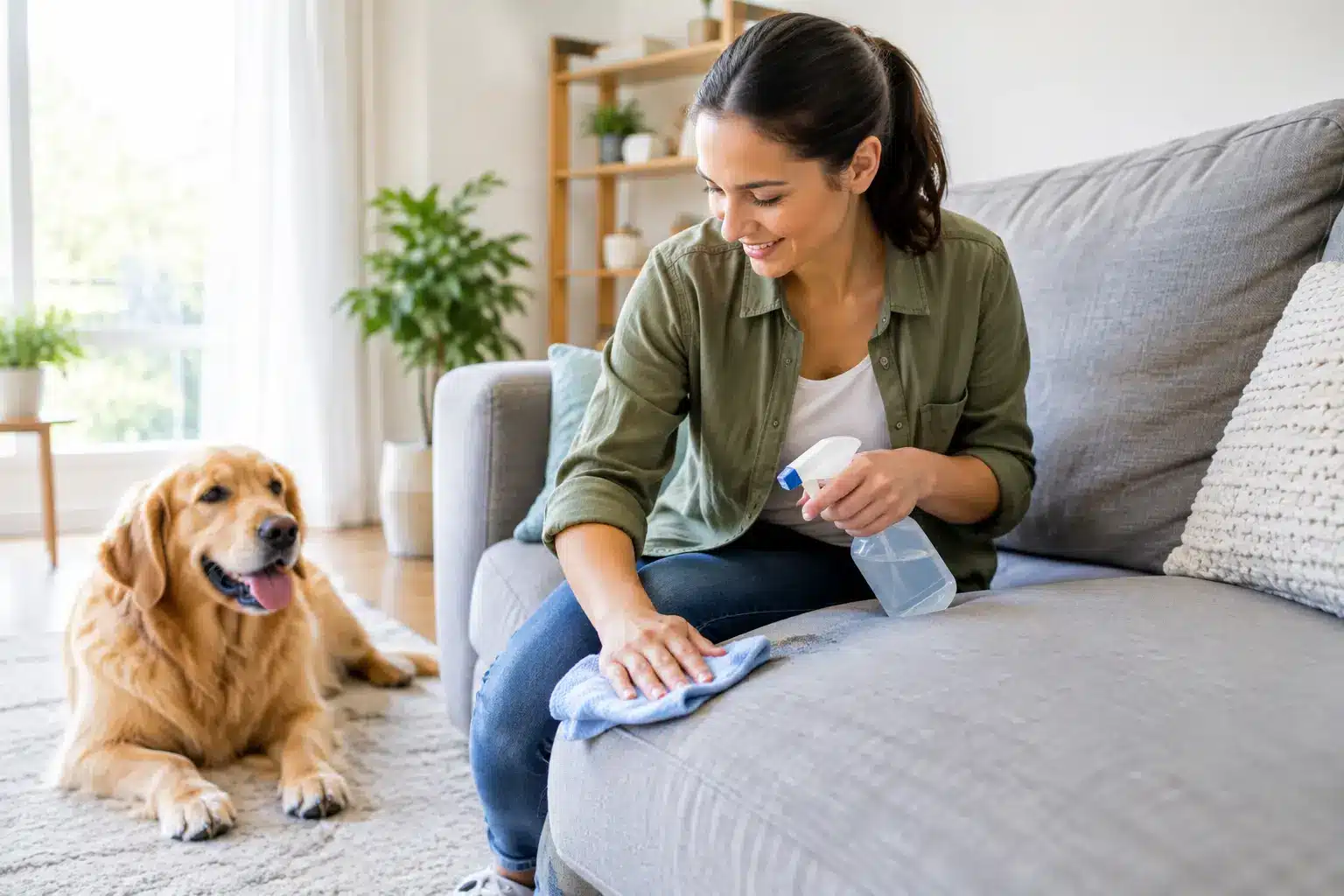
When an accident is fresh, resist the urge to scrub the area. Scrubbing pushes liquid deeper into the fibers, spreads the affected area, and can roughen delicate upholstery. Instead, use clean white towels or paper towels to blot firmly from the outside of the spot toward the center.
Apply steady pressure, then replace the towel as it becomes wet. If the cushion cover can safely be removed, blot both the top fabric and the underside. For removable cushion inserts, check whether liquid has reached the inner filling. Surface fabric may look dry while the foam inside still holds moisture and odor-causing residue.
Avoid soaking the area with water. Adding too much liquid often drives urine farther into the cushion, particularly on microfiber, cotton blends, and heavily padded furniture. It also increases drying time, which creates conditions that can leave upholstery smelling musty.
Why Pet Odor Comes Back After Upholstery Cleaning
Pet urine is not just a stain. As it dries, it leaves behind salts and organic compounds that can remain in the fabric, backing, foam, and even the furniture frame. Humidity can reactivate those residues, which is why a couch may smell fine one day and noticeably worse on a damp afternoon.
Many store-bought cleaners mask the odor for a short time without removing what is causing it. Others contain soaps or fragrances that leave a residue of their own. When the area gets damp again, the original odor can return, sometimes stronger than before.
This is also why a spot that appears gone can reappear. Moisture may pull remaining contamination upward as the cushion dries. If the urine reached deep into the filling, surface treatment alone will not solve the problem.
Furniture Cleaning After Pet Accidents Requires the Right Method
There is no one-size-fits-all cleaner for upholstery. A durable synthetic sofa may tolerate a process that would be risky for a natural-fiber chair. Wool, cotton, rayon, silk, linen, velvet, and some specialty performance fabrics all require a more controlled approach.
Before applying any product, check the furniture tag. Upholstery codes generally indicate whether the piece can be cleaned with water-based products, solvent-based products, vacuuming only, or professional cleaning methods. A code is helpful, but it is not a guarantee that every product labeled for upholstery is safe. Dye stability, prior cleaning attempts, fabric construction, and hidden stains all matter.
For a small, fresh accident on a water-safe fabric, a quality enzyme-based pet treatment may help when used exactly as directed. Enzyme products need enough contact time to work, and they must reach the same depth as the urine. Spraying only the visible surface is often not enough.
Be cautious with homemade mixtures. Vinegar, baking soda, peroxide, dish soap, and essential oils are frequently recommended online, but they can create new problems. Peroxide may lighten certain fabrics. Soap can leave a sticky residue that attracts soil. Baking soda can be difficult to remove from cushions. Strong fragrances may cover odor while making it harder to tell whether the treatment actually worked.
Know When a DIY Attempt Is No Longer Enough
A professional inspection is worth considering when the accident is old, the odor is persistent, or the cushion feels damp deep inside. It is also the smart choice if your pet has repeatedly used the same area. Repeat accidents can saturate padding and contaminate the furniture base, making a simple spot-cleaning effort unlikely to last.
Call for professional upholstery cleaning if you notice any of the following:
- The smell returns after the furniture dries or when the room is humid.
- A yellow, brown, or dark ring appears around the original spot.
- The urine reached a thick cushion, recliner, sectional, or upholstered headboard.
- Previous cleaning products have left the fabric stiff, sticky, faded, or discolored.
- Your pet returns to the same location despite your efforts to clean it.
These situations require more than deodorizer. A trained technician can identify the fabric, evaluate the depth of contamination, and select a treatment that is appropriate for the piece. Depending on the furniture and the affected area, the work may involve targeted odor treatment, controlled flushing and extraction, and deep cleaning designed to remove soil and residue without overwetting the upholstery.
Why Extraction Matters for Deep Odor Problems
The strongest results come from removing contamination, not simply treating the top layer. Professional hot water extraction can be highly effective on suitable upholstery because it helps rinse away embedded soil and residues while powerful vacuum recovery pulls moisture back out.
That said, extraction is not automatically the answer for every fabric or every accident. Some materials need low-moisture cleaning, specialized solvents, or careful hand treatment. The premium approach is not forcing one method onto every sofa. It is choosing the safest process that gives the best chance of lasting odor and stain removal.
At Spurling’s Carpet Cleaning, technicians assess the furniture before beginning work and use advanced cleaning systems selected for the fabric and condition. That matters because a fast surface pass may make a piece look better for a day, while a properly planned treatment addresses the contamination that is still hiding below.
Protect the Furniture While It Dries
After cleaning, good drying practices help prevent water marks, odor recurrence, and dye migration. Leave cushions separated when possible, stand them on edge for airflow, and run ceiling fans or a room fan nearby. Avoid sitting on the furniture until it is fully dry, since pressure can transfer remaining moisture between layers.
Do not place plastic over a damp cushion or close it inside a tight storage space. Trapped moisture can produce a musty smell and make a manageable accident more complicated. If the furniture has a removable cushion cover, do not use high heat to speed the process unless the manufacturer specifically allows it. Shrinkage and distorted cushion covers are common results of aggressive heat.
If you have multiple pets or a pet that is still being house-trained, consider using washable covers or throws on their favorite furniture spots. These do not replace proper cleaning after an accident, but they can reduce how quickly liquid reaches the upholstery underneath.
Prevent Repeat Accidents Without Making Your Home Feel Off-Limits
A clean sofa can still attract a pet back to the same area if even a small amount of odor remains. Thorough odor removal is part of prevention, but so are routine, practical changes. Make bathroom breaks consistent, clean litter boxes frequently, and watch for changes in behavior that may signal stress or a health concern.
For older pets, a new accident pattern can be a reason to speak with a veterinarian. For younger pets, management matters: limit unsupervised access to problem furniture until training is reliable. The goal is not to make your home less comfortable for your pet. It is to stop one accident from becoming an expensive, repeating cycle.
Your furniture should be a place where your family relaxes, not a source of lingering odor or worry. Act quickly, avoid harsh shortcuts, and get experienced help when the accident has traveled beyond the surface. A properly treated piece can look fresh, smell clean, and stay that way far longer.