
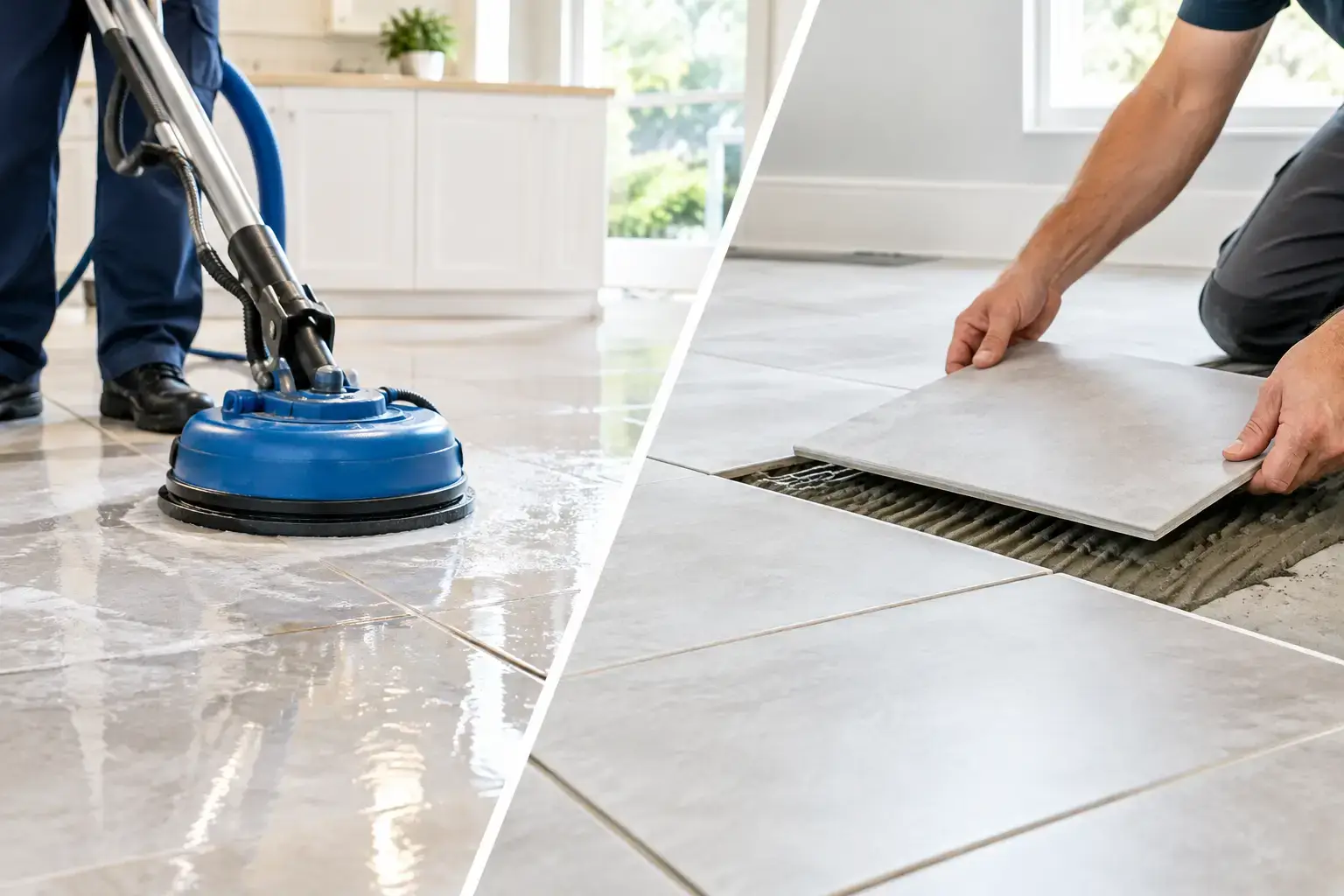
A dull tile floor can make an otherwise clean kitchen, bath, entryway, or commercial space feel worn out. But before you start planning a messy renovation, consider tile cleaning vs replacement carefully. In many cases, the tile itself is still in excellent shape. What has changed is the grout, the buildup on the surface, and the way years of foot traffic, spills, soap residue, and everyday soil have changed its appearance.
Replacement has a place when tile is truly damaged or outdated beyond repair. Professional cleaning, however, is often the faster, less disruptive, and more cost-conscious option for ceramic and porcelain tile that still has good structural integrity. The right decision comes down to what is actually causing the problem – not just how bad the floor looks at first glance.
Tile Cleaning vs Replacement Starts With the Tile’s Condition
The first question is simple: is the tile damaged, or is it dirty? Those are two very different problems, and they require very different solutions.
Ceramic and porcelain tile are durable surfaces. They can hold up for many years, even in busy homes, rentals, offices, and other commercial cleaning spaces. Yet grout is porous, textured, and usually lighter in color than the tile itself. It collects soil gradually. Before long, what started as light gray grout can look brown or black, and the entire installation may appear old.
A professional deep cleaning can remove embedded soil, oily residues, mineral deposits, and cleaning-product buildup that regular mopping leaves behind. Many property owners are surprised by the original grout color hiding beneath that buildup. If the tile is intact, cleaning may restore the appearance you thought was gone for good.
Replacement becomes the more sensible choice when you see widespread cracking, loose tile, missing sections, serious water damage beneath the floor, or failed grout joints that cannot be stabilized. A cleaning process can improve appearance, but it cannot repair a compromised subfloor or reattach tile that has already lost its bond.
Signs Cleaning Is Usually the Better First Move
If your tile is solid underfoot and mostly free from cracks and chips, cleaning deserves serious consideration. Discolored grout, a sticky or hazy finish, dark traffic lanes, shower residue, and grime around toilets or entryways are often cleaning issues, not replacement issues.
This is especially true when the floor looked good when it was first installed and you still like the size, color, and layout of the tile. There is little value in removing a functional ceramic or porcelain floor simply because its grout has absorbed years of soil.
Professional equipment also matters. A mop spreads dirty water across the floor and leaves much of it behind. A thorough tile and grout cleaning uses a multi-step process to break down soil, agitate the grout lines, rinse thoroughly, and extract the suspended grime. Truck-mounted equipment can make a noticeable difference because it provides strong recovery rather than leaving loosened dirt to settle back into the grout.
Signs Replacement May Be Worth the Investment
Some floors have moved beyond a cleaning problem. If tile is cracked throughout the room, hollow in multiple areas, lifting at the edges, or showing signs of moisture intrusion, replacement may prevent a larger repair later. A musty odor associated with a known leak or visible staining below tile should be evaluated by the appropriate repair professional before any cosmetic decision is made.
Replacement may also make sense if you are changing the function of a room, correcting an unsafe surface, or dealing with a style you genuinely dislike. Cleaning can reveal the best version of your current floor. It cannot turn beige tile into a new design or correct an installation that was poorly done from the beginning.
The key is not to confuse permanent damage with neglected maintenance. A floor can look rough enough to replace and still respond dramatically to the right cleaning system.
The Cost and Disruption Difference Is Real
Tile replacement is a renovation project. It can involve demolition, dust, noise, material selection, labor scheduling, subfloor repairs, new grout, and time when the room cannot be used normally. In bathrooms, kitchens, and business spaces, that disruption can affect daily routines quickly.
Professional tile and grout cleaning is typically far less invasive. There is no demolition and no need to remove fixtures or tear out a floor that may still have years of service left. For homeowners preparing for guests, putting a property on the market, refreshing a rental, or simply taking pride in a well-kept space, this can be a practical way to get a major visual improvement without taking on a full renovation.
That does not mean cleaning is always the cheapest decision over the long term. A floor with structural failure can continue to deteriorate, and repeated cosmetic work will not fix it. But when the tile is sound, cleaning protects the investment you already made rather than replacing it prematurely.
Why Grout Changes the Whole Look of a Room
People often blame the tile when grout is the real issue. Light-colored grout lines cover a large amount of surface area, especially in rooms with smaller tile. Once those lines darken unevenly, the entire floor can look stained, even when the tile faces themselves are fairly clean.
Home cleaning products can make this worse. Some leave a film that attracts soil. Others are too mild to release embedded grime, while harsh products can create their own problems when used incorrectly. Scrubbing grout by hand may improve a small section, but it is difficult to get consistent results across an entire floor with consumer tools.
A professional cleaning process is designed to clean the tile face and grout lines together. That matters because a bright tile surface next to dark, dirty grout still looks unfinished. When both are cleaned properly, the room often feels brighter and more cared for without changing a single tile.
A Smart Way to Decide Before You Renovate
Before committing to replacement, inspect the floor in good light. Look for physical damage rather than just discoloration. Press gently on questionable tiles to check for movement. Notice whether grout is merely dark or actually crumbling out in multiple places. Think about whether you dislike the floor itself or simply dislike how dirty it has become.
Then consider your goal. If you want to restore the condition of a ceramic or porcelain surface you already like, professional cleaning is the logical first step. If you are planning a complete design change or dealing with widespread failures, replacement may be the better long-term path.
For rental properties and commercial spaces, this decision is often even more practical. Cleaning can help maintain a professional appearance between occupants or before an important client-facing period, without the downtime of construction. It is a maintenance decision that can preserve the life and appearance of the existing installation.
What a Professional Tile Cleaning Can and Cannot Do
A quality cleaning can remove a substantial amount of embedded soil and residue, improve grout color, refresh the overall appearance of the room, and make routine maintenance easier afterward. At Spurling’s Carpet Cleaning, the focus is not a quick pass with a mop. It is a detailed, high-performance cleaning process built to deliver Thee Longest-Lasting Clean possible for ceramic and porcelain tile surfaces.
Still, honest expectations matter. Cleaning will not erase chips, repair cracked tile, replace missing grout, reverse water damage, or change the color of the material. Certain stains or permanent discoloration may remain, depending on their source and how long they have been present. A reputable cleaning company should explain that clearly, without pressure or exaggerated promises.
The best outcome is often a floor that looks remarkably better because the dirt is gone, not because the underlying material has been disguised.
Keep a Restored Floor Looking Its Best
Once tile and grout are professionally cleaned, maintenance becomes much easier. Use a neutral cleaner appropriate for the surface, avoid leaving dirty mop water behind, and address spills before they have time to settle into grout. In high-traffic areas, regular sweeping or vacuuming helps prevent grit from being ground across the floor.
If your floor looks tired but remains solid and functional, do not let appearance alone push you into a renovation. Start by finding out what professional cleaning can reveal. You may discover that the floor you were ready to remove still has plenty of life, value, and clean-looking years ahead.