
A bright spill on a light carpet can become a permanent reminder of a rushed evening in minutes. Effective carpet stain prevention is not about treating your home like a museum. It is about building a few practical habits that stop everyday spills, tracked-in soil, pet accidents, and oily residue from settling into the fibers.
For Rochester-area homes and businesses, this matters even more through wet, salty winters and muddy spring weather. The goal is not simply to make carpet look clean today. The goal is to keep it looking better between professional cleanings and protect the investment beneath your feet.
Carpet Stain Prevention Starts Before the Spill
Most carpet spots do not begin with a dropped glass of wine. They begin with dry soil, oils from shoes, pet dander, cooking residue, and tiny particles that work their way down into the pile. Once those materials accumulate, carpet fibers become dull, matted, and more likely to grab onto the next spill.
A good prevention plan starts at the doors. Use durable walk-off mats outside and inside every busy entrance, especially near garages, patios, and mudrooms. The outside mat removes larger grit; the inside mat catches moisture and fine particles. Clean those mats regularly, because a saturated mat cannot do its job.
A shoes-off routine can make a remarkable difference in homes with light-colored carpet, children, or pets. That does not have to mean making guests uncomfortable. A small bench, a basket for slippers, and a clear place for shoes make the habit easy. In an office, retail space, or rental property where shoes will stay on, invest instead in quality entrance matting and more frequent vacuuming near the door.
Vacuuming Is Your First Line of Defense
Vacuuming may not feel like stain prevention, but it is one of the most effective ways to protect carpet. Dry soil has sharp edges. As people walk across it, those particles abrade the carpet fibers and create a gray, worn appearance that cleaning cannot always reverse.
High-traffic areas such as hallways, family rooms, stairs, and paths from the garage should be vacuumed two or three times per week. Lower-traffic bedrooms may need attention weekly. Slow, overlapping passes are more useful than a quick lap around the room, particularly with plush carpet where grit settles below the surface.
If you have pets, vacuuming becomes even more important. Pet hair carries natural oils, and those oils can hold odors and attract more soil. A vacuum with strong suction, a clean filter, and a brush roll suited to your carpet style will outperform an expensive machine that is clogged or poorly maintained.
Treat Spills Quickly, but Do Not Panic
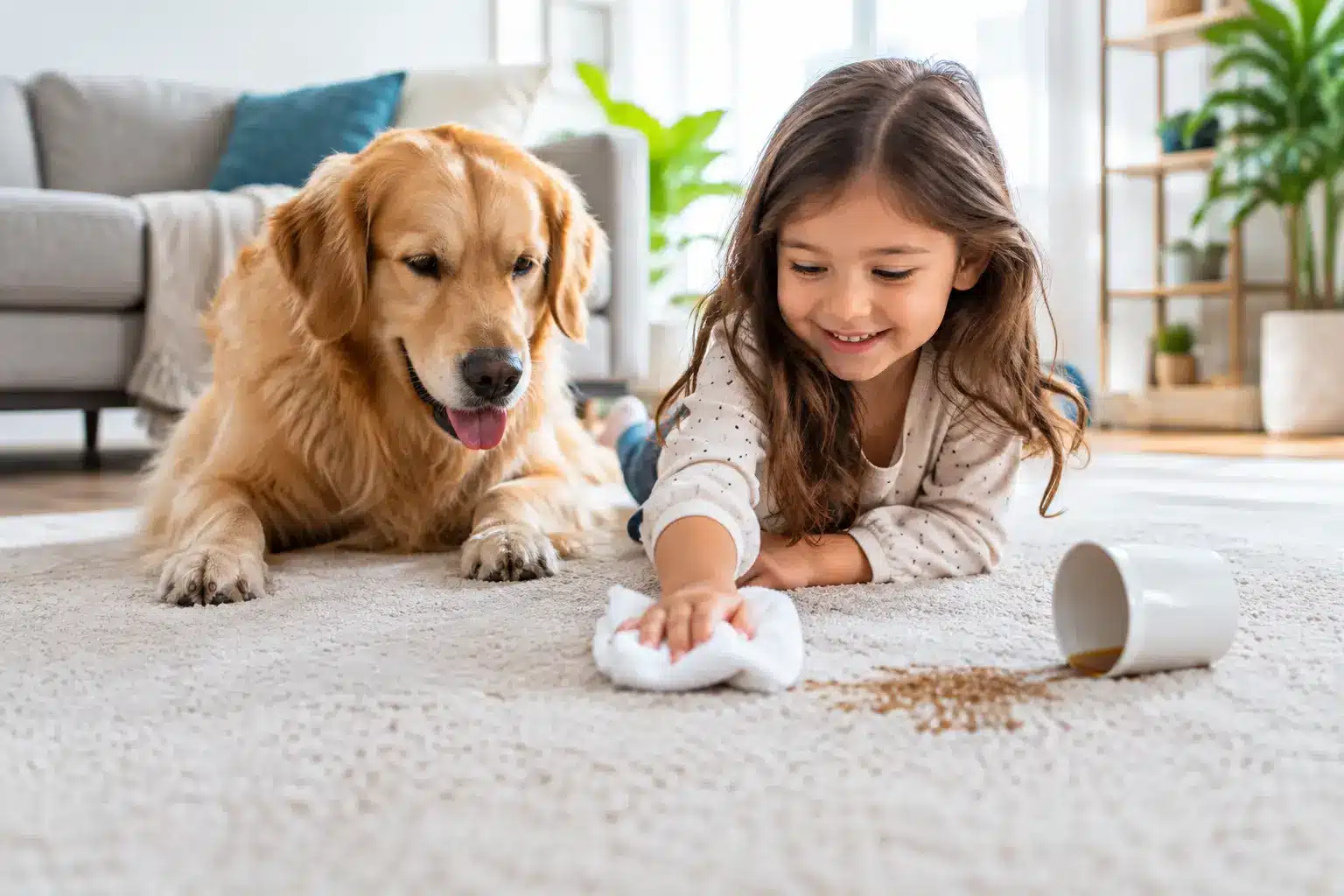
The first few minutes after a spill matter. Blot up as much material as possible with clean, white absorbent towels, working from the outside of the spill toward the center. This limits spreading. Replace towels as they become damp, and use gentle pressure instead of aggressive rubbing.
Rubbing is one of the fastest ways to turn a manageable spill into a visible stain. It pushes the substance deeper into the backing, frays carpet fibers, and can leave a fuzzy texture that catches light differently from the surrounding carpet. Even after the color is gone, that damaged area may remain noticeable.
For plain water-based spills, blotting followed by a small amount of cool water is often enough. Blot again until the area is only slightly damp, then allow it to dry completely. Place a clean towel over the spot and weigh it down lightly if the carpet is very wet. This helps wick remaining moisture upward rather than allowing it to dry deep in the backing.
The situation changes with coffee, red wine, grease, ink, pet urine, or brightly colored foods. Each stain has different chemistry, and the wrong household product can set the stain, bleach the carpet, or leave behind a sticky residue that attracts dirt. If you are not sure what you are treating, stop after blotting and get informed guidance before applying a cleaner.
Be Careful With Store-Bought Spot Removers
Spot cleaners can be useful when selected and used correctly, but more product is rarely better. Overapplication is a common reason a spot seems to disappear, then returns as a dark ring a few days later. The cleaner residue remains in the fibers, collects soil, and makes the area look worse over time.
Avoid pouring products directly onto the carpet. Apply a small amount to a white towel first, test in an inconspicuous area, and blot gently. Never mix cleaning chemicals. Bleach, ammonia, dish soap, and vinegar are not a universal carpet-cleaning formula, and combinations can damage fibers or create unpleasant fumes.
Homemade remedies also have limits. Vinegar may help with certain odor concerns, but it is not a complete answer for pet urine that has reached the pad or subfloor. A surface-level treatment can mask the problem briefly while odor-causing material remains below.
Protect High-Risk Areas Before They Look Dirty
The rooms that need the most protection are predictable: dining areas, family rooms, kids’ play spaces, stair landings, hallways, and the route between the kitchen and the living room. Put washable rugs or runners in these zones when appropriate, using a non-staining rug pad designed for carpet beneath them.
Furniture placement matters too. A favorite recliner or sectional can create a traffic lane around its edges. Rearranging furniture occasionally changes where people walk and can reduce concentrated wear. Use protective cups under furniture legs, especially when carpet is damp after cleaning, to prevent rust or dye transfer.
For homes with young children, create a practical snack zone rather than trying to enforce perfection everywhere. A washable mat under a small table or a rule that juice and brightly colored drinks stay off carpet can prevent a surprising number of emergency spot-cleaning sessions. Pet owners can use the same thinking by placing washable mats under water bowls and keeping muddy-paw towels near the entrance.
Professional Cleaning Supports Prevention
Regular professional cleaning is not a substitute for daily care. It removes the embedded soil and residues that home vacuuming and spot treatment cannot fully reach. When performed with the right process, hot water extraction flushes contaminants from carpet while reducing the sticky buildup that causes rapid re-soiling.
Timing depends on the household. A low-traffic home may benefit from professional cleaning every 12 to 18 months. Busy families, pet owners, homes with allergies, and commercial spaces often need it more frequently. Waiting until carpet looks visibly dirty usually means soil has already been grinding into the fibers for months.
Professional carpet protector can also be worth considering after a thorough cleaning. Protector does not make carpet spill-proof, and it will not allow a spill to sit overnight without consequences. What it can do is help liquids bead up longer, make vacuuming more effective, and give you a better chance of removing a fresh spill before it bonds to the fibers.
There is a trade-off: protectant needs to be reapplied after professional cleaning, and its value is greatest in high-use areas. In a rarely used guest room, it may not be necessary. In a family room with pets, kids, and daily traffic, it can be a sensible layer of protection.
Know When a Spot Needs Professional Attention
Some stains are best handled quickly by a trained technician, particularly when they involve urine, vomit, red dye, grease, wax, ink, or unknown substances. The visible spot is not always the whole issue. Urine, for example, can travel through carpet backing into the pad and may require targeted treatment for both stain and odor control.
A spot that disappears and returns is another warning sign. This can happen when residue rises from deep in the carpet as it dries, or when a previous cleaner leaves behind soap that attracts soil. Repeatedly adding more spot remover usually compounds the issue.
At Spurling’s Carpet Cleaning, trained technicians use a multi-step approach and truck-mounted hot water extraction to address the soil beneath the surface, not just the mark you can see. That attention to detail is how carpets stay cleaner longer, with shorter dry times and no-pressure service built around the condition of your home or business.
A clean carpet is easier to keep clean. Start with entrance mats, consistent vacuuming, and calm, careful spill response. Then give high-use carpet the professional care it needs before stains and wear become the story your floors tell.