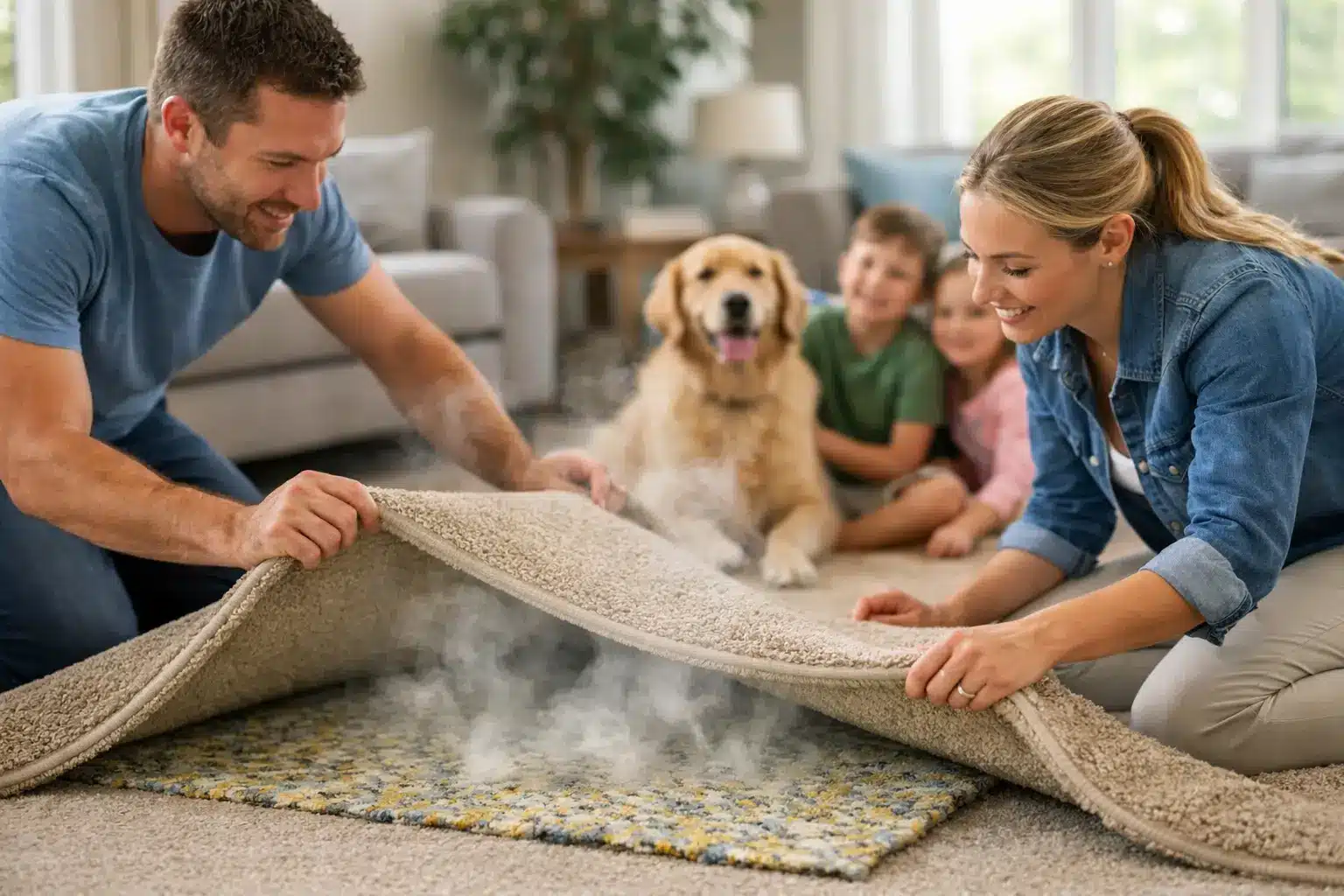
A carpet can look clean, feel soft, and still make the room smell wrong. That usually means the problem has moved below the carpet fibers. Knowing how to deodorize carpet padding starts with one honest question: did the odor stay on the surface, or did it soak through into the pad and possibly the subfloor?
For pet urine, spilled drinks, mildew, smoke, or recurring musty odors, spraying fragrance on top of the carpet rarely solves the problem. It can even make the room smell worse by combining perfume with the original odor. Lasting odor control requires treating the source completely, then drying the area properly.
Why Carpet Padding Holds Odors So Stubbornly
Carpet padding is designed to cushion the carpet and provide insulation. Unfortunately, many padding materials are also absorbent. When a liquid spill reaches the pad, it can spread wider than the visible spot above it. Pet urine is especially troublesome because it can travel through carpet backing, settle in the padding, and reach the subfloor below.
As moisture dries, odor-causing residue remains. With urine, the smell may seem to disappear for a while, then return during humid weather or after the room warms up. That is not a mystery – it is a sign that residue is still present beneath the carpet.
The right solution depends on the cause, how long the odor has been there, the amount of contamination, and the type of padding installed. A fresh, small spill may respond well to immediate treatment. A long-term pet accident in a favorite corner or near a doorway may require lifting the carpet and replacing part of the pad.
How to Deodorize Carpet Padding Without Masking the Smell
Start by identifying the affected area as accurately as possible. Your nose can help, but it is not always reliable once you have been in the room for a few minutes. If pet urine is suspected, a UV light can reveal dried urine deposits that are not visible in normal light. Mark the edges lightly with painter’s tape so you do not lose the area when the room is brighter.
Remove as much moisture as possible first
For a recent spill, blot firmly with clean white towels. Stand on the towels to apply pressure, then replace them as they become damp. Do not scrub. Scrubbing can spread contamination through more carpet fibers and drive it deeper into the backing.
If the spot is still wet, extraction is far more effective than blotting alone. A wet vacuum or professional extraction equipment can remove a meaningful amount of liquid before it has more time to spread. Avoid flooding the area with water in an attempt to rinse it out. Excessive moisture can create a larger problem in the padding and raise the risk of mildew.
Use an odor treatment that reaches the source
For organic odors such as urine, vomit, food spills, or milk, an enzyme-based odor treatment is usually the appropriate starting point. These products are made to break down organic residue rather than simply cover the smell. Read the label carefully and use enough solution to reach the same depth as the original contamination.
That last part matters. If urine soaked through the carpet and into the pad, lightly misting the carpet surface will not reach the odor source. The treatment may need to be applied slowly and evenly, allowing it to penetrate through the carpet backing. Do not mix products or add bleach, ammonia, or heavily scented cleaners. Besides creating unpleasant fumes or damaging carpet, ammonia-like odors may encourage some pets to return to the same location.
Give the treatment the dwell time listed by the manufacturer. Enzyme products need time to work. Rushing to shampoo, rinse, or dry the spot immediately can reduce their effectiveness.
Extract and dry the area thoroughly
After the product has had time to work, extract according to the product directions or arrange professional cleaning. The goal is to remove dissolved residue and avoid leaving the carpet and pad overly wet. Then increase airflow with fans, open windows when weather allows, and use a dehumidifier if the room is damp.
A carpet that dries quickly is less likely to develop a secondary musty smell. If the area remains damp for more than a day, or if a musty odor becomes stronger after cleaning, stop adding products. The padding may be too saturated to dry adequately in place.
When You Need to Lift the Carpet
There is a point where topical treatment becomes a temporary fix. Carpet should be lifted for inspection when the odor is concentrated and persistent, when the affected area is large, when urine has occurred repeatedly, or when moisture has been sitting for an extended period.
A trained technician can release the carpet at the edge, inspect the padding, and determine whether the material can be treated or should be removed. In many urine cases, replacing a contaminated section of padding is the most dependable option. It may sound like a bigger repair, but leaving heavily contaminated pad in place often leads to odor that returns after every cleaning.
The subfloor also deserves attention. Concrete and wood can absorb odor, especially after repeated accidents. Once damaged padding is removed, the subfloor can be cleaned, treated with the correct odor counteractant, and, when necessary, sealed before new padding and carpet are installed. This is often what separates a room that smells better for a week from one that stays fresh.
Common Mistakes That Make Carpet Odors Worse
Home remedies are tempting, particularly when the odor appears small. Some can help with a mild surface smell, but they have limits. Baking soda may absorb a little odor from dry carpet fibers, yet it does not neutralize contamination trapped in wet padding. Worse, large amounts of powder can be difficult to remove and may interfere with professional equipment.
Steam cleaning alone is also not a complete odor solution. Hot water extraction can remove soil and residue, and it is a valuable part of a professional cleaning process. But if urine salts remain in the pad or subfloor, cleaning the carpet face yarns alone cannot reach the entire problem.
Avoid these common missteps:
- Covering the area with heavily scented sprays, candles, or carpet powders.
- Over-soaking the carpet with water, vinegar, or multiple cleaning products.
- Using bleach or harsh chemicals that can damage carpet, backing, or indoor air quality.
- Assuming a spot is gone because the odor fades temporarily after it dries.
The best approach is targeted, not aggressive. More product and more water do not automatically mean a better result.
Professional Odor Treatment Is Different From Basic Cleaning
For a room with recurring pet odors, old tenant smells, or unexplained mustiness, professional inspection saves time and frustration. An experienced cleaner does more than apply deodorizer. They assess the carpet, locate contamination, determine whether the pad and subfloor are involved, and select a treatment process based on what is actually causing the odor.
At Spurling’s Carpet Cleaning, odor work is approached as a source-removal issue, not a fragrance issue. Our trained technicians use advanced treatment methods and truck-mounted hot water extraction when extraction is appropriate, while keeping an eye on drying time and the condition of the carpet underneath. If replacement is the honest answer, that should be explained clearly instead of selling a surface treatment that cannot deliver a lasting result.
This matters for homeowners with pets, property managers preparing a unit, and businesses that need a clean environment without disruption. A professional process can also help prevent overwetting, protect your flooring investment, and identify problems that are hidden beneath otherwise presentable carpet.
Preventing Padding Odors From Returning
Fast action is the best defense. Keep pet accidents from sitting, blot spills immediately, and address recurring accidents rather than repeatedly cleaning the same spot. If a pet returns to one area, consider whether a trace odor remains below the carpet or whether there is a behavioral or medical reason worth discussing with a veterinarian.
For homes with pets, regular professional carpet cleaning helps remove the everyday soils that hold odors in the fibers. It is not a substitute for treating a saturated pad, but it helps keep minor issues from becoming bigger ones. Entry mats, prompt spill cleanup, and good indoor humidity control also make a noticeable difference.
When a room still smells off after you have cleaned the carpet, trust that signal. The padding may be telling you the real work needs to happen underneath.